
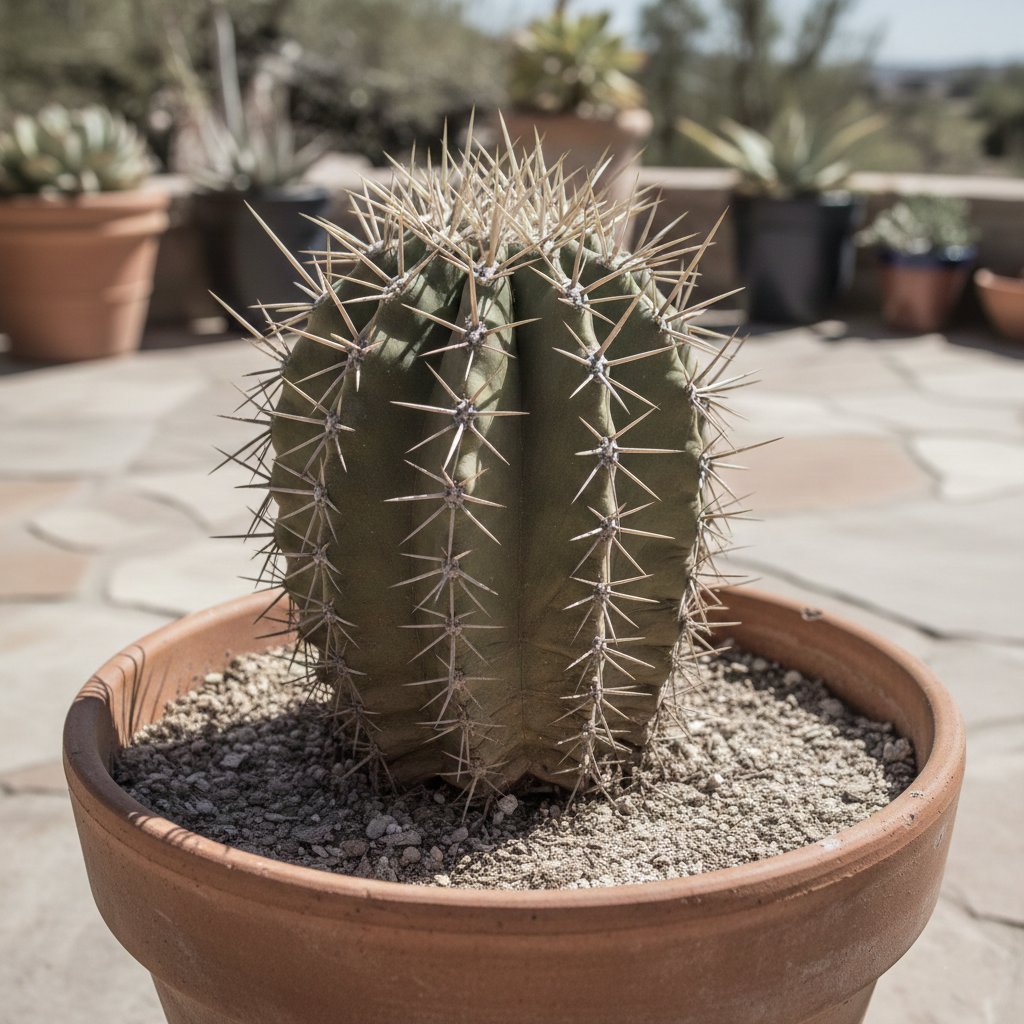
How To Tell If Your Cactus Needs Water
Caring for a cactus may seem simple, but knowing exactly when it needs water can be tricky. Cacti store moisture for long periods, so they don’t always show clear signs of thirst right away. You can tell your cactus needs water when the soil feels completely dry and the plant starts to look slightly wrinkled or soft at the base.
Pay attention to changes in texture and color. A healthy cactus feels firm, while a thirsty one looks dull or slightly shriveled. The time since your last watering also matters, long dry periods or hot weather can deplete stored moisture faster than expected.
Checking your cactus regularly helps you understand its unique rhythm. With a careful eye and consistent routine, you can keep it hydrated without overwatering and help it stay strong year-round.
Key Takeaways
- Look for dry soil and slight wrinkles as signs your cactus needs water
- Observe how light, temperature, and seasons affect watering needs
- Adjust your watering schedule based on your cactus’s growth and environment
Key Signs Your Cactus Needs Water
A cactus that lacks enough water often shows visible and physical changes. You can usually spot the problem through its skin texture, spines, soil condition, or even by the plant’s weight.
Wrinkled or Shriveled Skin
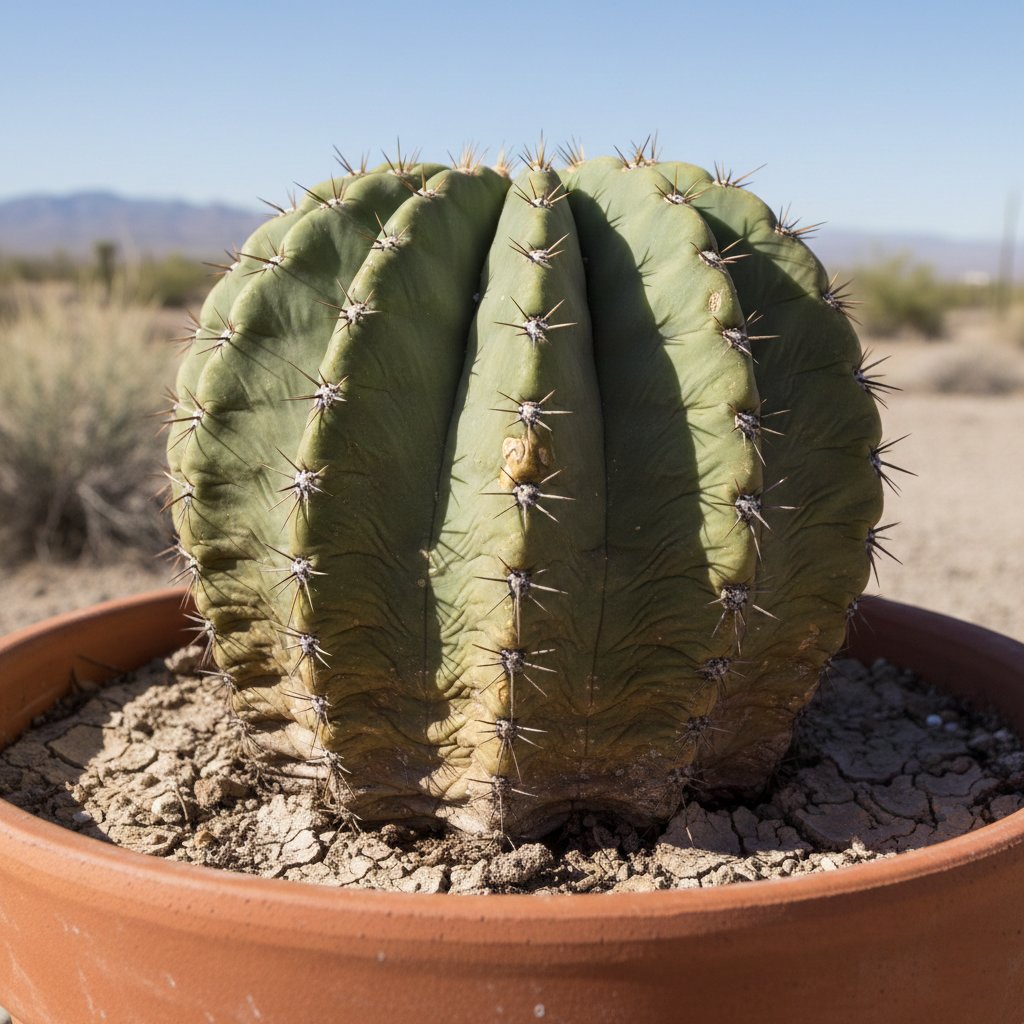
When your cactus needs water, its surface may start to wrinkle or shrink slightly. This happens because the plant uses up stored water inside its tissues during dry periods. The skin may look deflated, similar to how a balloon loses air.
Look closely at the base or along the ribs of the cactus. Wrinkles or folds that were not there before signal dehydration. Some species naturally have ridges, but new, uneven wrinkles suggest a problem. In severe cases, the plant can look sunken or limp, which means it has been dry for too long.
To help it recover, water the cactus deeply and let the soil drain completely. The skin should slowly plump back within a few days once moisture returns to the plant’s cells.
Dull or Soft Spines
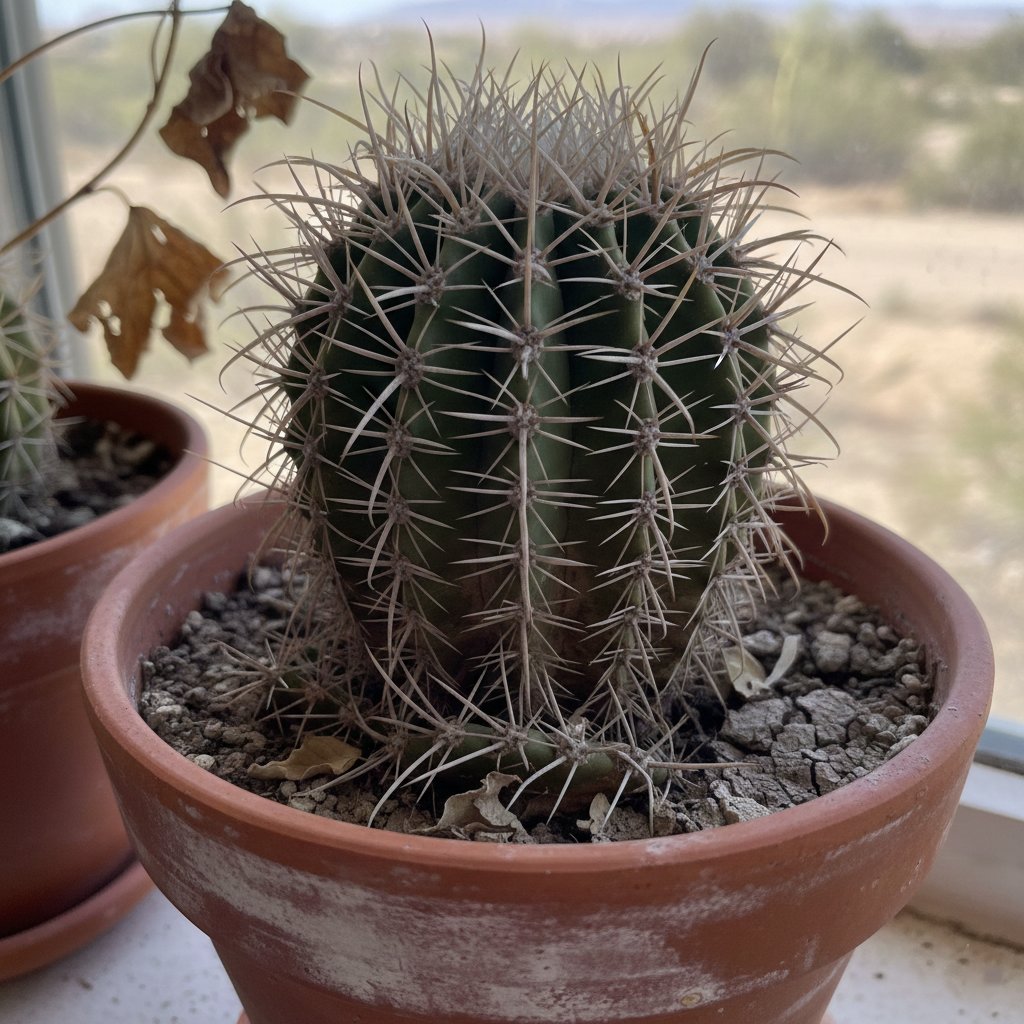
Healthy cactus spines feel firm and look sharp or glossy. When the plant lacks water, its spines can appear dull, faded, or even brittle. This change occurs because the cactus stem’s underlying tissue has lost turgor pressure (internal water pressure).
You might also notice that the spines bend more easily when touched. Compare older photos of your plant if you’re unsure, spine color and texture change slowly, so small differences are easier to catch that way.
A gentle watering routine can restore strength and appearance. Always wait until the soil fully dries between waterings so you don’t accidentally overwater and cause root rot.
Soil Dryness and Texture
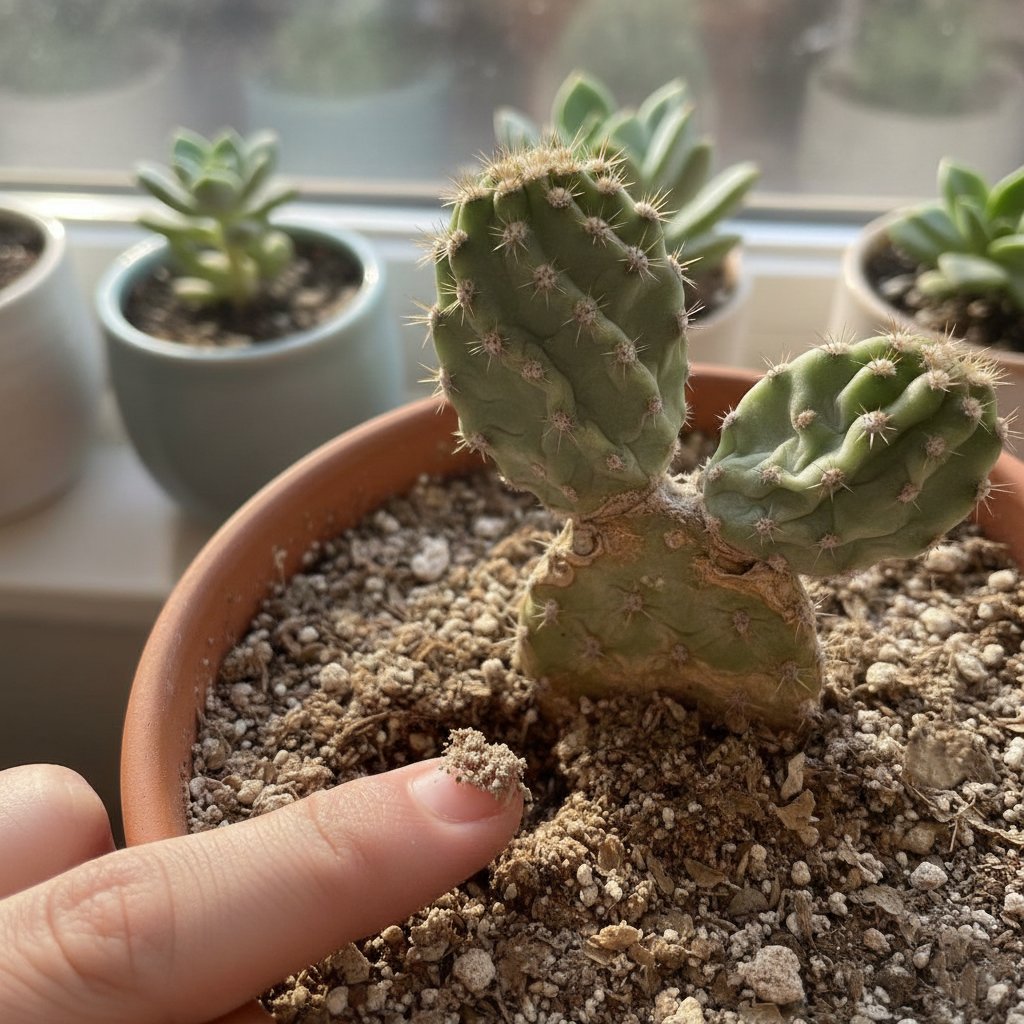
Checking the soil is one of the easiest ways to tell if your cactus needs water. Stick your finger about an inch into the soil or use a moisture meter. If the soil feels completely dry and dusty, it’s time to water.
Dry soil signs:
| Texture | Description |
|---|---|
| Loose and crumbly | Soil separates easily and doesn’t stick together |
| Pale or grayish color | Indicates low moisture levels |
| Shrinking from pot edges | Means the mix has fully dried out |
If the soil still feels even slightly damp, wait a few days. Cacti roots need air circulation, and sitting in wet soil can cause rot. Adjust your watering based on the season, more in warm months, less in cooler ones.
Lightness and Weight of the Plant
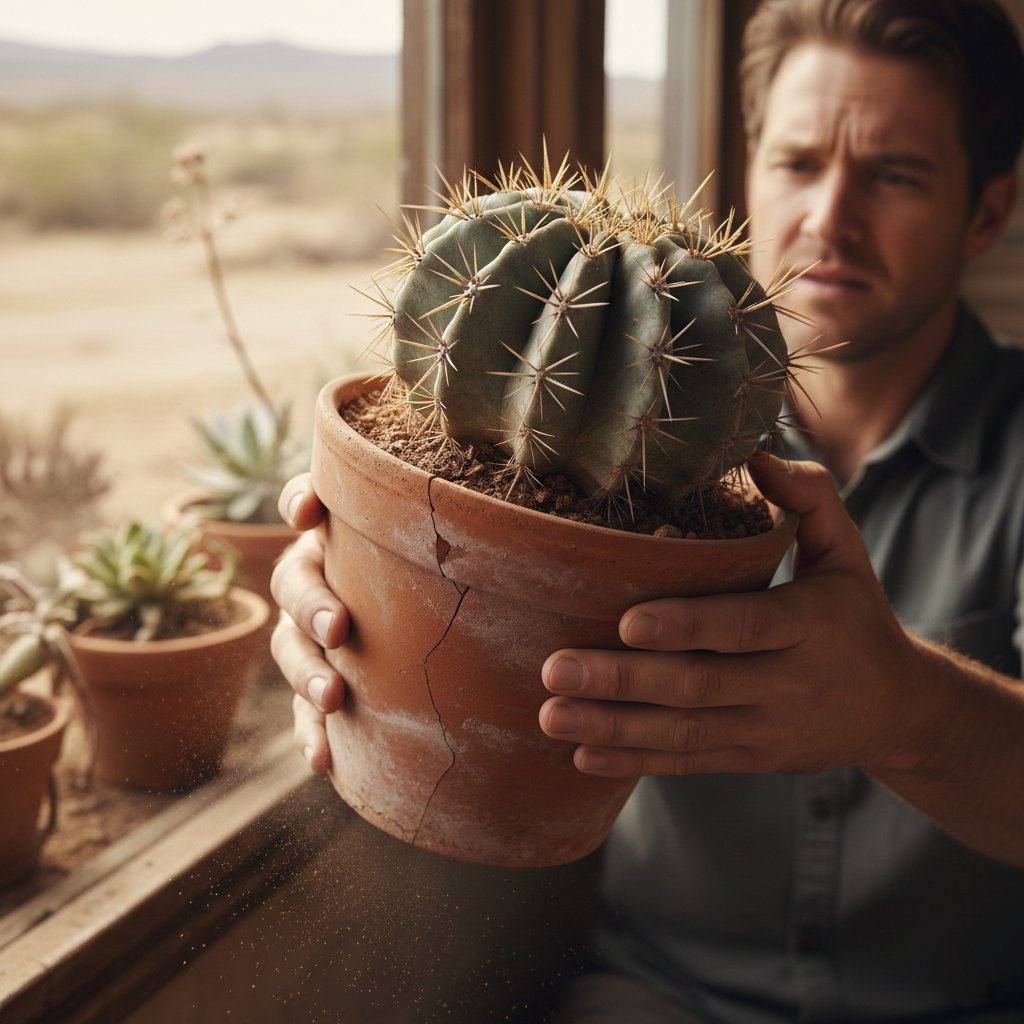
A well-watered cactus feels noticeably heavier than a dry one. The weight difference comes from the water stored inside the stems and soil. When your cactus feels unusually light when lifted, it’s often a sign that the plant and soil have lost most of their moisture.
Compare by gently lifting the pot right after watering and again several days later. You’ll start to recognize the difference. If the pot feels dry and the cactus looks slightly shriveled, it’s likely time to water again.
This weighing method is especially helpful for small potted cacti where visual signs are subtle. Over time, you’ll learn what your cactus’s “hydrated weight” feels like and can prevent dehydration before it becomes severe.
How to Check and Adjust Your Watering Routine
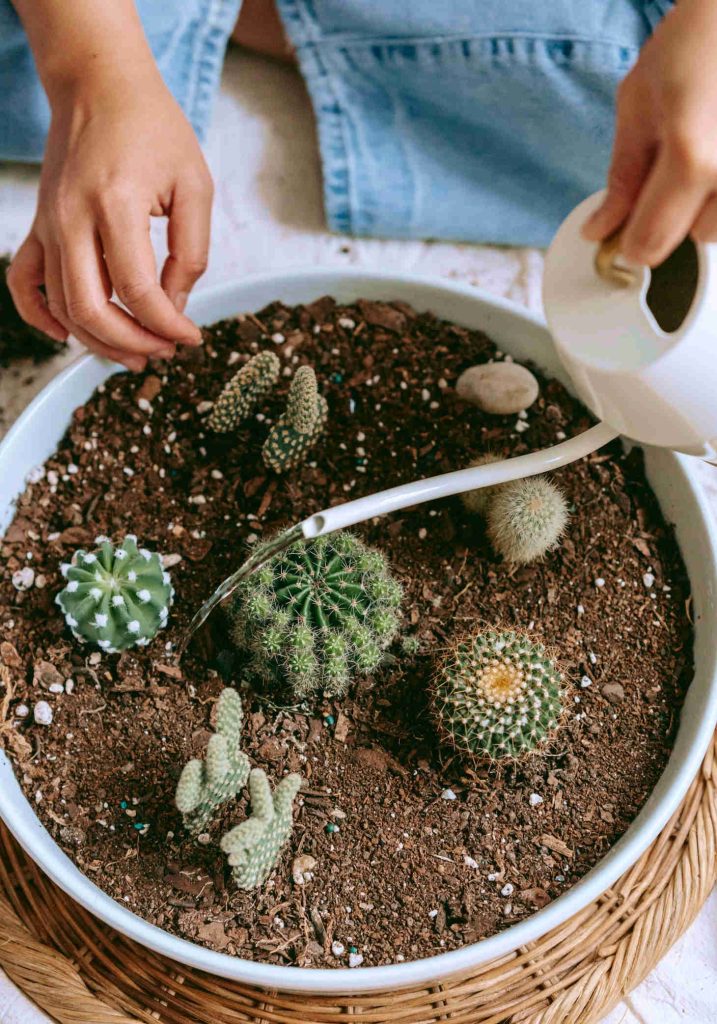
You can keep your cactus healthy by checking soil moisture, using the right watering method, and setting a balanced schedule. Paying attention to the plant’s signals and your environment helps you make steady improvements to your cactus watering routine.
Assessing Soil Moisture
Check the soil before adding water. Insert your finger about 1 to 2 inches deep or use a moisture meter. If the soil feels completely dry at that depth, your cactus likely needs water. If it feels damp or cool, wait a few more days.
Cacti grown in smaller pots dry out faster than those in large containers. The type of soil also matters. A mix with good drainage, such as one that contains coarse sand or perlite, prevents roots from sitting in water. Standing water or heavy soil increases the risk of root rot.
Visually inspect the plant. A plump cactus often has enough moisture stored, while one that looks shriveled or dull may be too dry. Always check soil dryness before watering, as surface moisture can be misleading.
| Check | What It Means | Action |
|---|---|---|
| Soil is dry 1-2″ below surface | Cactus needs water | Water thoroughly |
| Soil feels damp | Still moist | Wait before watering |
| Pot feels heavy | Soil likely wet | Wait until lighter |
Choosing Proper Watering Methods
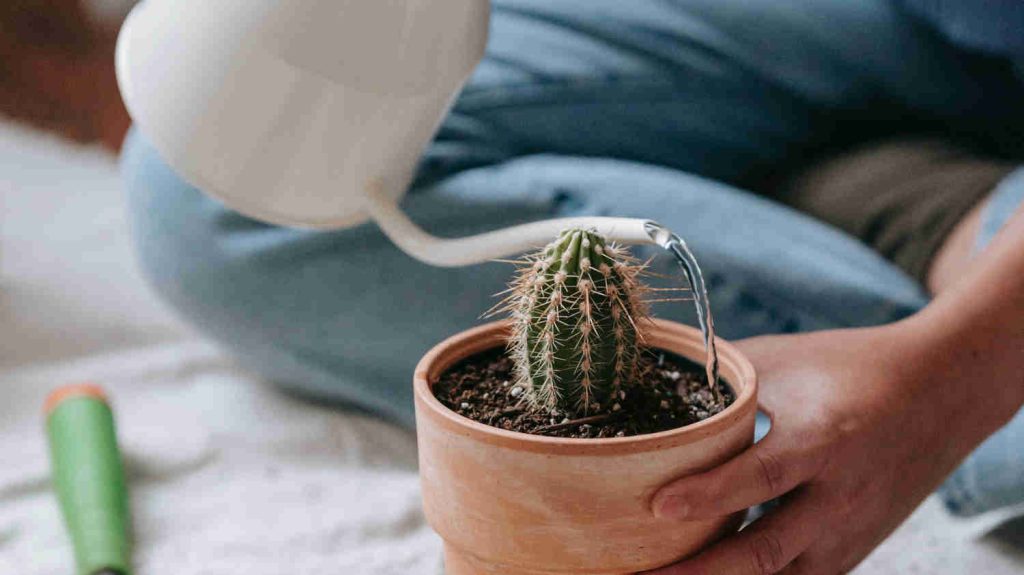
When watering cacti, aim to soak the soil evenly instead of misting the plant. Pour water slowly into the base of the pot until it drains from the bottom. This ensures moisture reaches the roots. Avoid getting water on the cactus body, especially fuzzy or hairy species, as trapped moisture can lead to rot.
Use room-temperature water and let the pot drain fully. Never let it sit in a saucer of leftover water. If your cactus grows in a clay pot, it will dry quicker than one in plastic, so you may need to water a bit more often.
Bottom watering can also help keep moisture balanced. Set the pot in a shallow container of water for 10–15 minutes, then remove it once the topsoil feels slightly damp. This method encourages roots to reach downward for water.
Adjusting Your Cactus Watering Schedule
Cacti need a flexible schedule rather than a fixed date. Watering frequency depends on temperature, humidity, pot size, and season. In spring and summer, many cacti need water every 2–3 weeks. In cooler months, once a month, or even less, may be enough.
Track how fast your soil dries by checking it weekly. Adjust your watering interval based on those observations. Do not water by habit; water when the plant’s condition and soil dryness call for it.
Keep records of your watering routine in a notebook or mobile app. Note soil type, lighting, and indoor humidity. Over time, these details help you find the cycle that keeps your cactus healthy and prevents both overwatering and underwatering.