
Cactus Display Ideas For Minimalist Homes
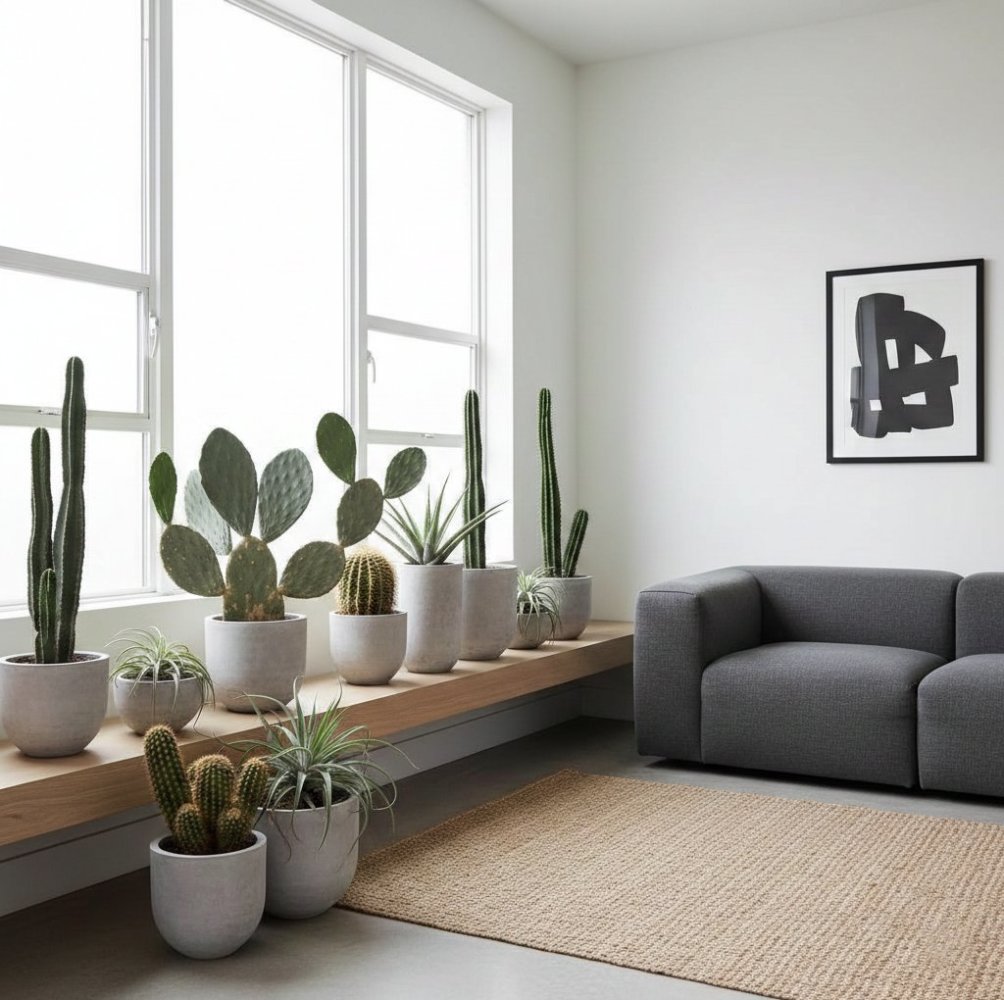
Cactus arrangements fit naturally into minimalist homes because they bring structure, texture, and calm without clutter. Their geometric shapes and clean lines match simple interiors, creating a modern yet relaxed atmosphere. You can make a striking display using only a few well-chosen cacti in neutral or concrete pots that highlight their natural form.
By focusing on fewer, more distinctive plants, you create balance and visual interest while keeping surfaces open and spaces uncluttered. A single tall cactus can anchor a living room corner, while small clustered succulents can soften a kitchen shelf. These arrangements show that simple design can still feel warm and inviting.
Key Takeaways
- Minimal cactus displays create balance and visual calm.
- Clean lines and simple containers highlight each plant’s form.
- Careful placement turns functional areas into modern design accents.
Essential Principles of Minimalist Cactus Displays
A clean, cohesive cactus display uses a balance of plant form, space, and texture to create visual calm. The goal is to highlight natural beauty through careful species selection, restrained design choices, and materials that complement simplicity without distraction.
Choosing the Right Cactus Species
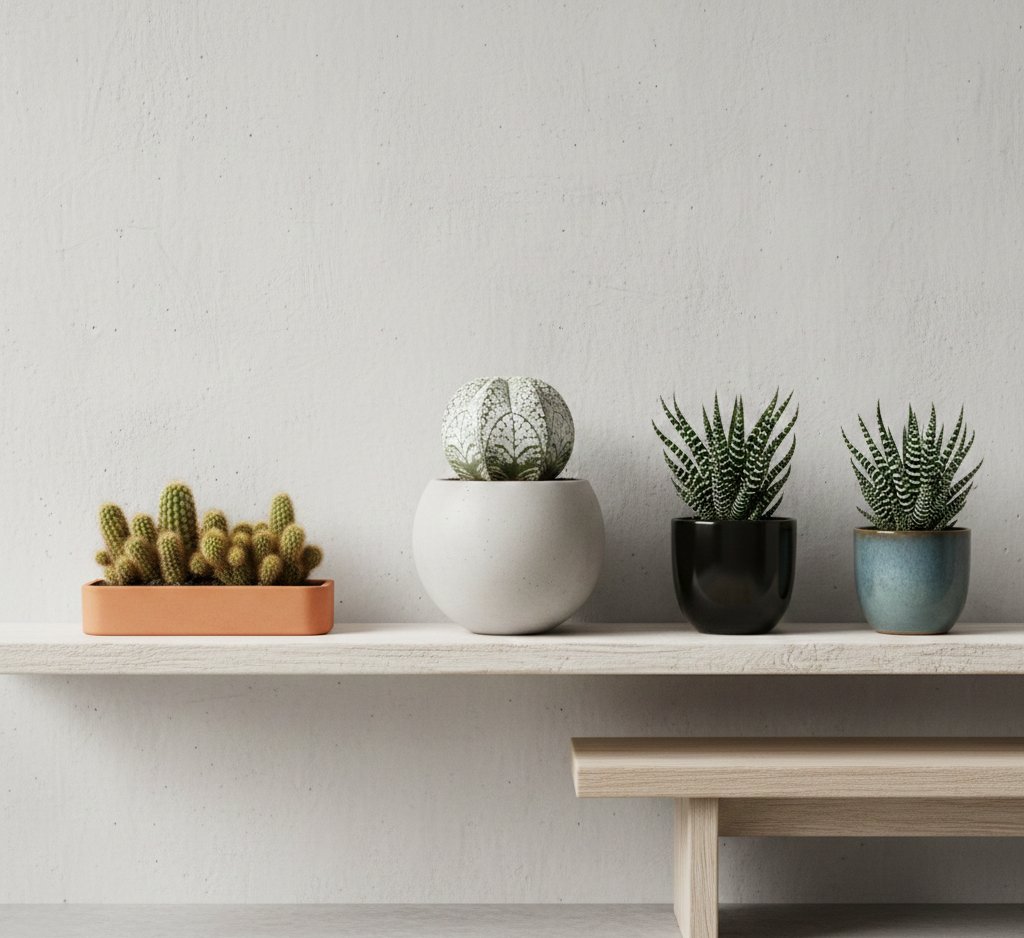
Select cactus species with defined shapes and clean lines. Popular options like Echinocactus grusonii (Golden Barrel), Astrophytum myriostigma (Bishop’s Cap) and Mammillaria varieties provide sculptural appeal without crowding the space. These types grow slowly and maintain compact forms, which makes them ideal for minimalist rooms.
Pair one or two succulents such as Haworthia or Gasteria for texture contrast. Avoid mixing too many species or placing large, irregular cacti together, as that can create visual clutter. Focus on harmony in height, shape, and color.
When arranging multiple plants, keep spacing generous. Use small clusters of matching plants in rows or grids to emphasize order and rhythm. A single, well-placed cactus can make a statement by itself when light and shadow fall naturally around it.
Tip: Choose species that tolerate low watering and thrive in the room’s bright light to minimize daily maintenance. Low-care species fit the minimalist philosophy of simplicity and ease.
Balancing Simplicity and Visual Interest
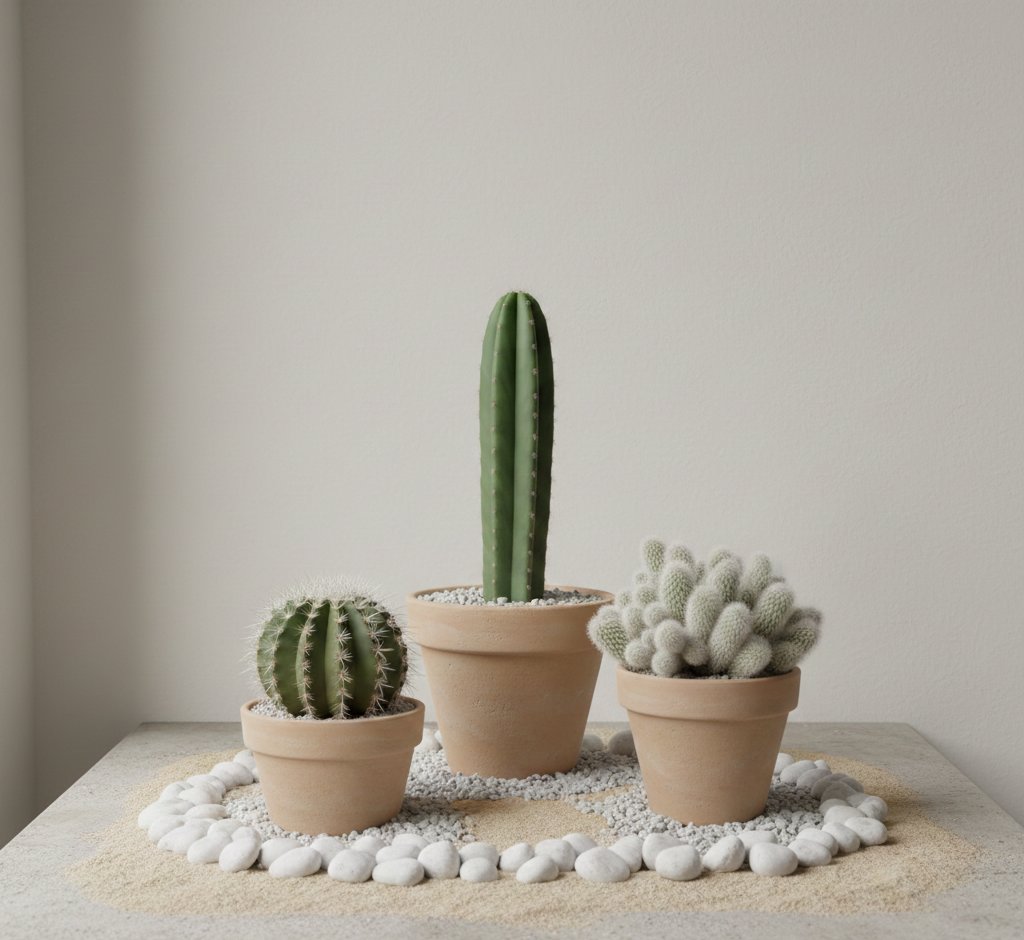
In minimalist design, less works only when every detail feels deliberate. Use contrast in texture, color tone, or arrangement scale to maintain visual interest. For example, pair a smooth cactus with one that has prominent ribs or spines.
Keep your color palette neutral and consistent. Shades of green, beige, and white help the plants stand out without creating distraction. You can add gentle contrast through small stones, sand layers, or a light gravel base. Use soft, indirect lighting to emphasize the forms rather than the surroundings.
When spacing your display, remember that open space contributes as much to the design as the plants do. Minimalist balance depends on negative space to let each cactus feel distinct.
Checklist:
- Keep color accents subtle
- Repeat shapes rather than mixing styles
- Avoid unnecessary decorative pieces
Selecting Minimalist Containers and Materials
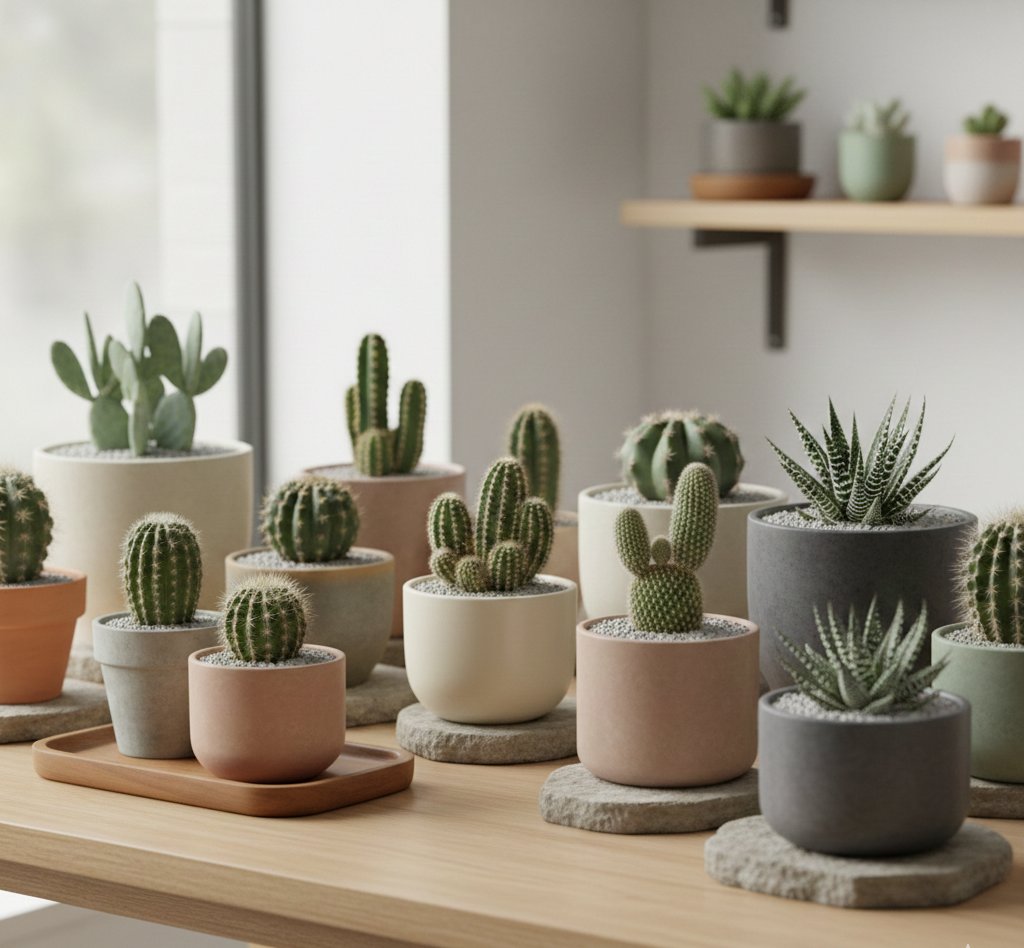
Containers set the tone for the entire display. Use terracotta pots, matte ceramic planters, or neutral concrete vessels that blend into their environment. Their muted tone allows the cacti’s natural texture and geometry to remain the focus.
Colorful ceramic pots can still fit minimalist décor when they use muted or earthy shades. Opt for simple silhouettes without ornate patterns. The container’s shape should mirror the clean lines of the cactus it holds.
Materials matter as much as color. Choose eco-friendly or natural materials whenever possible, unglazed clay, wood trays, or smooth stone bases align with minimalist values. Group pots of the same material for a cohesive look.
Use a narrow layer of light sand or fine gravel as top dressing. It keeps the presentation tidy. Consistency in tone, texture, and form creates a composed display that supports the minimalist aesthetic.
Cactus Display Styles for Minimalist Homes
Clean lines, neutral tones, and focused design choices define how cacti fit into minimalist interiors. Simple but carefully planned arrangements let natural shapes, textures, and colors become the main feature of your living space.
Single Statement Piece Arrangements
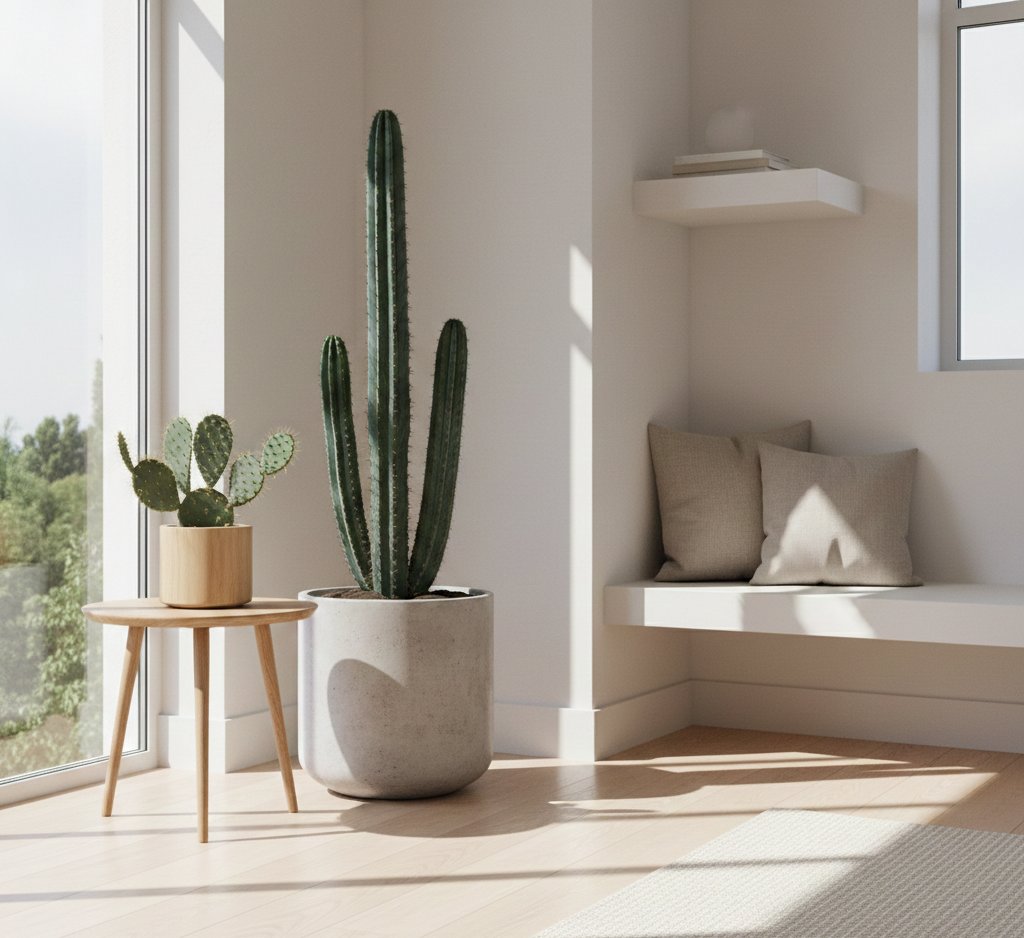
A single cactus can serve as a sculptural focal point when you select a striking species such as a tall columnar cactus or a compact prickly pear. Place it in a simple pot made of matte ceramic, concrete, or light wood to maintain a calm, clean look.
Choose locations with open space, like a low side table, a corner shelf, or near a window, to highlight the plant’s form. Use contrasting textures, such as smooth surfaces beside spiny details, to accentuate its natural design.
To support a minimal setup, limit accessories and use natural light. A soft shadow pattern across the room helps emphasize the cactus without adding clutter. When cared for properly, one well-placed cactus can define an entire room’s character.
Grouped Potted Cactus Displays
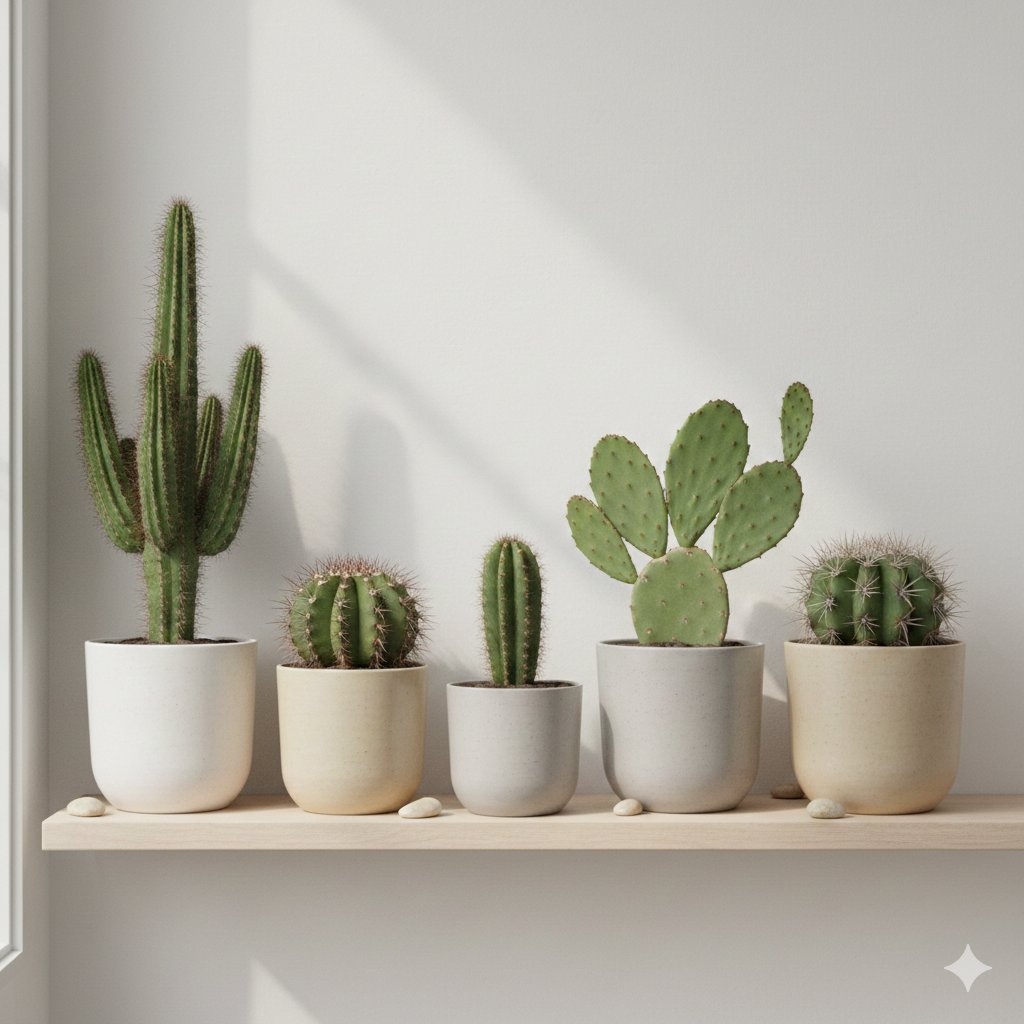
Grouping small potted cacti creates visual interest without overwhelming the room. Combine two to five plants of varying heights and shapes while keeping the color palette consistent. Use matching or coordinating planters to maintain order.
Arrange them in straight lines on a narrow shelf or cluster them in a shallow tray filled with small stones. This keeps the display unified and prevents the arrangement from feeling busy.
| Element | Recommendation |
|---|---|
| Pots | Neutral tones: white, gray, tan |
| Placement | Symmetrical alignment or geometric layout |
| Lighting | Bright, indirect sunlight |
Regularly rotate the plants for even growth and dust the surfaces to ensure proper plant function and preserve the neat aesthetic that minimalism values most.
Mixed Cactus and Succulent Compositions
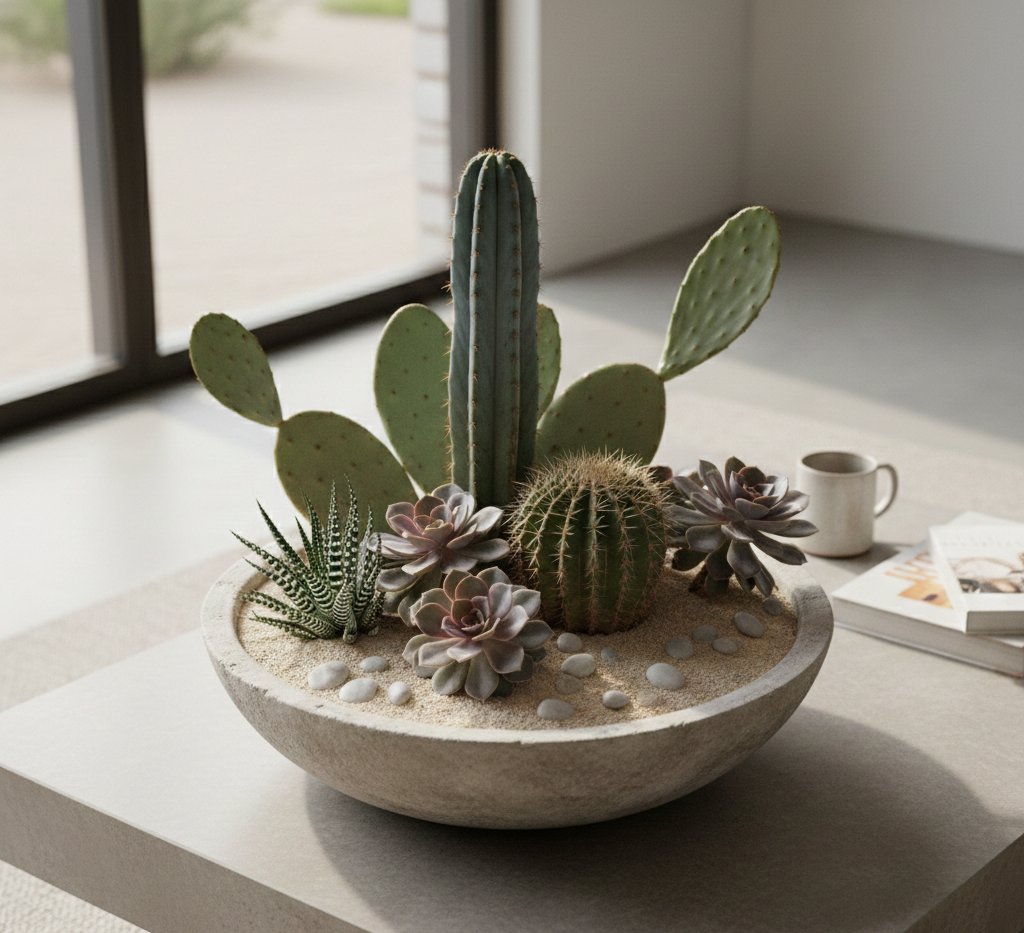
Combining cactus species with low-growing succulents adds a mix of shapes and textures while staying true to minimalist design. Use plants with subtle color variations, soft greens, grays, or muted purples, to keep harmony among the group.
Select a shallow, wide planter for balance. Arrange taller cacti toward the center or back and shorter succulents like echeveria or haworthia at the edges. Add fine gravel or sand as topdressing for a clean, finished surface.
This kind of cactus and succulent mix works well on coffee tables or countertops, providing variety without excess. Their infrequent watering needs and slow growth make them practical for simple, low-maintenance decor, provided all selected plants share compatible care requirements.
Creative and Functional Placement Ideas
Use placement strategies that highlight your cacti while keeping your space open and calm. Choose locations that provide enough light, easy maintenance access, and a balanced look. Aim for simple, clean arrangements that blend form and function.
Zen Garden and Desert Escape Themes
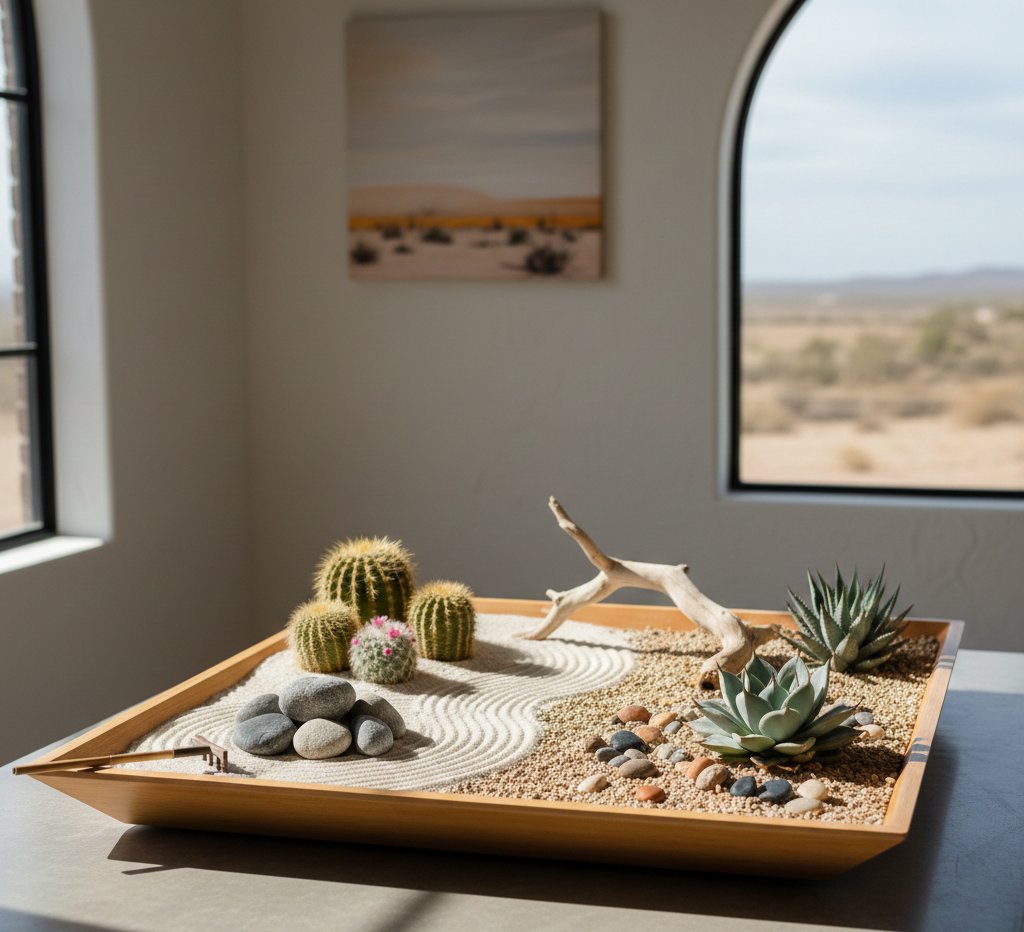
A small zen garden with cacti brings calm and texture to minimalist interiors. Use fine sand, smooth stones, and compact cactus varieties like Echinocactus or Mammillaria to shape a balanced composition. Low, shallow dishes or trays keep the design contained and neat.
To create a desert escape feel, combine sand-toned gravel, driftwood, and succulents that complement cactus shapes. Adding small pebbles in natural colors enhances the layered, arid look. Light placement is critical, while the design may look good in soft light, most cacti and succulents require several hours of direct, bright sunlight to grow healthily.
Keep every element intentional. Leave open space between plants and décor so each texture stands out without cluttering the scene. This approach enhances both mindfulness and style.
Modern Shelf and Tabletop Displays
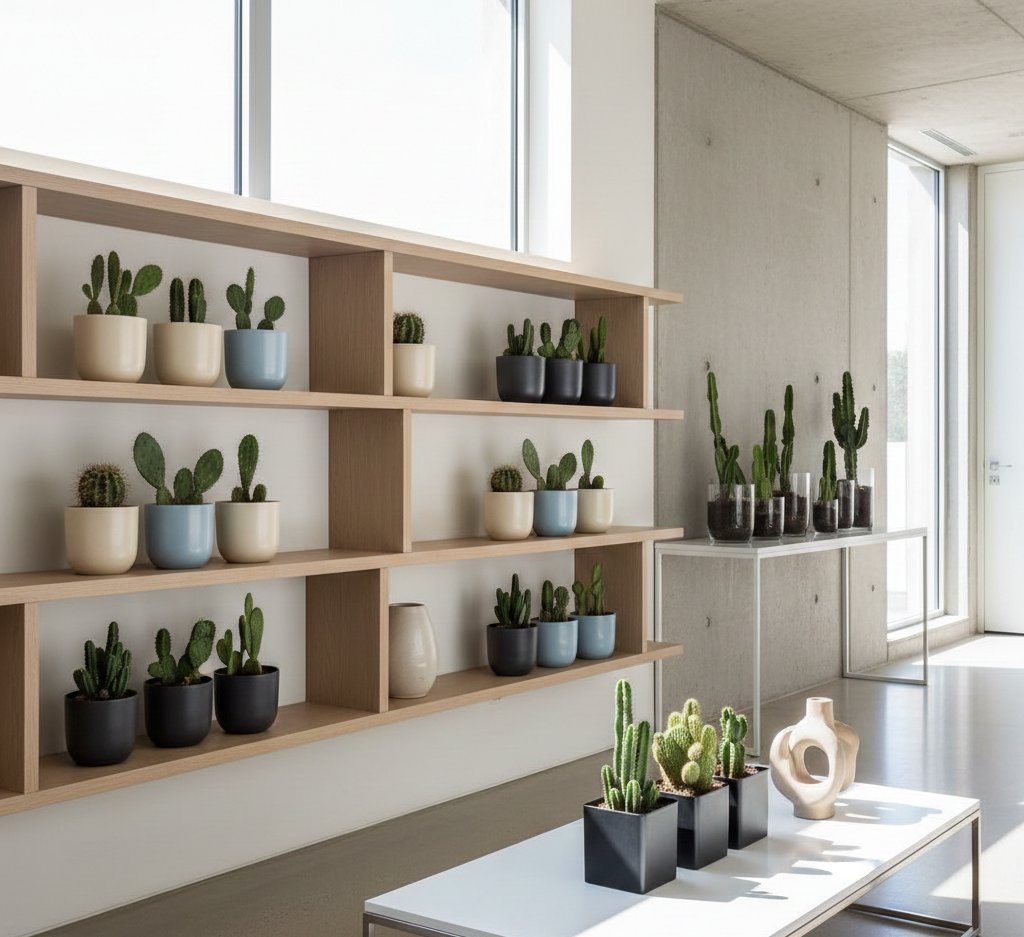
Modern cactus displays suit open shelving, side tables, or built-in ledges. Use clean-lined containers made of ceramic, glass, or matte metal. A group of three to five small pots in matching tones can form an appealing rhythm without overwhelming the surface.
A simple layout often works well:
| Placement | Style Tip | Lighting Suggestion |
|---|---|---|
| Floating shelf | Use uniform pots for symmetry | Bright, direct light |
| Coffee table | Combine cacti with one neutral sculpture | Bright, direct light |
| Entry console | Line up cacti at different heights | Bright, direct light |
Choose slow-growing species that maintain their shape, reducing the need for frequent changes. Keep tabletops uncluttered to preserve the clean, modern feel typical of minimalist design.
Hanging and Wall-Mounted Cactus Designs
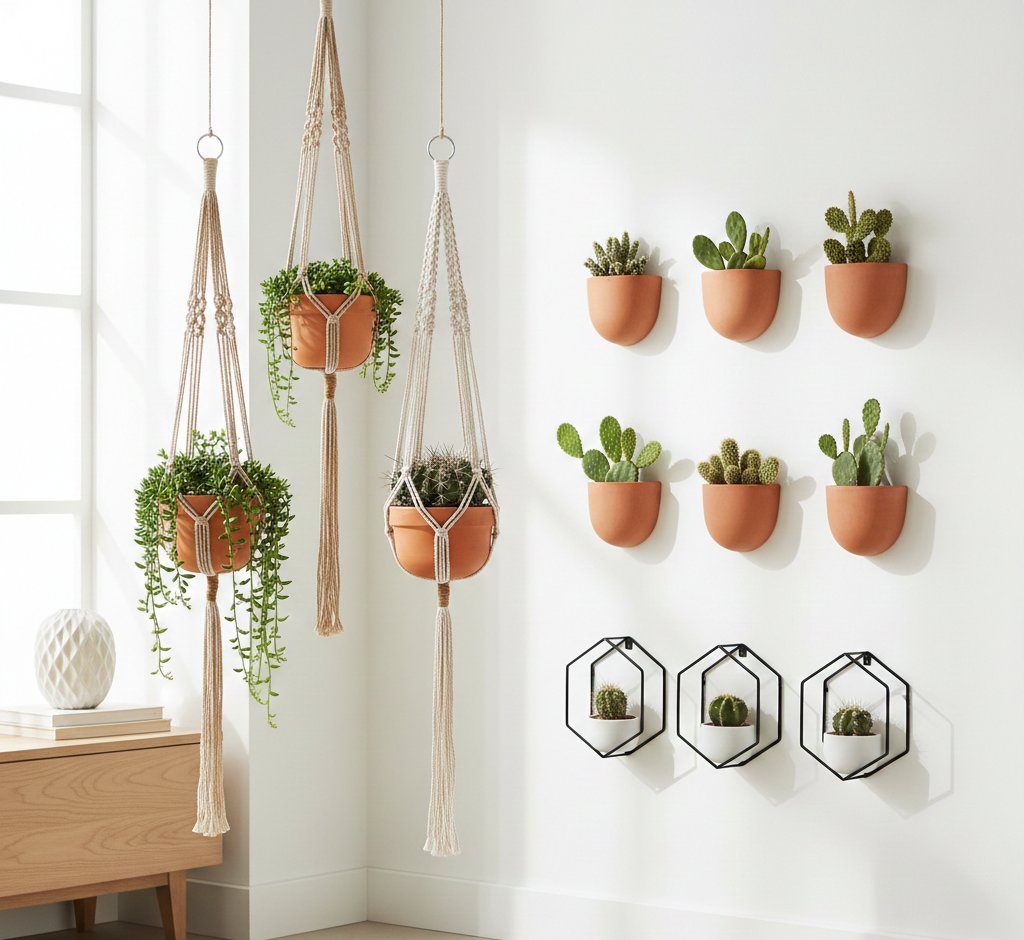
Hanging cactus displays free floor space and draw the eye upward. Macramé plant hangers work well for small trailing or spherical cacti placed in lightweight pots. Choose neutral rope colors like beige, white, or gray to keep the focus on the plant.
Wall-mounted planters add visual interest to blank walls. Use mounted terracotta pockets or geometric metal frames in repeating patterns. Small cacti placed in those holders provide texture without crowding the wall.
Be sure to mount planters securely and consider drip trays to protect walls from excess water. Keep designs consistent with the room’s tone, minimal, well-balanced, and light-friendly.
Window Ledge and Corner Nook Displays
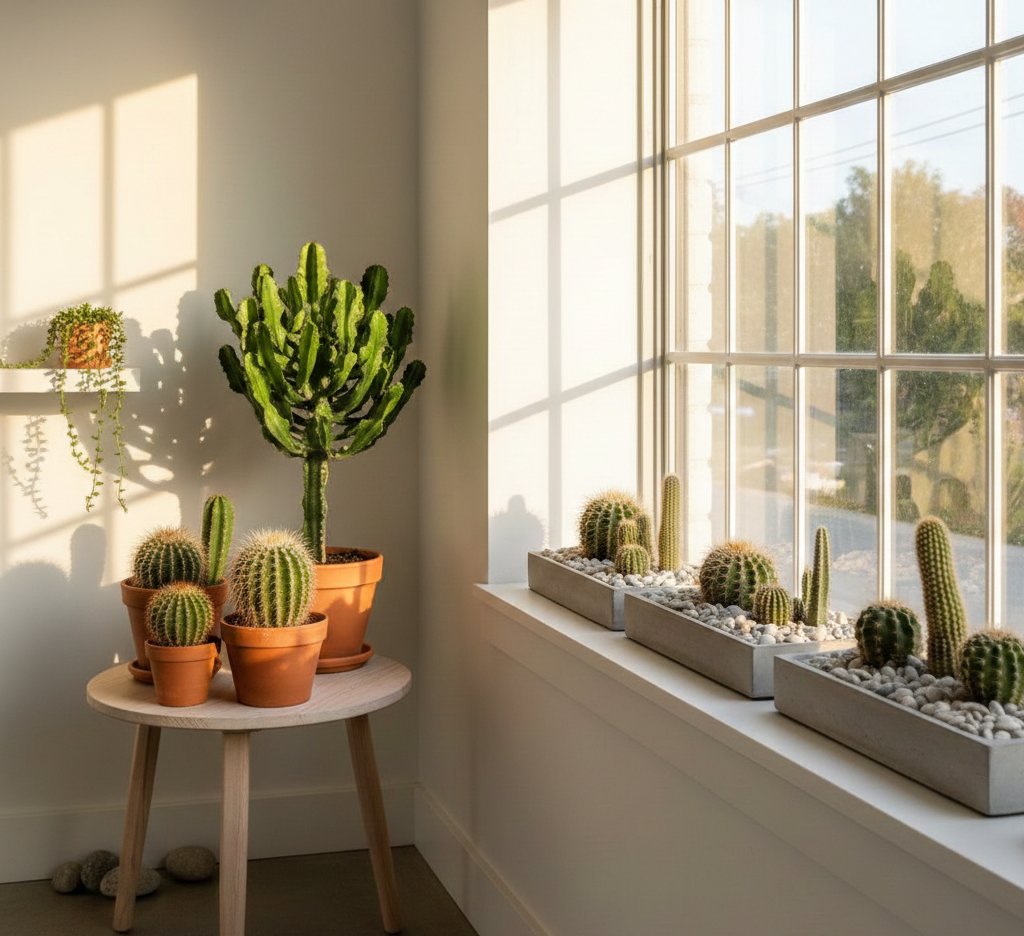
Window ledges give cacti direct access to light and a clean, linear setting. Use narrow trays filled with mixed mini cacti for a tidy lineup. A gravel top-dressing can be used to prevent soil erosion and keep the surface dry.
For shaded corners, add a cactus cluster on a low stool or a small corner shelf. Place taller species like Euphorbia trigona (African Milk Tree) in the back and compact ones at the front for balance.
Lighting matters most here, south- or west-facing windows usually support healthy growth. Keep setups easy to reach for watering and rotate pots occasionally for even light exposure. Each display should look calm, intentional, and consistent with your minimalist aesthetic.
Sustainable and Artistic Touches
Sustainable cactus displays combine natural materials, mindful design, and efficient use of space. You create a layout that supports the environment while adding visual depth through simple artistic detail and thoughtful layering.
Eco-Friendly Container Choices
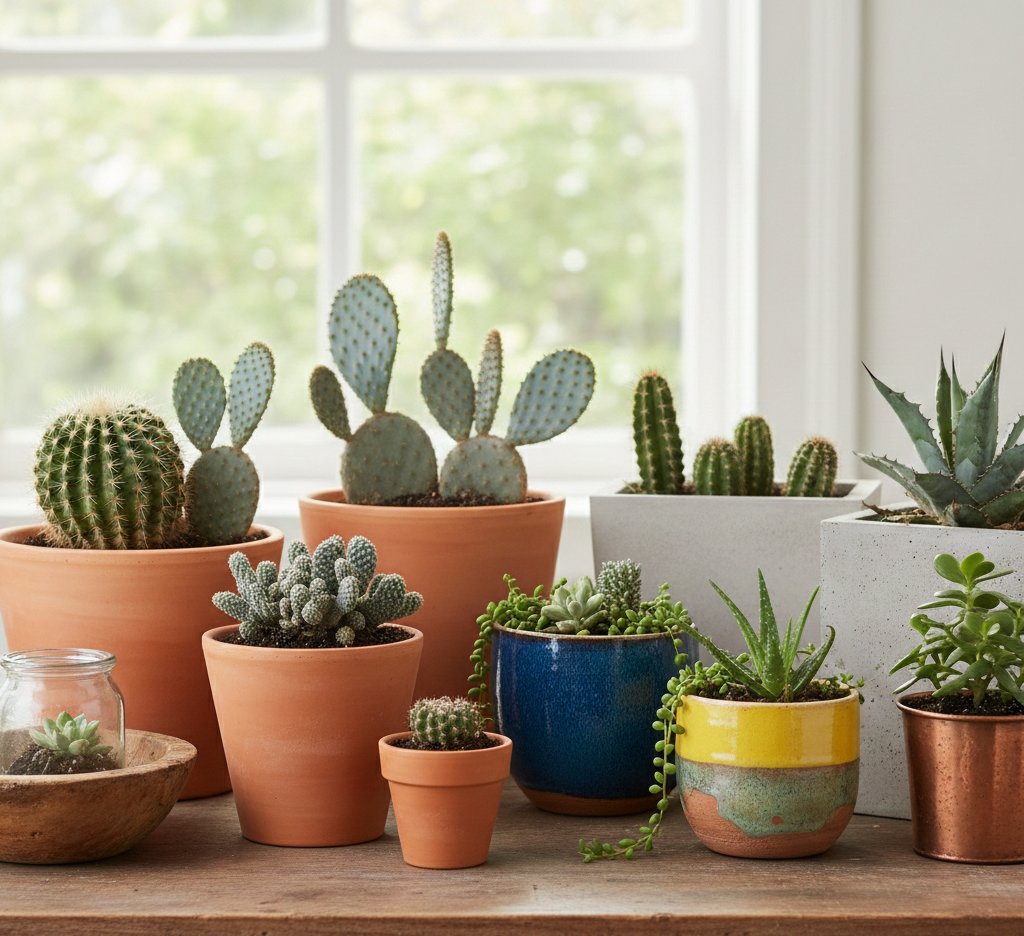
Choosing eco-friendly containers helps reduce waste and promotes long-term use. Terracotta pots are durable, breathable, and complement the minimalist look. Their natural tone works well with green and gray cactus shades.
For a more colorful accent, upcycled ceramic pots, which repurpose existing ceramic items, or colorful ceramic pots made from sustainable materials offer variety without harming the environment.
If you seek a lightweight and modern look, consider fiberstone (fiberglass and crushed stone composite). For extreme durability, concrete is a sturdy option, though it is heavy and cement production is energy-intensive. Enhancing sustainability involves sourcing planters made with recycled aggregates.
Reusing old containers, glass jars, or repurposed bowls also keeps your cactus garden low-cost and sustainable.
Below is a quick comparison of popular eco-friendly pots:
| Material | Main Benefit | Ideal Use |
|---|---|---|
| Terracotta | Breathable, natural texture | Indoor cactus displays |
| Recycled ceramic | Vibrant, non-toxic glazes | Accent containers |
| Concrete / fiberstone | Durable, modern look | Both indoors and patios |
Blending Cactus Displays with Interior Decor
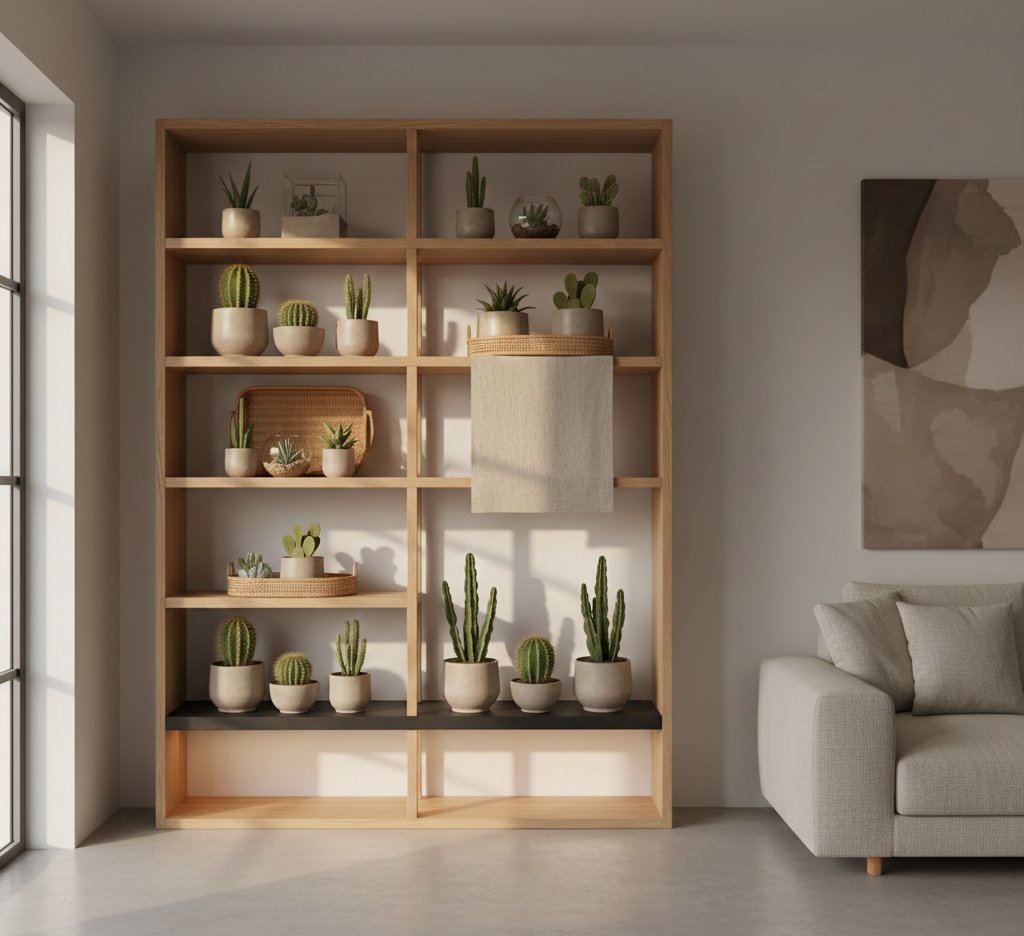
Cactus displays look best when they reflect your home’s color palette and design style. In minimalist rooms, focus on neutral shades and clean lines that enhance the plant’s sculptural forms. Match your container materials with furniture elements, such as wood, glass, or metal, to maintain a cohesive look.
Use open shelving or narrow tables to highlight small cactus collections. You can mix matte planters with subtle textures like linen runners or woven rattan trays for warmth. Grouping different shapes, round cacti beside tall columnar types, adds contrast while keeping visual order.
Lighting also matters. Natural sunlight emphasizes form and color, while soft artificial light creates tone variation at night. Keep the setup uncluttered to maintain balance and calm.
Layering Textures and Heights
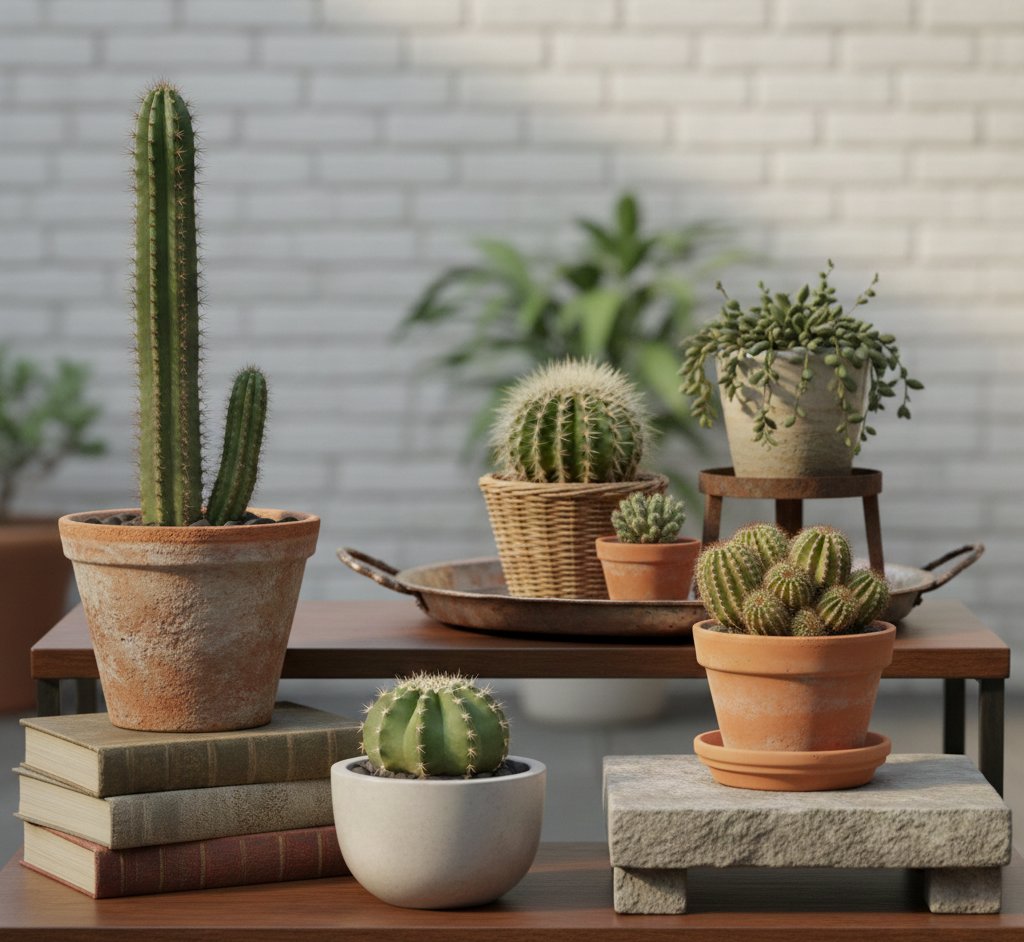
Layering strengthens the visual rhythm in a small cactus garden. Combine planters of various heights to draw the eye upward and add movement to your display. Raise certain pots using stands or stack thin books to create small elevation changes.
Mix textured containers, smooth concrete beside rough terracotta, to add subtle contrast. You can also pair tall, slender species like cereus with round or clustered ones like echinopsis for dimension.
Use surfaces of different finishes such as wood shelves, stone slabs, or metal trays. This mix keeps the setup interesting without crowding your space. The varied textures and heights balance the minimalist structure with natural character and visual depth.