
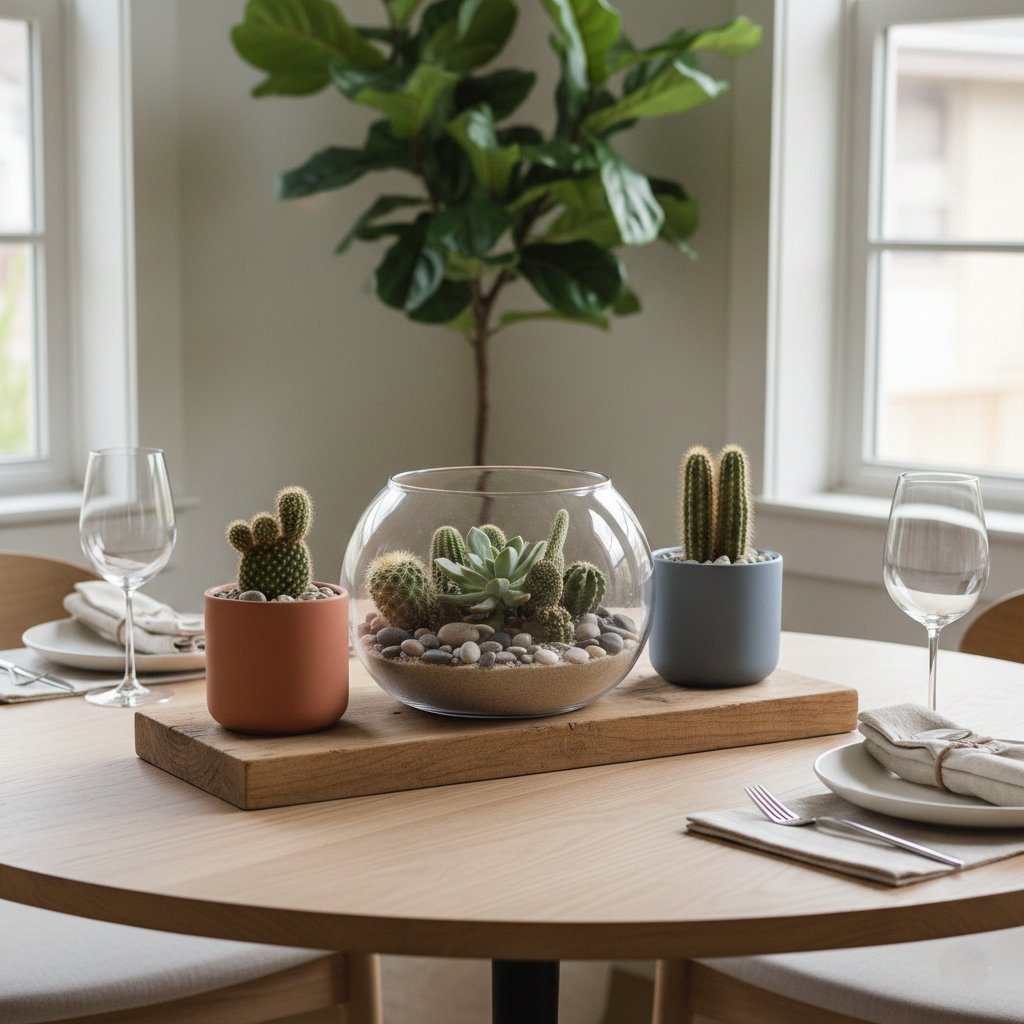
Cactus Centerpiece Ideas For Small Spaces
Small spaces don’t have to limit your style. With thoughtful design, you can turn a compact table, shelf, or kitchen counter into a lively display that reflects your taste. Creating a cactus centerpiece brings texture, color, and structure into your home without taking up much room or time.
You can mix small cacti in varied shapes and sizes, pairing them with clean, minimal containers or rustic pots for a cozy touch. These compact arrangements fit well in almost any setting, adding natural charm that lasts all year. They also stay low-maintenance, making them perfect when you want an easy way to freshen up your space.
As you explore ideas for styling, choosing, and caring for your centerpiece, you’ll find practical ways to design a look that fits your home’s layout and lighting. Whether you prefer modern, earthy, or playful details, cactus centerpieces offer an easy path to a stylish, space-saving accent.
Stylish Cactus Centerpieces for Small Spaces
You can create stylish centerpieces that fit tight areas by focusing on smart container choices, thoughtful plant variety, and clean design. Small cactus arrangements add texture and color while staying easy to care for and practical for everyday use.
Compact Tabletop Arrangements
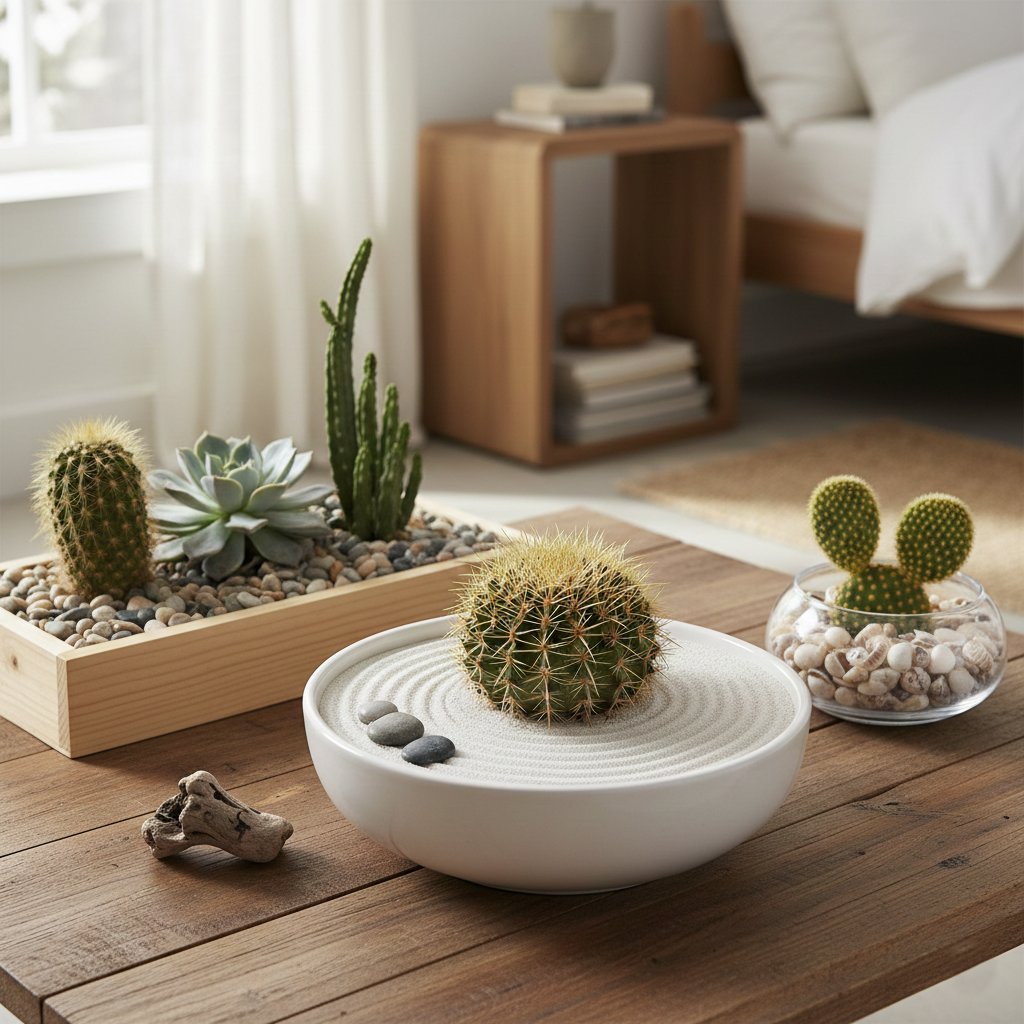
A compact cactus arrangement works best on a small coffee table, windowsill, or bedside stand. Choose low, shallow bowls or rectangular wooden planters to keep the display proportional to its setting. Using a mix of small cacti and succulents creates contrast in shape and tone without crowding the space.
Pair green and gray plants with light-colored decorative pebbles or fine gravel to keep the look balanced. Add a few polished stones or pieces of driftwood for texture. Minimal decorations help draw attention to the plants themselves while keeping your home decor uncluttered.
Consider this simple setup:
| Container | Plant Type | Accent |
|---|---|---|
| Ceramic bowl | Golden barrel cactus | White sand |
| Wooden tray | Various mini cacti | Pebble mix |
| Shallow glass dish | Bunny ear cactus | Small shells |
Keep the arrangement low-maintenance with bright, indirect light and minimal watering.
Miniature Desert Landscape Designs
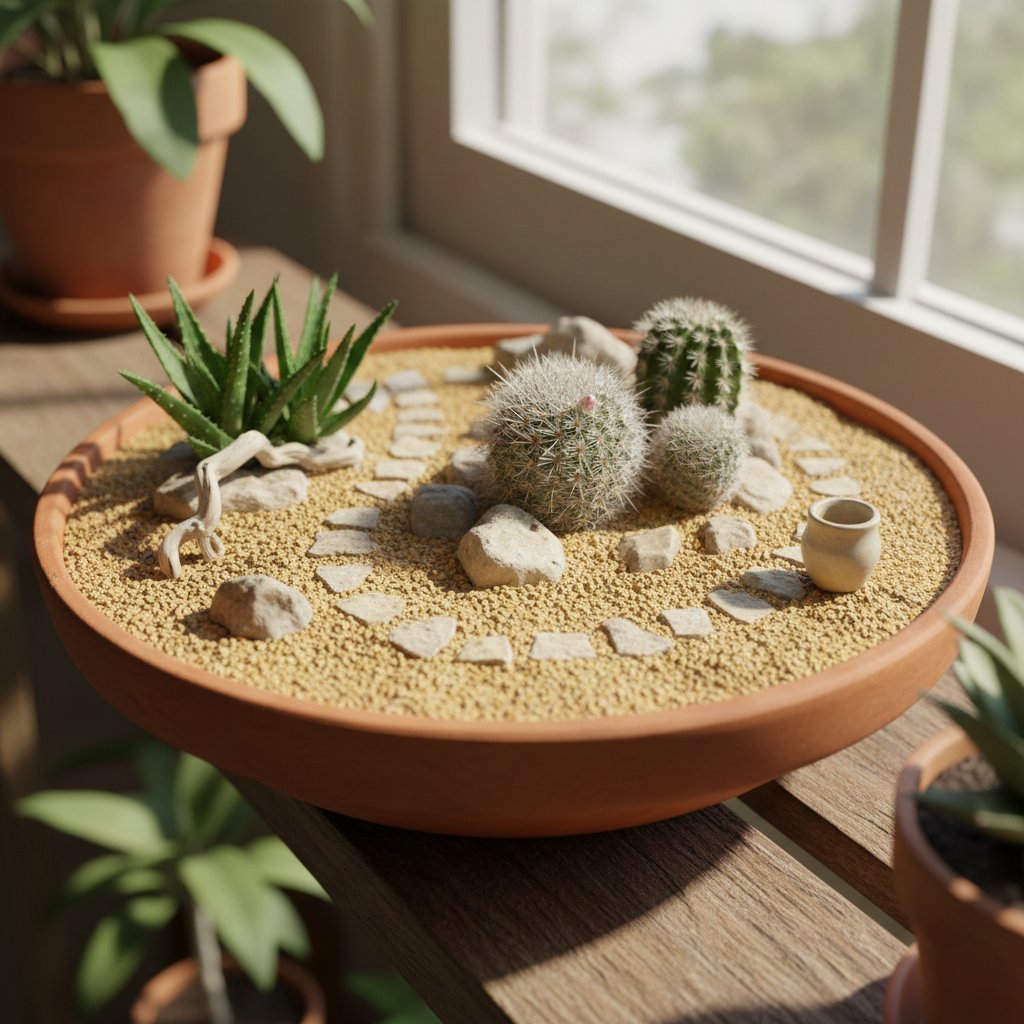
A miniature desert landscape brings natural charm to small areas. Start with a wide terracotta dish or shallow planter and layer coarse sand and small stones to mimic a desert floor. Combine several cactus types of varying heights to create depth.
You can shape the layout into small rock garden scenes, using stones to create gentle hills or pathways. Add detailed touches like mini ceramic pots or small pieces of driftwood for realism. Choose plants such as hedgehog cactus, mammillaria, or small aloe for variety.
Arrange spacing carefully so each plant can grow without touching the others. This design works well as a focal piece for narrow shelves or window ledges where natural light keeps the scene bright and clean.
Trendy Glass Container Displays
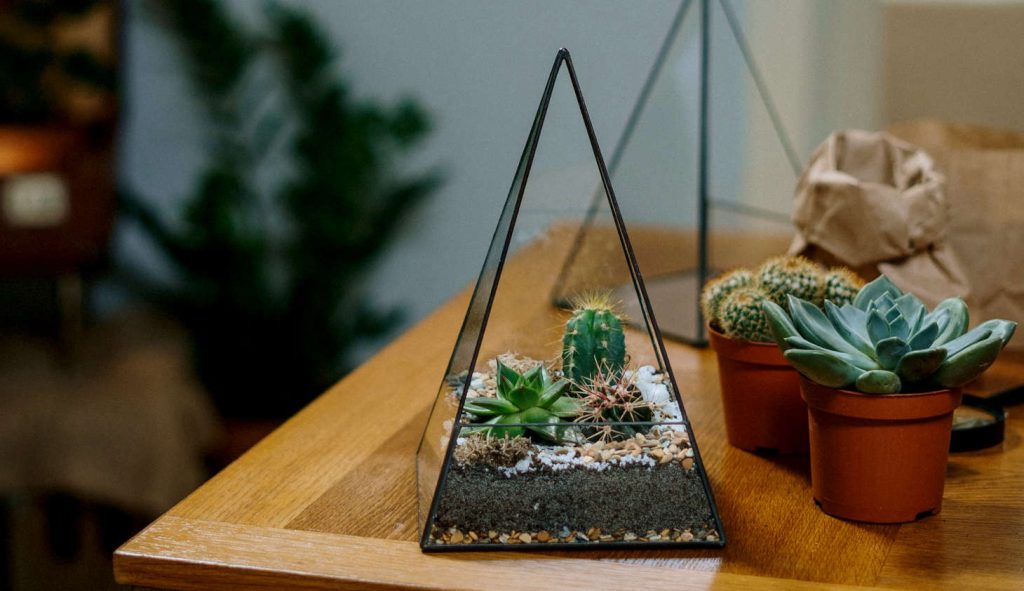
Glass containers highlight the structure and texture of your cacti while keeping your decor modern. Choose clear bowls, cylinders, or terrariums that fit snugly on small tabletops or narrow ledges. The transparency lets you display soil layers, pebbles, and sand in neat patterns.
Use coarse soil at the bottom and top with decorative rocks for a tidy finish. Mixing darker soil with white pebbles or colored sand can emphasize the plants’ natural details. Avoid overwatering, since glass containers often lack drainage holes.
Try combining a few mini cacti with succulents in one glass vessel for a mix of forms and textures. Keep the design simple and let natural light bring out the subtle tones and shapes of the plants.
Choosing and Arranging Cacti for Centerpieces
You can make a cactus centerpiece look polished and natural by focusing on the right plant mix, paying attention to proportions, and keeping balance in color and texture. Matching plant types to your space and light levels also helps the arrangement stay healthy and attractive.
Plant Selection Tips
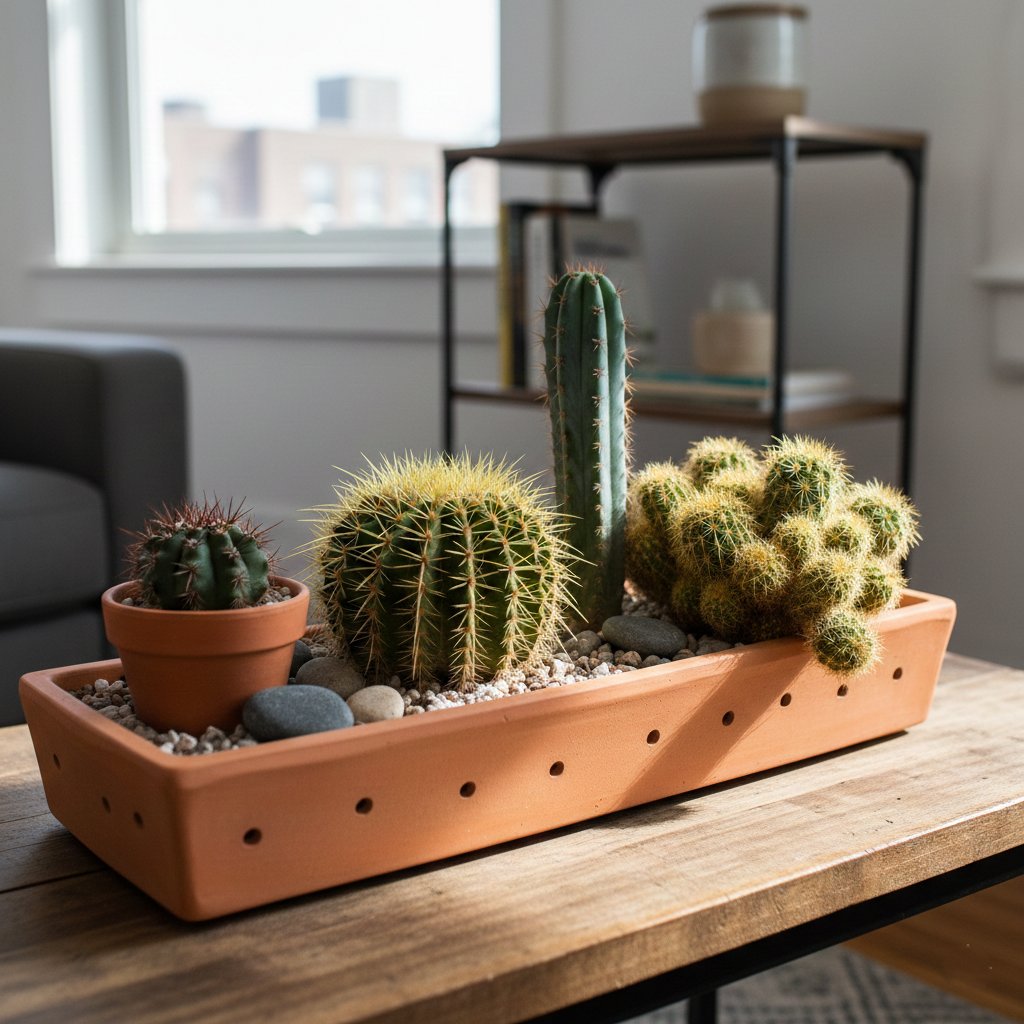
Choose cacti that stay compact and grow slowly, such as Mammillaria, Rebutia, or Echinopsis. These fit well on narrow shelves or small tables. For very tight areas, miniature cacti in 4-inch pots provide detail without taking up much space.
Check each plant’s light needs before grouping them. Most cacti need bright, direct light, but some, like Gymnocalycium, tolerate lower light levels. Use containers with drainage holes to prevent root rot.
Mix colors and shapes to add interest. Round cacti contrast nicely with column-shaped ones. You can use a simple chart to compare options:
| Shape | Example Species | Notes |
|---|---|---|
| Round | Echinocactus grusonii | Great focal plant |
| Column | Cereus peruvianus | Adds height |
| Cluster | Mammillaria elongata | Fills empty spaces |
Stick to 3–5 plants for a small centerpiece to keep it tidy and easy to manage.
Combining Cacti with Succulents
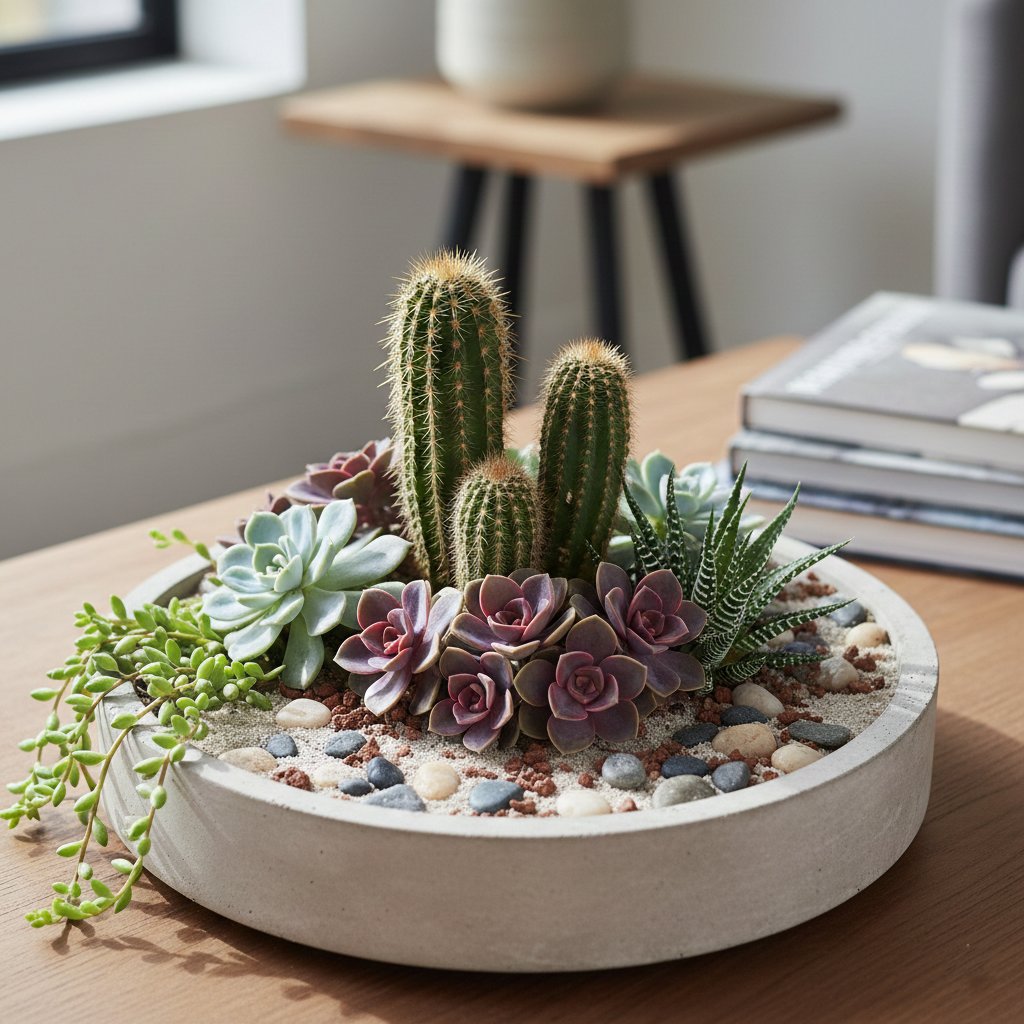
Pairing cacti with succulents helps soften sharp lines and adds variety in texture. Choose succulent plants with similar water and light needs, such as Echeveria, Sedum, or Haworthia. These plants thrive together in a gritty, well-draining soil mix and on a sparse watering schedule.
Place taller cacti near the center and ground-hugging succulents around the edges. You can fill gaps with decorative gravel, sand, or small stones to create a clean finish.
Keep balance in color. For example, the deep green of a cactus works well with the pale blue of Echeveria leaves or the purple tones of Graptopetalum. This contrast makes the centerpiece look layered without clutter. You can group plants in threes or fives for a natural look that feels cohesive.
Creating a Balanced Cactus Collection
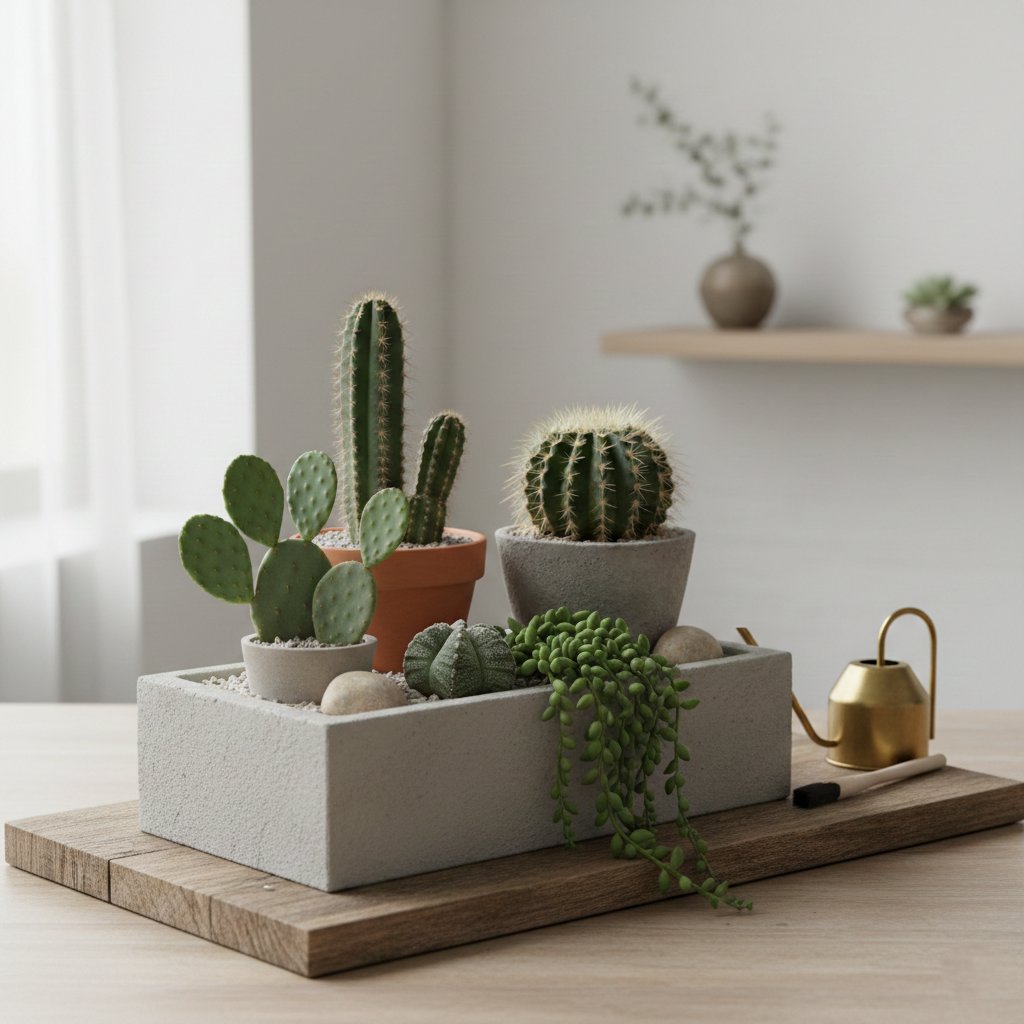
A balanced cactus collection balances height, shape, and spacing. Avoid crowding; each plant needs room for air circulation and growth. If you use a rectangular tray, place taller cacti toward the back and smaller types up front.
Vary the textures to keep the arrangement visually appealing. Smooth succulents next to spiny cacti create contrast. You can include a small, trailing plant like Sedum morganianum to soften hard lines along the container edges.
Balance also includes color rhythm. Repeat similar tones, like green or gray-green, throughout the centerpiece. This repetition ties the design together without making it look repetitive.
Use neutral pots or containers so the plants remain the main focus. Terracotta, concrete, or ceramic work well. Maintain easy access for watering and cleaning so the arrangement stays neat and healthy over time.
Frequently Asked Questions
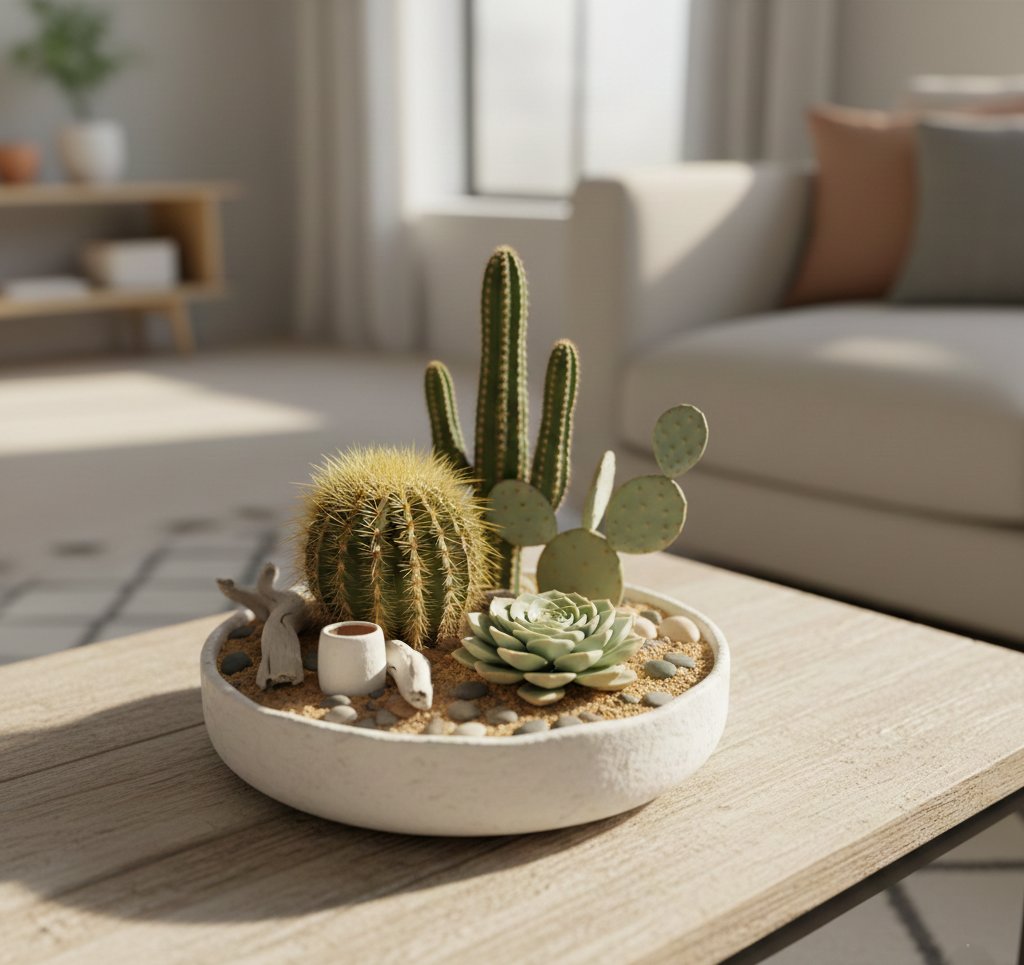
Cactus centerpieces work well in small spaces due to their compact size and unique natural texture. You can select compact cactus varieties, creative displays, and sturdy containers to keep your arrangement simple yet attractive.
How can I incorporate cacti into a small space as a centerpiece without overwhelming the area?
Use one or two small cacti arranged with decorative stones or sand to avoid clutter. Position them in clear glass bowls or shallow dishes to maintain visual lightness. Keeping the design minimal helps the plants stand out without making the space feel crowded.
What types of miniature cacti work best for restricted living areas looking for a desert-inspired theme?
Compact options like Mammillaria, Rebutia, and Echinopsis suit limited spaces. These small-growing types thrive indoors and need little water. Their rounded forms and varied textures create a natural desert look without taking up much room.
What are some creative ways to display cacti as a table centerpiece for small dining areas?
Combine several miniature cacti in a low glass terrarium for an open, airy look. Arrange them in a narrow wooden or ceramic tray with pebbles or sand for contrast. You can also display single potted cacti in matching containers along the center of a small table.
Could you suggest space-efficient container options for showcasing cacti in a limited space environment?
Choose shallow bowls, small terracotta pots, or square glass planters to keep the arrangement compact. Hanging planters or wall-mounted containers can also save surface space. Make sure the container includes drainage holes to protect roots.
What are the best practices for maintaining a cactus centerpiece to ensure it remains a visual focal point in a small space?
Place your cactus near a bright window with direct sunlight. Water sparingly, only when the soil is dry. Clean the container occasionally and remove dust from the cactus surface to preserve its healthy appearance.
How do I choose the right cactus and accessories for a centerpiece that complements a small room’s aesthetics?
Match cactus shapes and pot colors to your room’s style. For modern spaces, use simple neutral containers. For rustic or cozy rooms, pick clay or textured pots with natural pebble accents. Select cacti with forms that echo the lines and tones in your décor.