
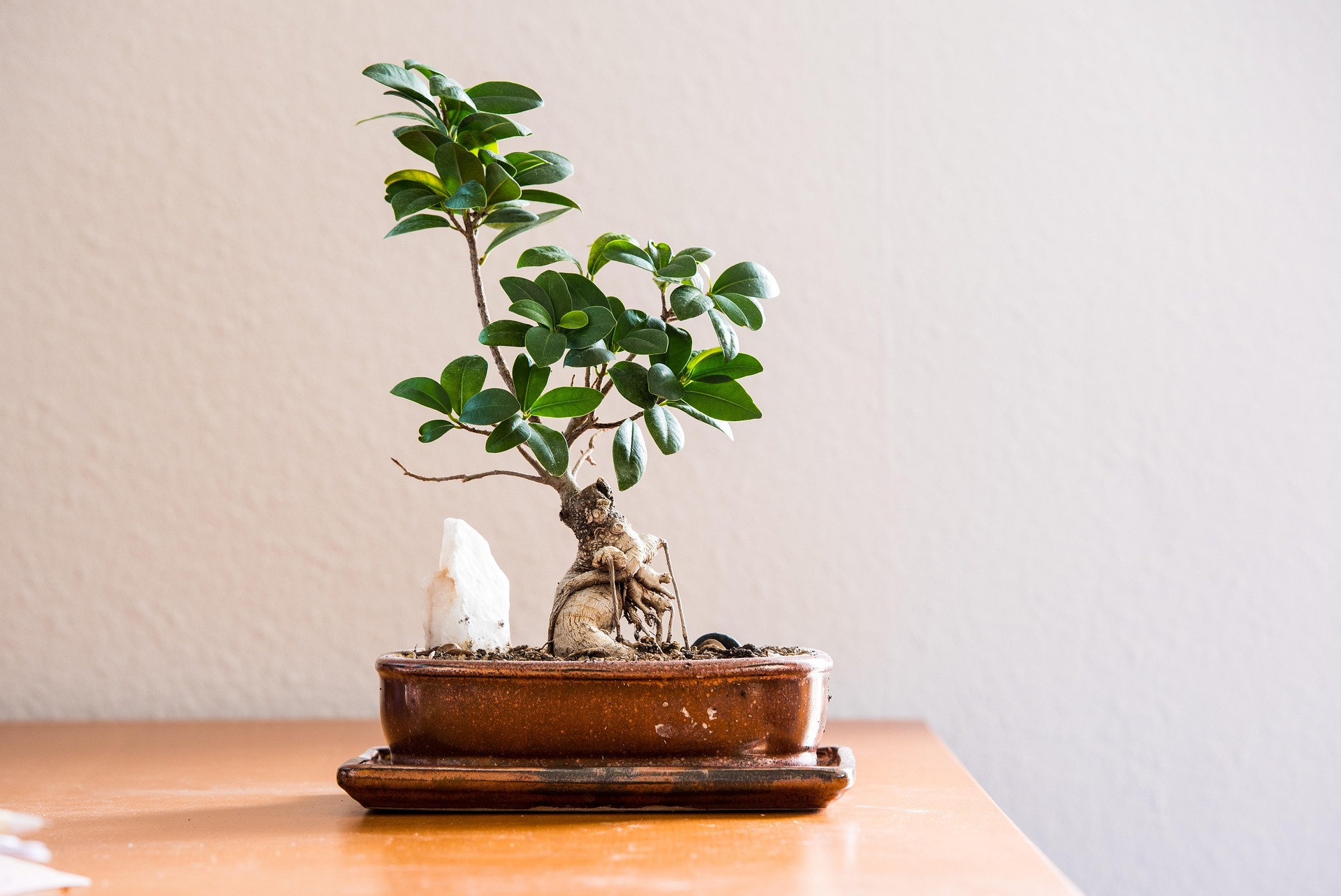
Ficus Bonsai Care
You can grow a healthy ficus bonsai when you give it bright, indirect light, steady watering, warm temperatures, and regular pruning. This hardy tree adapts well to indoor spaces, which makes it a strong choice if you want a bonsai that forgives small mistakes.
To care for a ficus bonsai, place it in bright, indirect light, water when the top soil feels dry, keep it warm and slightly humid, and prune often to control its shape and size. When you follow these basics, your tree stays compact, green, and balanced.
As you learn how to shape, feed, and repot your ficus, you gain more control over its form and health. With the right care, you keep your bonsai strong and attractive all year.
Key Takeaways
- Give your ficus bright light, proper watering, and warm conditions to keep it healthy.
- Prune and shape it often to maintain size and structure.
- Monitor soil, humidity, and pests to support long-term growth.
Fundamentals of Ficus Bonsai
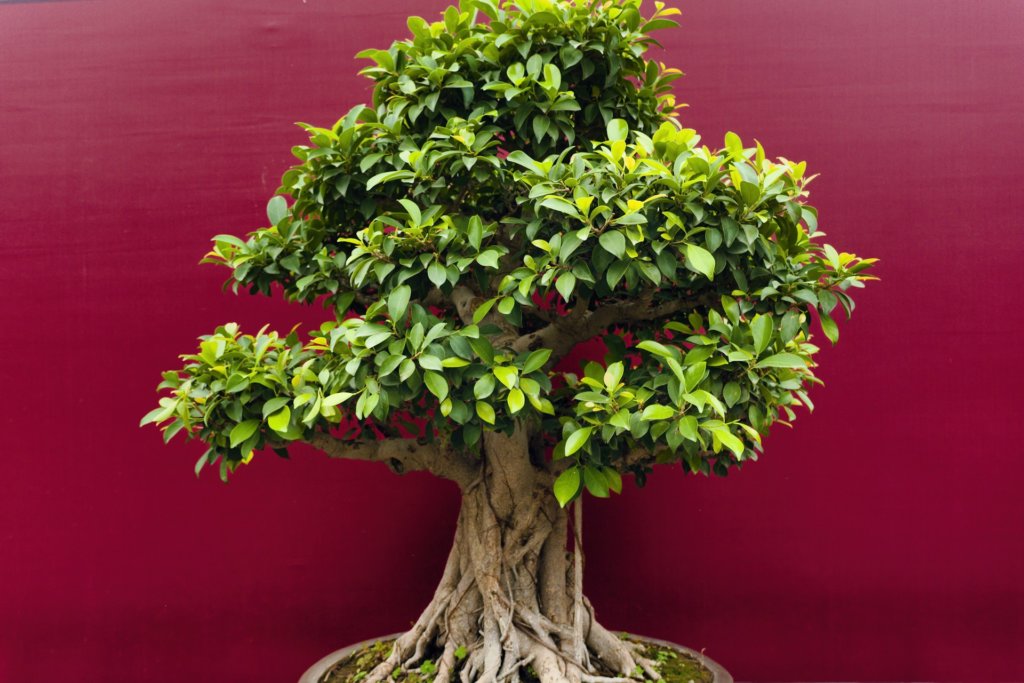
Ficus bonsai trees are popular because they adapt well to indoor life and respond well to pruning. You will work with hardy species that grow fast, form strong roots, and tolerate small mistakes.
Ficus Bonsai Overview
Ficus bonsai come from the Moraceae family, a group of tropical trees and shrubs. In nature, many ficus species grow large with wide canopies and aerial roots. When you train them as bonsai, you shape these same traits into a small, controlled form.
You will notice thick trunks, smooth gray bark, and glossy green leaves on most varieties. Many develop aerial roots that hang from branches and thicken over time. This feature gives styles like the Chinese banyan look.
Ficus is a top choice for indoor growing because it thrives in stable room temperatures. However, while it is more resilient than other species, it still prefers high humidity to maintain its health. It prefers bright, indirect light but can tolerate moderate light. If you keep temperatures above 60°F (15°C), your ficus bonsai will stay active year-round.
Popular Ficus Species for Bonsai
Several ficus species dominate the bonsai trade. Each one offers small differences in leaf size, growth habit, and appearance.
- Ficus retusa – Frequently confused with microcarpa. It has oval leaves and a thick trunk. Many stores sell it under different names.
- Ficus microcarpa – The true Chinese Banyan. Very common and often confused with retusa. It forms strong aerial roots and responds well to pruning.
- Ficus ginseng – A cultivar of F. microcarpa featuring a thick, bulbous root base. It is popular in malls and garden centers.
- Ficus benjamina – Also called weeping fig. It has thinner branches and a graceful, drooping shape.
- Ficus ‘Golden Gate’ – A cultivar of Ficus microcarpa known for compact growth and smaller leaves.
Most indoor bonsai sold to beginners are microcarpa types because they handle pruning and shaping with fewer problems.
Benefits for Beginners
You can start with ficus bonsai if you are new to bonsai care. These trees forgive missed waterings better than many temperate species. They also recover well after pruning.
Ficus species grow quickly in warm conditions. This growth lets you practice trimming, wiring, and shaping without waiting years to see change. If you make a mistake, new shoots often replace lost growth.
As an indoor bonsai, ficus adapts to stable home temperatures. It does not require winter dormancy like juniper or maple. This makes it easier to manage if you do not have outdoor space.
You also gain flexibility in design. Strong roots and thick trunks help you create bold shapes, exposed root styles, and banyan forms with confidence.
Essential Ficus Bonsai Care
You keep your ficus bonsai healthy by giving it strong light, careful watering, fast-draining soil, and steady feeding. When you control these basics, your bonsai ficus grows dense leaves, strong roots, and balanced shape.
Lighting and Placement Needs
Place your ficus bonsai in bright, indirect light for most of the day. A south- or west-facing window works well if you filter harsh afternoon sun with a sheer curtain.
Ficus bonsai trees tolerate lower light, but growth slows and leaves may drop. If natural light is weak, use a grow light for 12–14 hours each day to support steady growth.
Keep your bonsai ficus indoors when temperatures drop below 60°F (15°C). In warm months, you can move it outside to a shaded patio or balcony. Avoid sudden changes in light or temperature, since this often causes leaf drop.
Rotate the tree every week. This helps all sides receive even light and prevents uneven growth.
Watering Techniques and Humidity
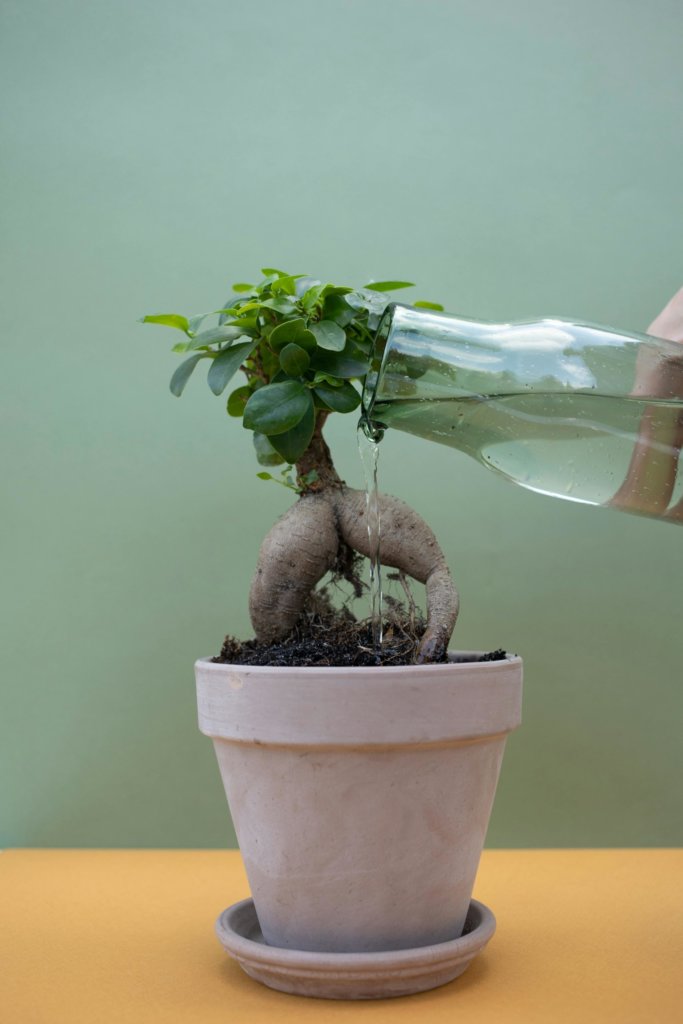
Watering is one of the most important parts of ficus bonsai care. Check the top inch of soil daily with your finger.
Water thoroughly when the surface feels slightly dry. Pour water over the soil until it drains from the bottom holes. Do not let the tree sit in standing water.
Ficus trees prefer slightly moist soil, but they do not tolerate soggy roots. Overwatering leads to yellow leaves and root rot.
Indoor air is often dry, especially in winter. Increase humidity by:
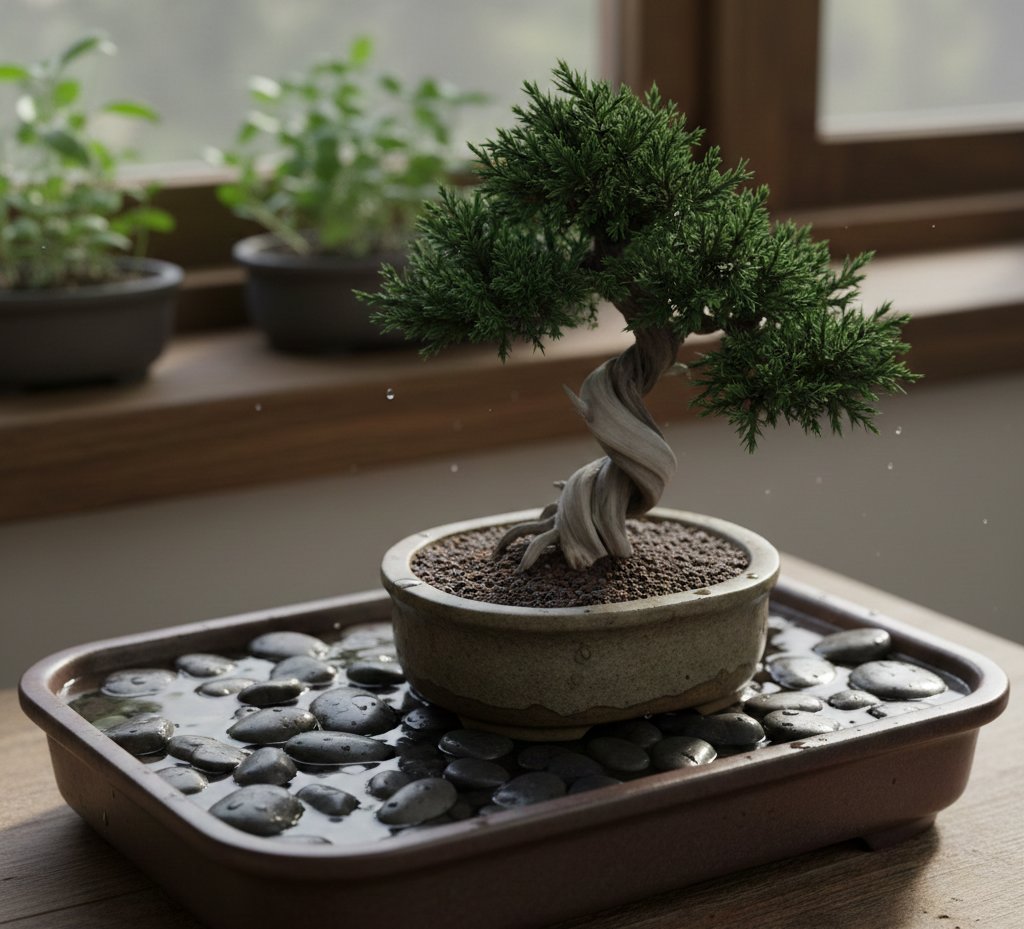
- Placing the pot on a humidity tray filled with water and pebbles
- Grouping plants together
- Misting lightly in the morning
Aim for moderate to high humidity. This supports healthy leaves and steady growth.
Ideal Soil and Repotting
Use a well-draining bonsai soil mix to protect the roots. Standard potting soil holds too much water and compacts over time.
A good bonsai soil mix often contains:
| Component | Purpose |
|---|---|
| Akadama or clay | Holds moisture and nutrients |
| Pumice | Improves drainage and aeration |
| Lava rock | Adds structure and airflow |
This blend allows water to pass through while keeping enough moisture for the roots.
Repot young ficus bonsai trees every 1–2 years. Older trees need repotting every 3-5 years. Repot in late spring or early summer when growth is active.
Trim back long roots during repotting, but avoid removing more than one-third of the root mass. Fresh soil and root pruning support strong, compact growth.
Fertilizing Your Ficus Bonsai
Regular feeding supports steady leaf and root growth. During the growing season, apply a balanced bonsai fertilizer every two weeks.
Use a liquid fertilizer at half strength to avoid burning the roots. You can also use slow-release pellets if you prefer fewer applications.
In fall and winter, reduce feeding to once a month if the tree continues to grow indoors. If growth slows due to lower light, fertilize less often.
Never fertilize a dry tree. Water first, then apply fertilizer to moist soil. This protects the roots and improves nutrient uptake.
Consistent feeding plays a key role in strong ficus bonsai tree care and helps your bonsai maintain dense foliage and healthy color.
Shaping, Maintenance, and Health
You shape your ficus bonsai with careful pruning and wiring. You also guide aerial roots and watch for pests to keep the tree strong and balanced.
Pruning and Wiring Methods
Pruning controls size and keeps your ficus bonsai in proportion. Use sharp, clean scissors to trim new shoots back to 2–4 leaves once they grow 6–8 leaves.
Focus on removing:
- Long, straight shoots that break the tree’s outline
- Large leaves that block light
- Dead or crossing branches
Ficus species, including ginseng ficus, respond well to pruning. They often produce new buds from old wood. This makes shaping a ficus bonsai easier than many other species.
Use wiring to adjust branch position. Wrap aluminum wire at a 45-degree angle around the branch, then bend it slowly into place. Check the wire every few weeks. Ficus bark marks easily, especially on a ginseng ficus bonsai with thick, swollen roots.
Remove wire before it cuts into the bark. Most branches set in 6–8 weeks during active growth.
Encouraging Aerial Roots
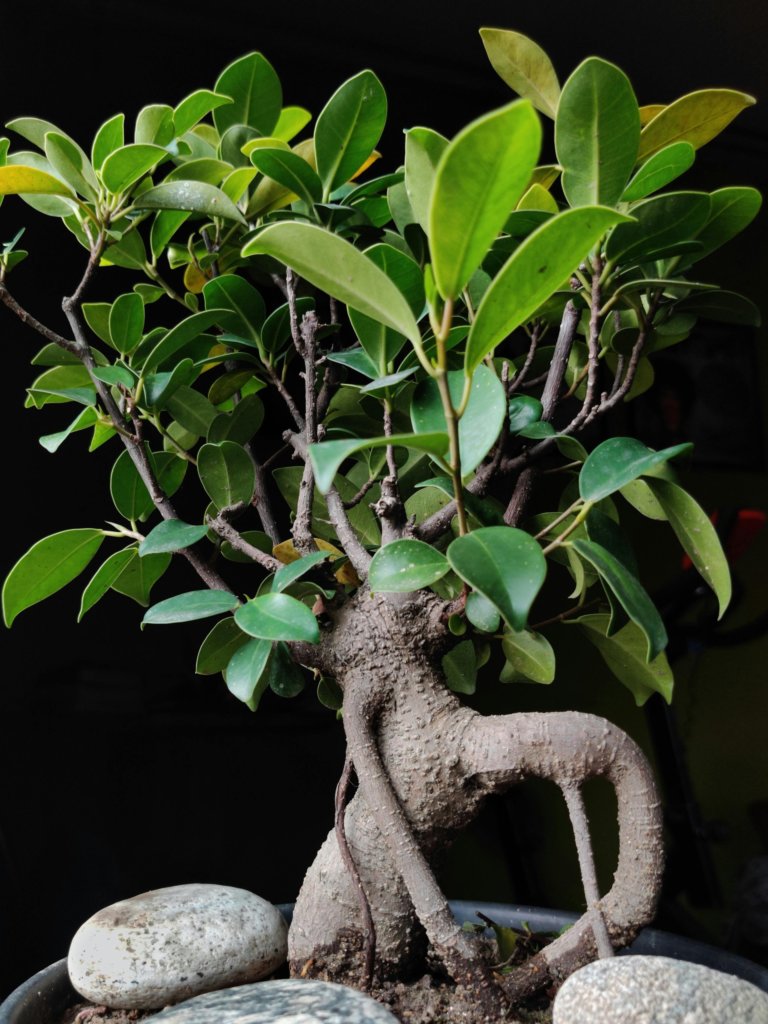
Ficus trees can grow aerial roots, which hang from branches and reach the soil. These roots add age and structure to your bonsai tree care plan.
To encourage them, raise humidity around the tree. You can:
- Mist the branches daily
- Place the tree on a humidity tray
- Grow it in a warm room above 70°F (21°C)
Outdoor summer growth often increases aerial root formation. In dry indoor air, roots may stop growing before they reach the soil.
Once a root touches soil, it thickens and becomes woody. You can guide young aerial roots with gentle positioning. Many growers highlight them in ginseng ficus bonsai designs to create a banyan-style look.
Do not force growth by cutting the bark. Healthy growth and steady humidity work best.
Common Pests and Problems
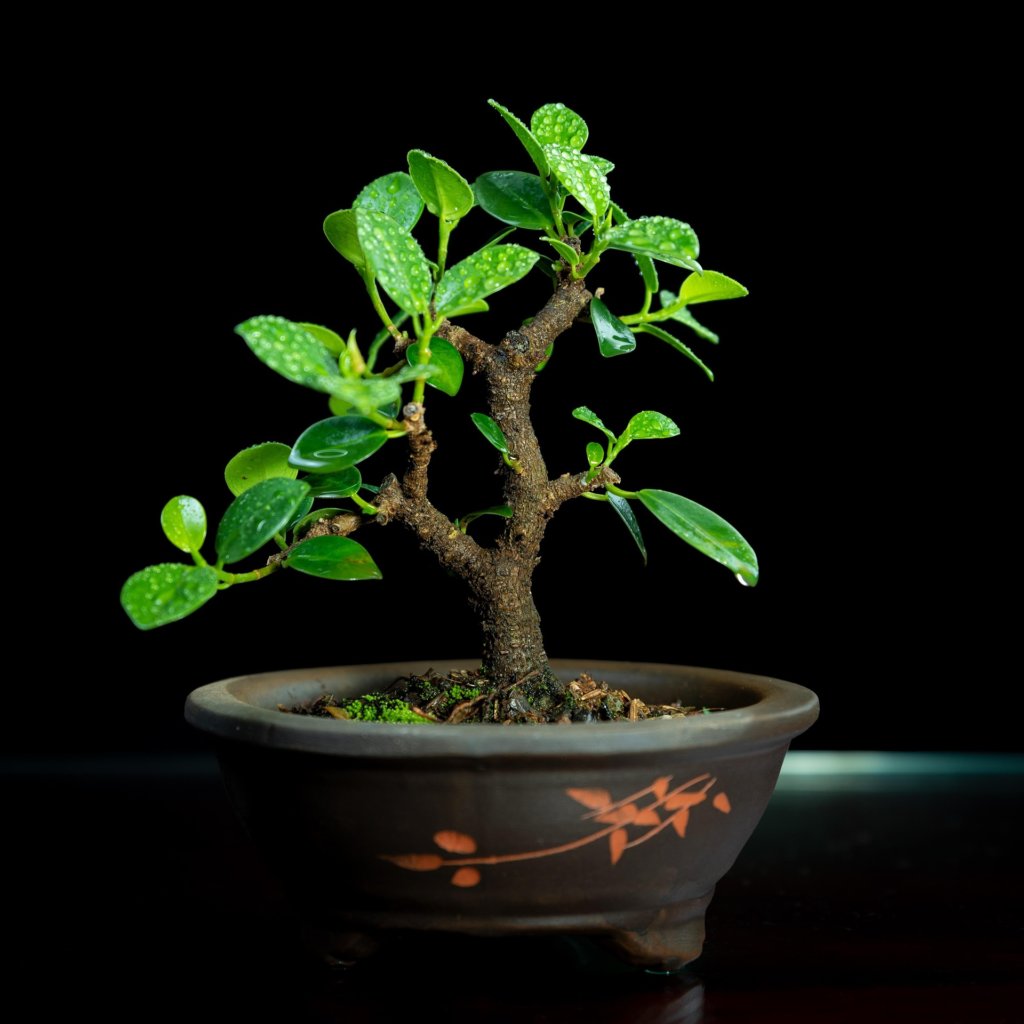
Ficus bonsai are hardy, but they still face common indoor pests. Check leaves and stems each week.
Watch for:
- Spider mites – fine webbing and pale leaves
- Scale insects – small brown bumps on stems
- Mealybugs – white cotton-like clusters
Wipe pests off with a damp cloth or use insecticidal soap. Isolate infected trees to prevent spread.
Yellow leaves often signal overwatering. Ficus need well-draining soil and steady moisture, not soggy roots. Let the top layer of soil dry slightly before watering again.
Sudden leaf drop can happen after changes in light or temperature. Ginseng ficus trees tolerate lower light than many species, but they still need bright, indirect light to stay healthy.
Propagation and Advanced Techniques
You can expand your collection and refine your skills by learning how to propagate and style a bonsai ficus with care. Strong technique helps you grow healthy roots, shape clean lines, and choose quality trees from the start.
Propagation Methods
Ficus bonsai trees root easily, which makes them good for propagation. You can use cuttings, air layering, or grafting, but most growers start with cuttings.
Stem cuttings work well in warm months.
- Cut a healthy shoot 4–6 inches long.
- Remove lower leaves.
- Place it in moist, well-draining soil.
Keep the soil slightly damp and the air warm. Roots often form within a few weeks.
Air layering creates a larger, more mature bonsai ficus faster. Remove a thin ring of bark from a branch. Wrap the area with moist sphagnum moss and cover it with plastic. Once roots form, cut below the new roots and pot the tree.
Use grafting only if you want to add branches or improve root spread. It requires steady hands and close aftercare.
Styles and Display Options
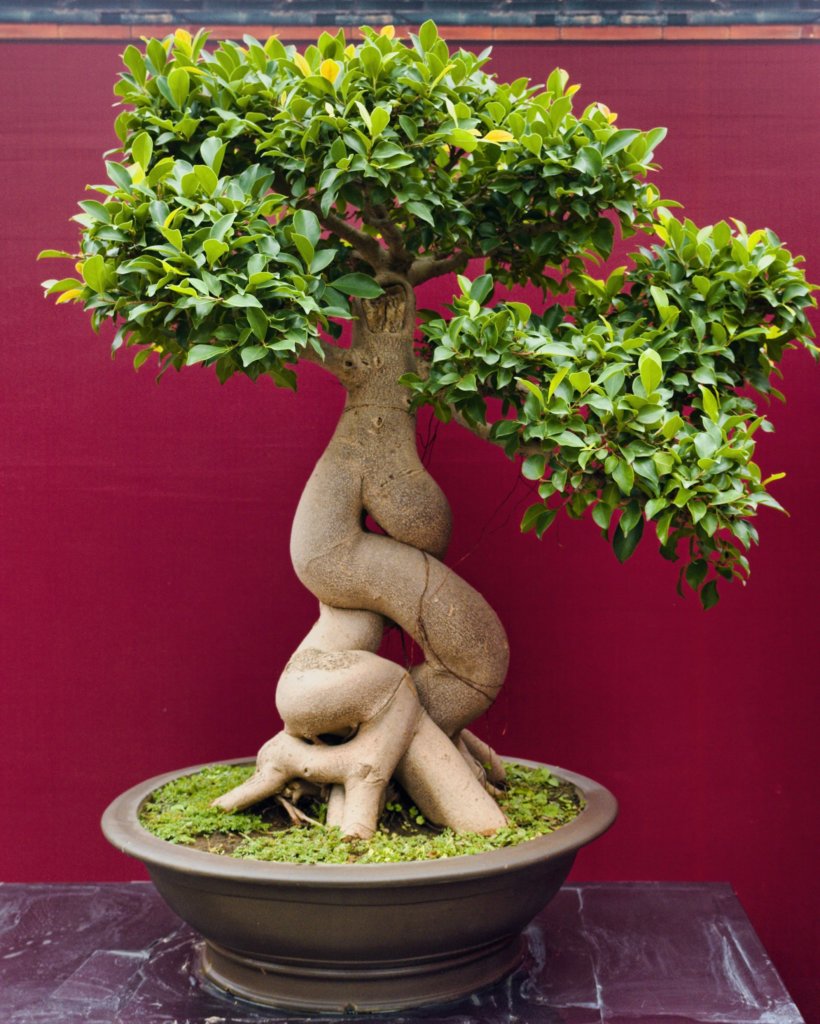
You can train a ficus bonsai tree into many classic bonsai styles. Ficus wood bends well when young, which makes shaping easier.
Common bonsai styles for ficus include:
- Formal Upright (Chokkan) – straight trunk, balanced branches
- Informal Upright (Moyogi) – gentle curves in the trunk
- Slanting (Shakan) – trunk leans to one side
- Banyan style – aerial roots form multiple trunk-like supports
Prune new growth often to keep the shape tight. Use aluminum wire to guide branches, but check it every few weeks. Ficus bark marks easily if the wire cuts in.
For display, choose a shallow pot that matches the tree’s size and style. A simple glazed pot works well for indoor bonsai ficus. Place your tree where it gets bright, indirect light and steady warmth.
Selecting and Acquiring Ficus Bonsai
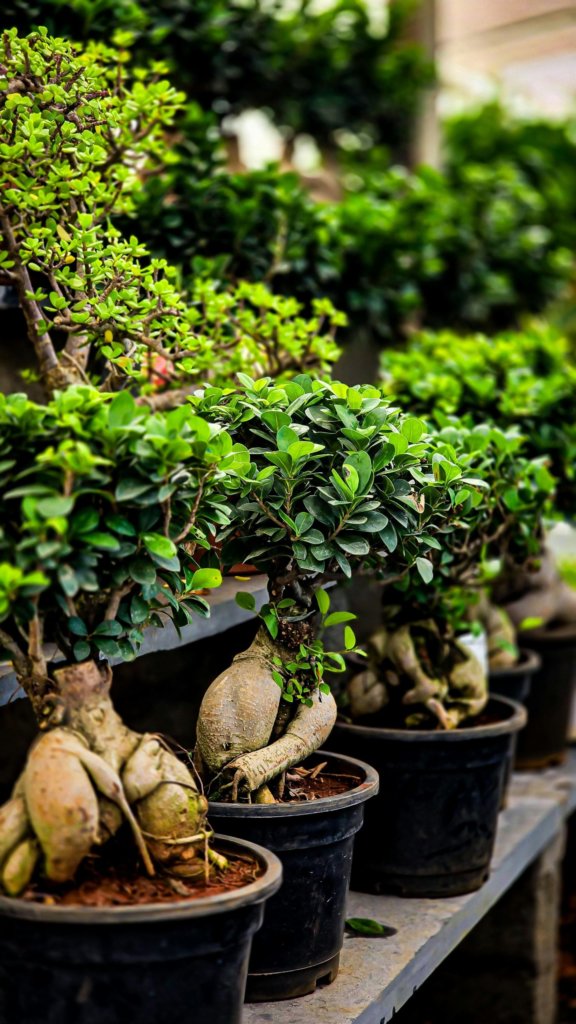
When you buy a ficus bonsai tree, inspect the roots, trunk, and leaves closely. Healthy leaves look firm and evenly colored. Avoid trees with yellowing leaves or soggy soil.
Check the trunk for taper and movement. A thicker base that narrows upward gives a stronger look. Surface roots should spread evenly from the trunk.
You can start with:
- A nursery plant and train it yourself
- A pre-bonsai ficus with early shaping
- A finished bonsai ficus from a trusted grower
Choose a tree that fits your skill level. If you are new, start with a healthy, simple shape. Strong structure and good root health matter more than complex styling.
Frequently Asked Questions
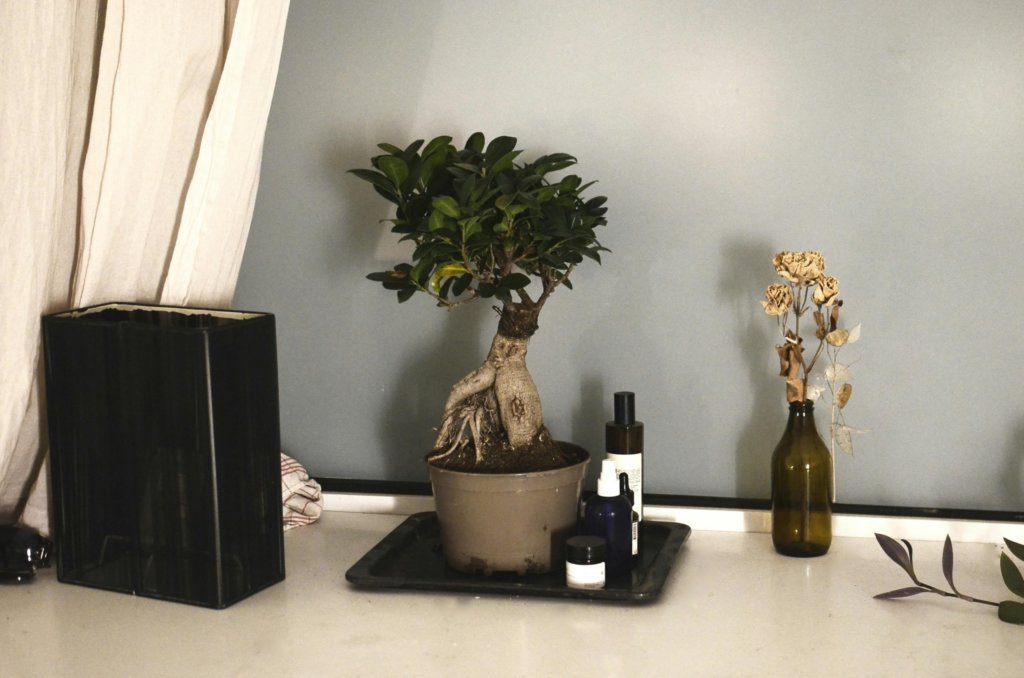
Proper watering, strong light, timely pruning, indoor placement, well-draining soil, and fast action against pests all keep your Ficus bonsai healthy. Clear routines and close observation help you prevent most common problems.
How often should I water my Ficus bonsai?
Water your Ficus when the soil surface feels slightly dry to the touch. Avoid waiting for the soil to dry deep down, as bonsai pots lose moisture quickly.
Frequency varies by light and heat, so check the soil daily rather than following a fixed schedule. In winter, water less often as growth slows.
Always water thoroughly until it flows from the drainage holes, and never let the pot sit in standing water.
What lighting conditions are best for a Ficus bonsai?
Place your Ficus bonsai in bright, indirect light for most of the day. A south- or west-facing window with filtered sunlight works well.
Ficus trees tolerate lower light, but growth may slow and leaves may drop. If natural light is limited, use a grow light for 10 to 12 hours daily.
Keep the tree away from cold drafts and sudden temperature changes. Stable light and warmth support steady growth.
When is the right time to prune and shape a Ficus bonsai?
Prune your Ficus bonsai during active growth in spring and summer. This is when the tree recovers fastest.
Trim back new shoots after they grow 6 to 8 leaves. Cut them back to 2 or 3 leaves to maintain shape.
You can remove dead or damaged branches at any time. Use clean, sharp tools to reduce stress and lower the risk of infection.
Can a Ficus bonsai be kept indoors all year round?
You can keep a Ficus bonsai indoors all year. This species adapts well to indoor conditions.
Keep room temperatures between 60°F and 75°F. Avoid placing the tree near heaters, air conditioners, or cold windows.
If outdoor temperatures stay above 60°F at night, you may move it outside in summer. Bring it back indoors before temperatures drop.
What type of soil mixture is ideal for a Ficus bonsai?
Use a well-draining bonsai soil mix that allows air to reach the roots. A blend of akadama, pumice, and lava rock works well.
You can also use a commercial bonsai mix designed for tropical trees. Avoid regular garden soil, which holds too much water.
Good drainage prevents root rot. Healthy roots support strong leaf and branch growth.
How do I identify and treat common diseases in a Ficus bonsai?
Watch for yellow leaves, black spots, sticky residue, or webbing. These signs often point to overwatering, fungal issues, spider mites, or scale insects.
If leaves turn yellow and soil stays wet, reduce watering and check drainage. Trim affected roots if you find rot during repotting.
For pests, wipe leaves with a damp cloth and apply insecticidal soap as needed. Isolate the tree until the problem clears to prevent spread.