Japanese Maple Bonsai Care
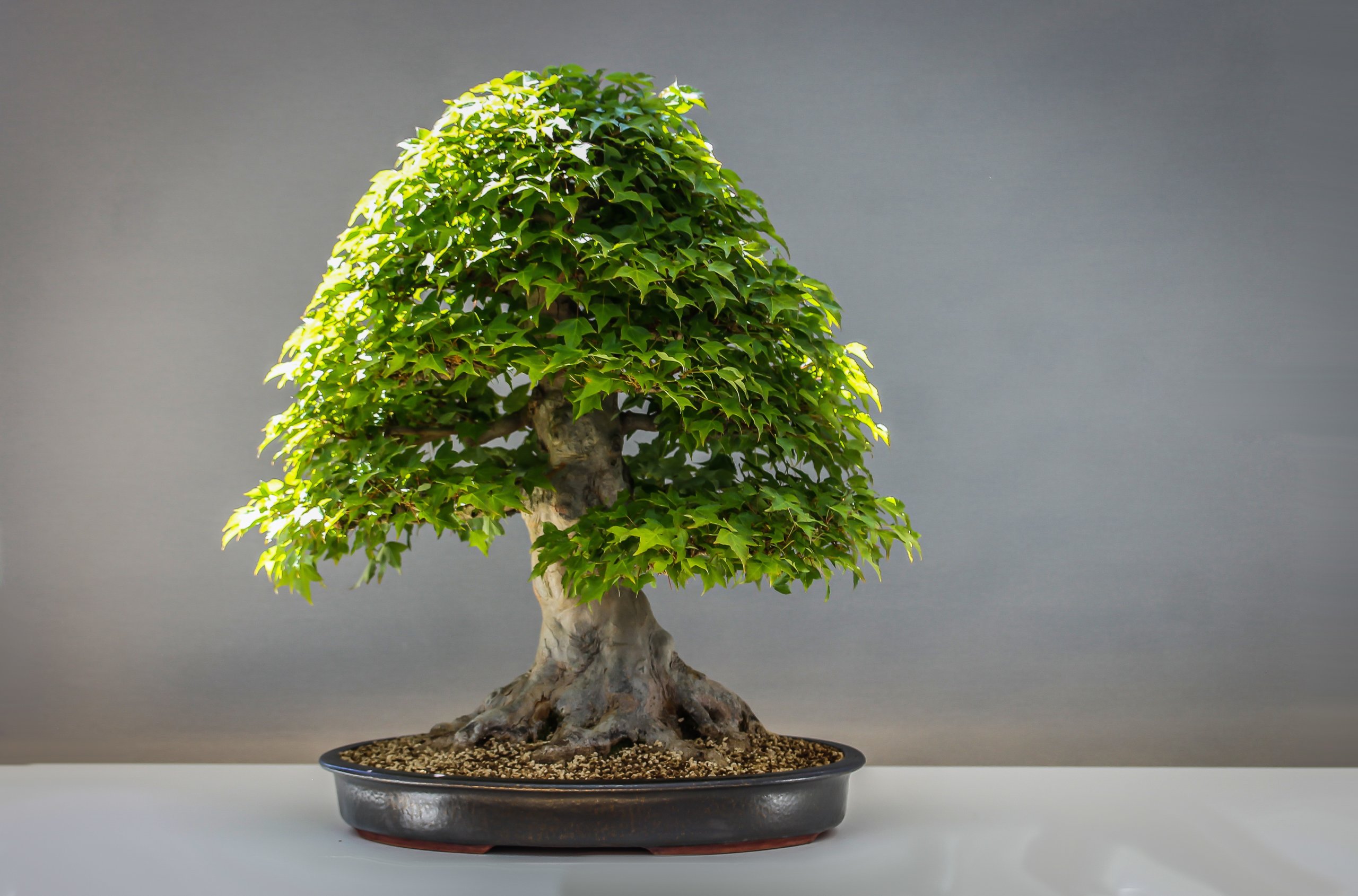
Japanese maple bonsai care takes focus and steady attention, but you can manage it with the right approach. These trees reward you with bright leaves, fine branches, and strong seasonal change when you meet their basic needs. You control their growth through careful watering, light, soil, and timing.
To care for a Japanese maple bonsai, you must provide consistent moisture, well-draining soil, balanced sunlight, careful pruning, and protection during extreme heat and winter cold. When you keep these factors in balance, your tree stays healthy and responds well to shaping and training.
As you move forward, you will learn how to manage daily care, shape and prune with purpose, feed and repot at the right time, and choose strong cultivars. You will also see how to prevent common health problems so your bonsai stays stable year after year.
Essential Japanese Maple Bonsai Care
You keep your Japanese maple bonsai healthy by giving it the right light, steady moisture, and fast drainage. Acer palmatum responds quickly to stress, so small care changes can affect leaf color, growth, and root health.
Placement and Light Requirements
Place your Japanese maple bonsai where it gets morning sun and afternoon shade. Morning sun supports strong growth and bright leaf color, while harsh afternoon sun can scorch delicate leaves.
In hot climates, protect the tree from direct midday sun. Too much heat dries the shallow roots and causes leaf burn. In cooler regions, you can allow more sun, but watch for crispy leaf edges.
During summer heat waves, move the bonsai to a spot with bright, indirect sunlight. Good air flow also helps prevent fungal problems.
In winter, most bonsai species like Acer palmatum need dormancy. Keep your tree outdoors in a cold but sheltered spot. Protect the roots from deep freezes by placing the pot in mulch or an unheated shed.
Avoid growing your Japanese maple indoors for long periods. Indoor air is too dry and light is too weak for healthy growth.
Watering Techniques
Watering Japanese maple bonsai requires close attention. The soil should stay slightly moist but never soggy.
Check the soil daily during the growing season. During peak summer heat, you will likely need to water multiple times. On scorching days, Japanese maple care demands frequent hydration if the mix is highly porous.
Use this simple method:
- Water slowly from above
- Soak the entire soil surface
- Stop only when water runs from the drainage holes
This method supports even bonsai watering and prevents dry pockets in the root ball.
Reduce watering in fall as growth slows. In winter, water only when the soil begins to dry. Overwatering in cold weather can cause root rot.
Avoid letting the soil dry out completely. Acer palmatum has fine roots that suffer quickly from drought stress.
Soil and Drainage Needs
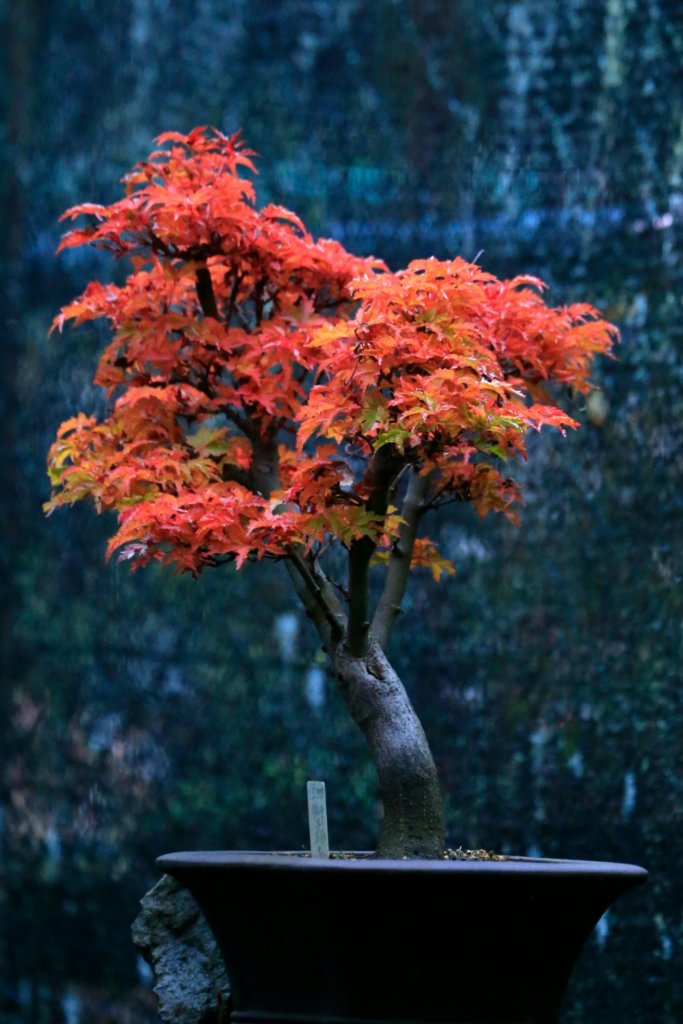
Japanese maple bonsai needs well-draining soil. Standard garden soil holds too much water and suffocates roots.
Use a proper bonsai soil mix made of granular materials. A common blend includes:
- Akadama for moisture control
- Pumice for root growth and aeration
- Lava rock for structure and drainage
This type of well-drained soil allows water to flow through while holding enough moisture for healthy roots.
Healthy bonsai soil supports strong roots, stable growth, and vibrant leaf color.
Pruning, Training, and Shaping
You shape a Japanese maple bonsai through careful pruning, steady training, and light wiring. Focus on timing, restraint, and the tree’s health to protect leaf color and fine branch structure.
Structural Pruning and Pinching
You use structural pruning to set the main trunk line and primary branches. Do this in late winter or very early spring, before strong growth begins. Remove crossing branches, heavy vertical shoots, and any branch that blocks light from reaching lower growth.
Make clean cuts with sharp tools. Seal larger wounds to reduce dieback.
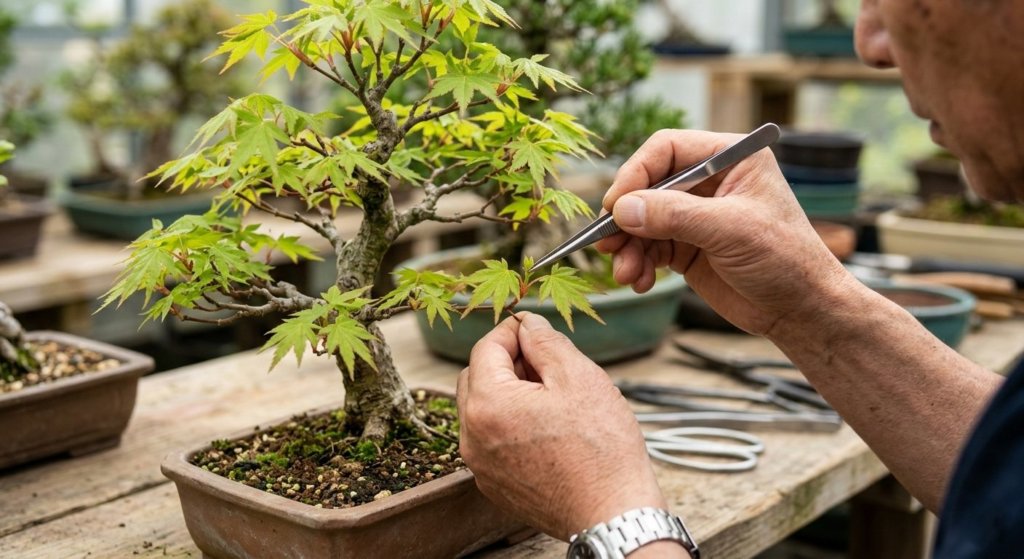
Shift to pinching and directional pruning once the spring flush begins. Use your fingers or tweezers to remove the center bud just as the first pair of leaves unfurls. This technique ensures short internodes and forces the tree to develop finer secondary branching.
Pinching helps control size and improves ramification. Avoid heavy pruning in mid-summer heat, as Japanese maple is sensitive compared to some other bonsai species.
Leaf Pruning and Defoliation
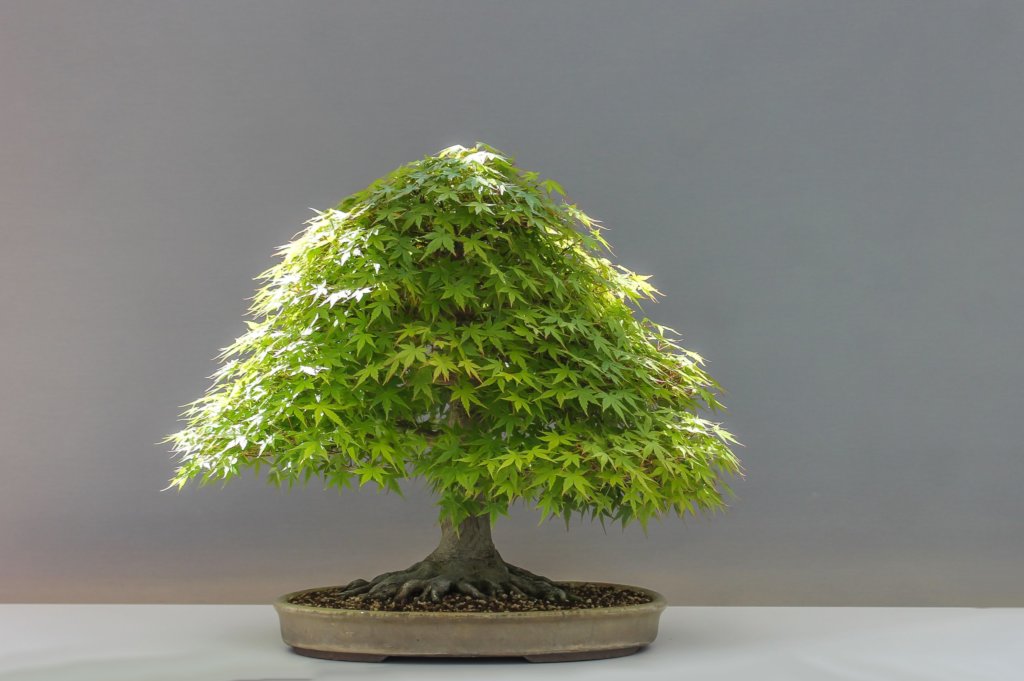
You use leaf pruning to reduce leaf size and improve light inside the canopy. This method supports better branching and more balanced growth.
For strong, healthy trees, apply partial leaf pruning in early summer. Remove the largest leaves and leave the smaller ones in place. This protects energy levels while still improving structure.
Full defoliation can reduce leaf size and boost fine twig growth. Only defoliate vigorous trees, and never do it on weak or newly repotted bonsai. Cut leaves at the stem and leave the petiole attached.
Expect a second flush of smaller leaves. Leaf color may shift slightly, especially in red cultivars, so monitor sun exposure to prevent scorch.
Wiring Methods
You use wiring to guide branch direction and refine shape. Japanese maple bark is thin and marks easily, so work with care.
Apply aluminum wire in early spring or mid-summer for the safest results. Wrap the wire at a 45-degree angle and avoid tight coils. Support the branch with one hand as you bend it slowly.
Check wired branches every 2–3 weeks during active growth. Remove the wire before it cuts into the bark.
For young shoots, you can also use clip-and-grow training instead of heavy wiring. This method reduces scarring and fits well with the natural growth pattern of this bonsai species.
Fertilizing and Repotting Practices
You support steady growth by feeding your tree at the right time and refreshing its root system on a set schedule. Careful fertilizing and timely repotting keep your Japanese maple bonsai compact, healthy, and balanced.
Fertilizer Selection and Application
Fertilizing Japanese maple bonsai keeps leaves strong and color bright during the growing season. Start feeding in early spring as buds open and continue until late summer. Stop in fall to let the tree prepare for dormancy.
Select a mild, balanced fertilizer, ideally a lower N-P-K like 5-5-5, to prevent excessive internode stretching on refined specimens. If your tree is young and still developing its trunk, choose a higher nitrogen formula in spring to support faster growth.
You can use organic bonsai fertilizer in pellet form or a diluted liquid fertilizer every two weeks. Organic options release nutrients slowly and lower the risk of root burn. Liquid fertilizer works faster but requires careful dosing.
Apply fertilizer to moist soil, never dry soil. Avoid feeding a weak or newly repotted tree for about four weeks.
Repotting and Root Pruning
Repotting refreshes the bonsai soil mix and prevents roots from circling inside the pot. Most Japanese maple bonsai need repotting every 1-2 years when young and every 2-3 years when mature.
Repot in early spring just before buds fully open. This timing reduces stress and supports quick root recovery.
Remove the tree from its pot and gently comb out the roots. Trim back about one-third of the root mass, focusing on thick or circling roots. This root pruning encourages fine feeder roots that absorb water and nutrients more efficiently.
Use a well-draining bonsai soil mix with components like akadama, pumice, and lava rock. After repotting, water thoroughly and keep the tree in light shade for two to three weeks. Avoid fertilizing during this recovery period.
Cultivar Selection, Propagation, and Health Management
The variety you choose shapes your tree’s size, leaf color, and growth habit. Proper propagation and steady health care protect your bonsai from stress, pests, and weather damage.
Japanese Maple Varieties for Bonsai
You can grow many Japanese maple varieties as bonsai, but some perform better in small pots. These trees generally derive from Acer palmatum and Acer amoenum, often referred to as “momiji.”
Popular choices include:
- Acer palmatum ‘Deshojo’ (Deshojo): Bright red spring leaves and strong autumn color. Best for growers who can protect delicate leaves from strong sun.
- Acer palmatum ‘Seigen’ (Seigen): Soft red spring growth and fine branching. It stays compact with careful pruning.
- Kiyohime: A true dwarf Japanese maple with small leaves and short internodes. Good for shohin bonsai.
- Shishigashira: Curled leaves and dense growth. It tolerates sun better than many types.
- Arakawa: Rough bark that adds age early, even on younger trees.
Choose a cultivar that fits your climate. Red-leaf types often need more shade to prevent leaf scorch. Strong green types usually handle sun and wind better.
Propagation Methods
You can start new trees from cuttings, air layering, or seeds. Each method has clear steps and limits.
Softwood cuttings work best in late spring to early summer. Take fresh shoots, trim the leaves, and place them in moist soil. Keep humidity high and light indirect until roots form.
Air layering gives faster results for thicker trunks. In early summer, remove a ring of bark from a branch. Wrap the area with damp sphagnum moss and cover it with plastic. Roots often form within a few months, and you can separate the new plant.
Seeds grow true to species but not always to named cultivars like Deshojo or Seigen. If you want a specific variety, use cuttings or air layering.
Pests, Diseases, and Seasonal Protection
Japanese maple bonsai react quickly to stress. Poor watering, strong sun, or weak airflow can lead to pests and diseases.
Watch for:
- Aphids on new growth
- Scale insects on stems
- Powdery mildew on leaves
- Verticillium wilt, which causes sudden branch dieback
Treat insects early with insecticidal soap, as oil-based sprays can burn maple foliage. Improve airflow to reduce fungal issues. Remove infected leaves at once.
Prevent leaf scorch by giving afternoon shade when temperatures rise above 85°F (30°C). In winter, provide winter protection by shielding roots from deep frost. Place the pot in an unheated shed or bury it in mulch. Healthy trees reward you with strong spring growth and vivid autumn color.
Frequently Asked Questions
You need to manage water, soil, light, pruning, and pest control with care. Each factor affects leaf color, growth rate, and long-term health.
How often should I water my Japanese maple bonsai?
Water your Japanese maple bonsai when the top layer of soil feels slightly dry. In spring and summer, you may need to water multiple times a day, especially during warm or windy weather.
During cooler months, water less often. Always check the soil first instead of following a fixed schedule.
Water thoroughly until it drains from the bottom of the pot. Do not let the soil stay soggy, as this can lead to root rot.
What is the best soil mixture for growing a healthy Japanese maple bonsai?
Use a fast-draining soil mix that still holds some moisture. A common blend includes akadama, pumice, and lava rock in balanced parts.
The soil should allow air to reach the roots. Good drainage helps prevent root rot and supports steady growth.
Avoid regular garden soil. It compacts easily and holds too much water in a shallow bonsai pot.
What are the ideal light conditions for a Japanese maple bonsai?
Place your bonsai outdoors in a bright location with morning sun and afternoon shade. Japanese maples prefer partial shade, especially in hot climates.
When temperatures rise above 85°F (30°C), protect the tree from strong afternoon sun. Too much direct sun can scorch the leaves.
Ensure good air flow around the tree. Fresh air helps reduce stress and supports healthy growth.
When is the proper time to prune a Japanese maple bonsai?
Prune structural branches in late winter while the tree is still dormant. This timing reduces stress and limits sap loss.
Trim new shoots during the growing season to maintain shape. Cut back to one or two pairs of leaves to control size.
Remove dead or damaged branches at any time. Always use clean, sharp tools to prevent disease.
How do I protect my Japanese maple bonsai from pests and diseases?
Inspect your tree often for aphids, spider mites, and scale insects. Check the undersides of leaves and along stems.
Remove pests by hand or use insecticidal soap if needed. Treat early to prevent spread.
Prevent fungal issues by avoiding overwatering and ensuring good air flow. Clean fallen leaves from the soil surface to reduce disease risk.
Can a Japanese maple bonsai be kept indoors and, if so, what are the specific care considerations?
Japanese maple bonsai grow best outdoors. They need seasonal changes, including winter dormancy.
If moving the tree inside temporarily, position it in a south-facing window with direct sunlight. Ensure high humidity levels and keep it far from dehydrating heat vents.
Return the tree outdoors as soon as conditions allow. Long-term indoor growth often weakens the tree due to low light and lack of seasonal change.