Maple Bonsai Care
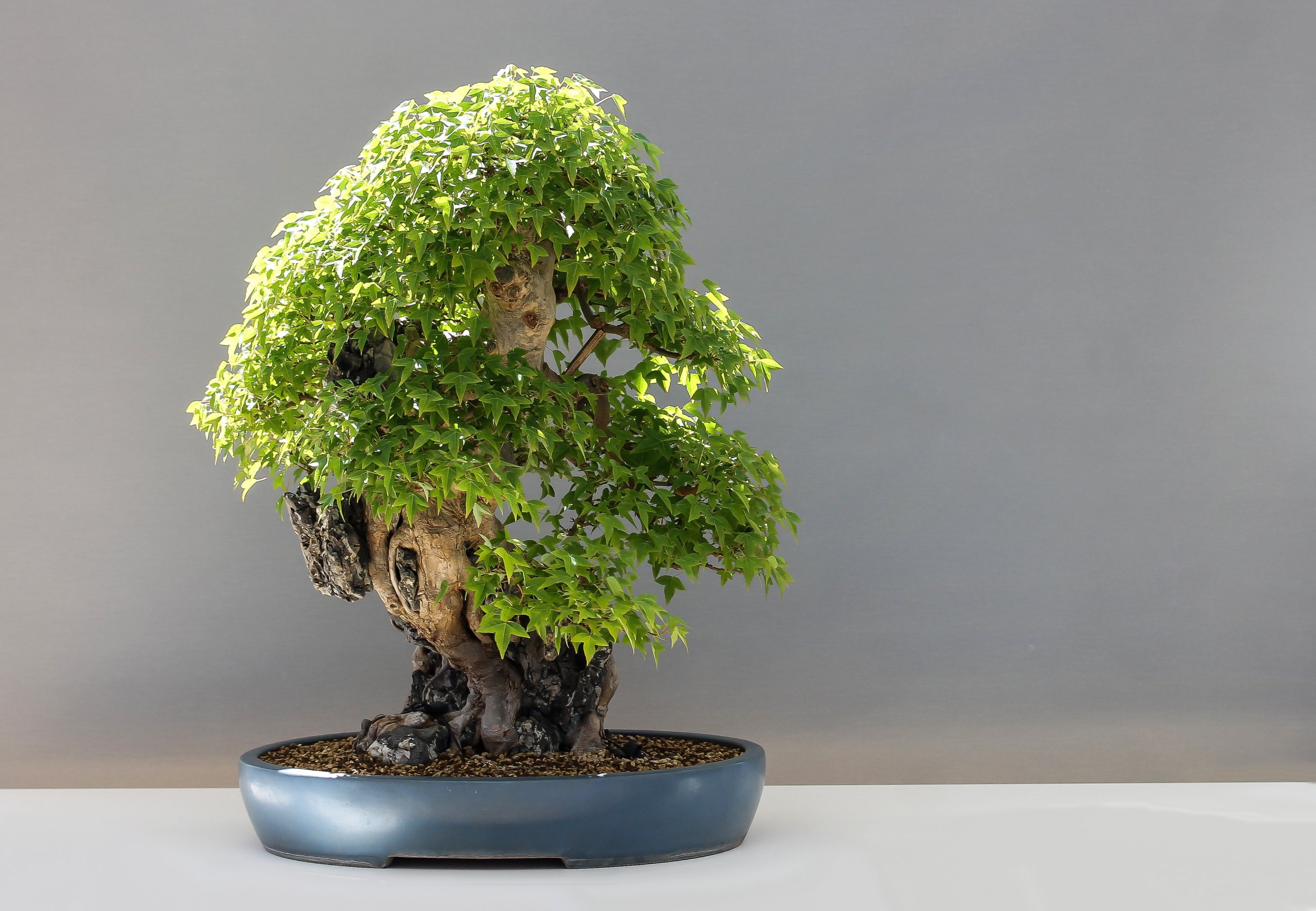
Maple bonsai care takes focus and steady effort, but you can master it with the right approach. These trees reward you with fine leaves, strong branch structure, and bright seasonal color. When you understand what your maple bonsai needs each day and each season, you keep it healthy and balanced.
You care for a maple bonsai by giving it proper light, steady watering, and careful pruning. Because maples have fast-growing roots, repotting is essential to prevent them from becoming pot-bound. You must also adjust your care as seasons change, since heat, frost, pests, and disease can stress the tree.
As you shape and train your bonsai, you guide its size and form without harming its strength. With clear care principles and smart seasonal planning, you ensure your maple bonsai develops healthy growth, a strong root base, and good long-term health.
Core Principles of Maple Bonsai Care
You keep a maple bonsai healthy by giving it proper light, steady moisture, and the right soil and pot. These basics guide all maple bonsai care, especially for sensitive varieties like Acer palmatum.
Placement and Light Requirements
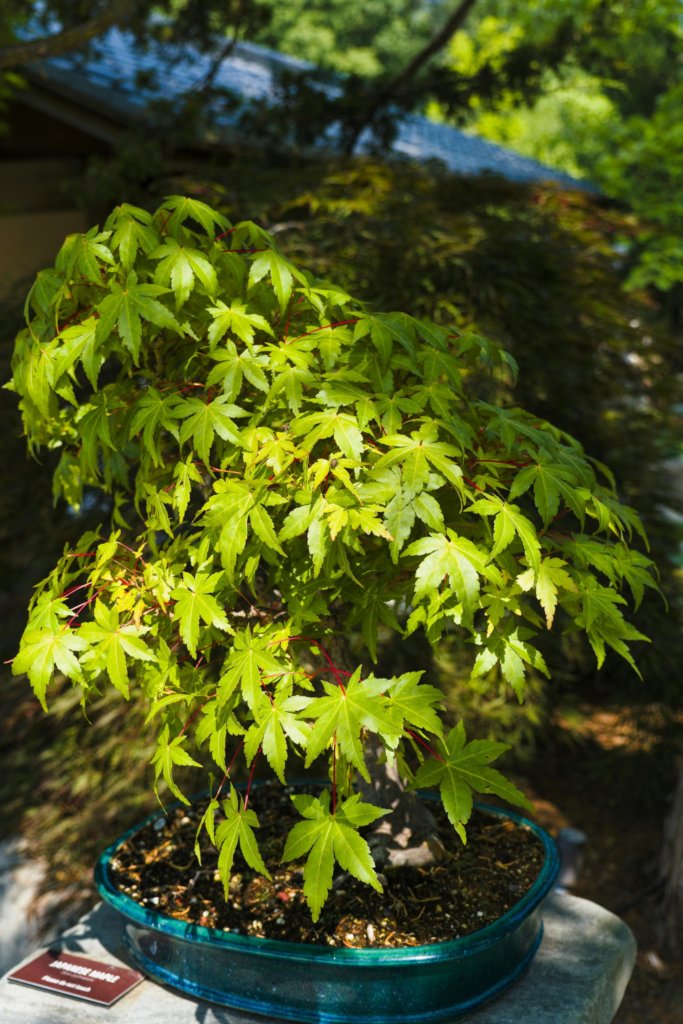
You should grow most maples as outdoor bonsai. Japanese maple bonsai care depends on natural seasons, including winter dormancy.
Place your tree where it gets morning sun and afternoon shade. Strong afternoon sun can scorch leaves, especially on Acer palmatum. In very hot climates, provide filtered light during peak heat.
Good air flow helps prevent fungal problems. Do not keep your maple bonsai indoors for long periods. Indoor air is too dry and light levels are too low for healthy growth.
In winter, protect roots from deep freezes. You can place the bonsai pot on the ground and mulch around it, or use a cold frame. The tree needs cold weather, but the roots should not freeze solid for long periods.
Watering and Moisture Management
Watering is a key part of bonsai care. Maples react quickly to dry soil and can show stress within days.
Check the soil daily during the growing season. Water thoroughly when the top layer of bonsai soil feels slightly dry. Pour water evenly over the surface until it drains from the bottom of the bonsai pot.
Do not follow a fixed schedule. Weather, pot size, and soil type all change how fast the soil dries.
Keep these points in mind:
- Never let the soil dry out completely
- Avoid constant soggy soil
- Reduce watering in winter, but do not let roots dry out
Balanced moisture supports fine root growth and steady leaf development.
Optimal Soil and Pot Selection
Use a well-draining soil mix for maple bonsai. Dense garden soil will hold too much water and damage roots.
A common bonsai soil mix for maples includes:
- Akadama
- Pumice
- Lava rock
Akadama helps retain moisture while still draining well. This balance is important for Japanese maple bonsai care, since roots are sensitive to both drought and excess water.
Choose bonsai pots with large drainage holes. The pot should match the tree’s size and allow space for root growth without being too deep.
Shallow bonsai pots dry out faster, so you must monitor moisture closely. Proper soil and pot selection support healthy roots, which directly affect leaf size, color, and overall structure.
Pruning, Training, and Styling Maple Bonsai
You shape a maple bonsai through careful pruning, steady training, and clean tool work. Each cut affects branch structure, leaf size, and long-term health, especially with delicate Japanese maple bonsai varieties.
Regular Pruning and Leaf Management
Prune your maple bonsai to control size and build branch structure. Pinch back new shoots to one or two pairs of leaves early in the growing season to keep growth compact. This encourages ramification and prevents long gaps between nodes. It is better to pinch the shoots back to the first pair of leaves immediately as they emerge, or after the second pair has developed, rather than waiting for 4–6 pairs to grow. Waiting for 4–6 pairs can lead to long internodes (the space between leaves), which is undesirable for a compact bonsai.
Japanese maple bonsai produce large, palm-shaped leaves. Use leaf pruning in late spring or early summer to reduce leaf size and increase light inside the canopy. Remove large leaves or trim them in half, but only on healthy trees. Avoid full defoliation on weak or newly repotted trees.
You should also manage roots during repotting. Perform root pruning in early spring before buds fully open. Trim thick roots and keep fine feeder roots close to the trunk. This supports a shallow root system and balanced top growth.
Work in small steps. Heavy pruning at the wrong time can weaken the tree and cause dieback.
Wiring Techniques and Bonsai Styles
Use wiring to guide young branches into place. Japanese maple bonsai have flexible shoots when young, but older branches become brittle. Bend slowly and support the branch with your fingers as you shape it.
Apply aluminum wire at a 45-degree angle along the branch. Do not wrap too tight. Check the wire every few weeks, especially during active growth, because maples thicken fast and wire can scar the bark.
Common bonsai styles for maple include:
- Informal upright (Moyogi) – gentle curves in the trunk
- Slanting (Shakan) – trunk leans to one side
- Broom style (Hokidachi) – fine branches form a rounded crown
Choose a style that fits your trunk movement and root spread. Avoid forcing a design that fights the tree’s natural shape.
Tools and Wound Care
Use clean, sharp bonsai tools to make precise cuts. Basic tools include:
- Pruning shears for small shoots
- Concave pruners for branch removal
- Root scissors for fine roots
Disinfect tools before and after use to prevent disease.
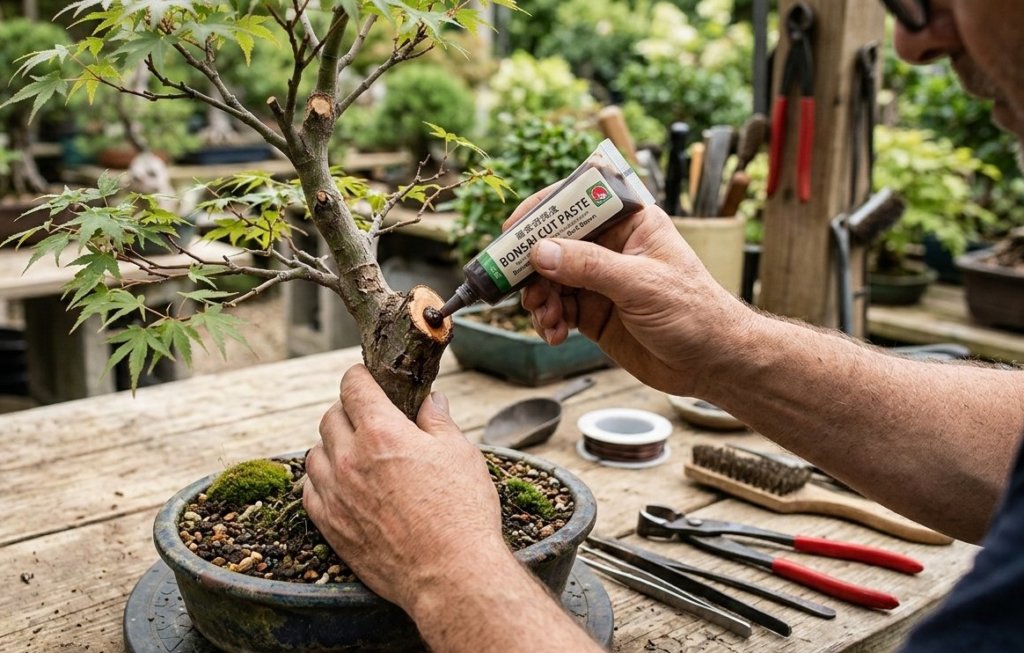
When you remove thicker branches, make a smooth cut close to the trunk. Apply cut paste to protect the wound and reduce drying. This matters for Japanese maple bonsai, which can bleed sap in early spring.
Check wounds over time. Healthy tissue should form a smooth callus around the cut.
Repotting, Propagation, and Fertilization Strategies
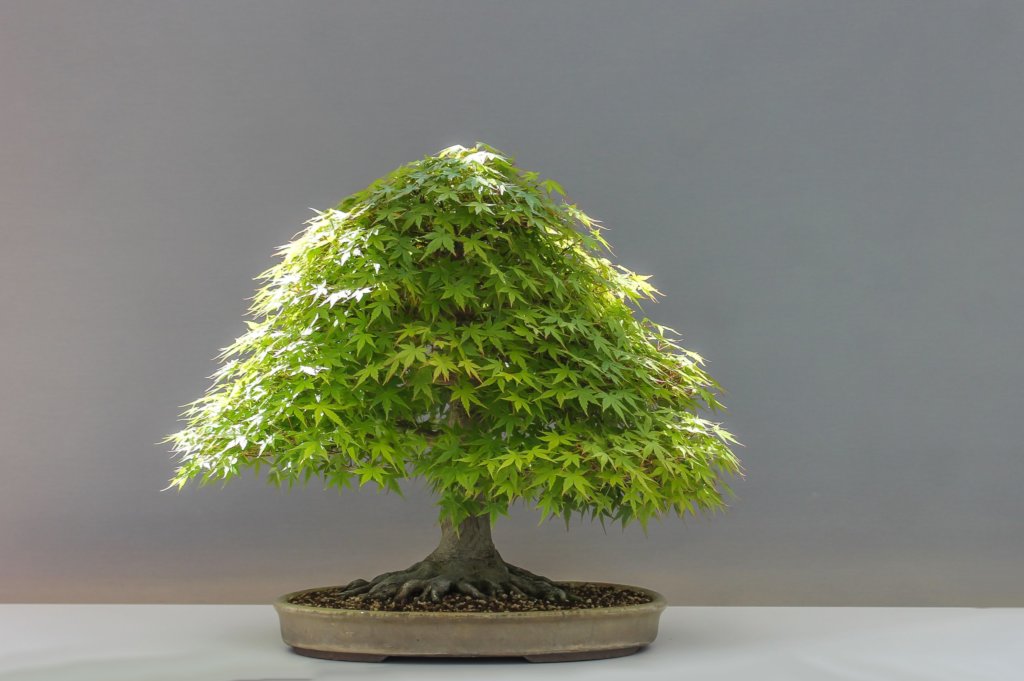
Healthy roots, fresh soil, and steady feeding keep your maple bonsai stable and strong. When you repot at the right time, use the right bonsai soil mix, and adjust fertilizer by season, you support steady growth and clean leaf color.
Repotting and Root Pruning Practices
Repot your Japanese maple bonsai every two years if it is young and growing fast. Older trees may need repotting every three to four years. Many growers repot in early spring, just before buds open.
Remove the tree from its bonsai pot and comb out the roots with a root hook. Trim long, thick roots and keep fine feeder roots close to the trunk. In most cases, remove no more than one-third of the root mass.
Key root pruning steps:
- Cut circling roots that wrap around the root ball.
- Shorten strong roots that grow straight down.
- Keep a flat root base to fit a shallow bonsai pot.
Root pruning controls size and improves nutrient uptake. Clean cuts also reduce stress and lower the risk of rot.
Soil Refresh and Choosing Containers
Use a fast-draining 1:1:1 mix of akadama, pumice, and lava rock to prevent root rot. A common blend includes akadama, pumice, and lava rock. Akadama holds moisture and nutrients, while pumice and lava improve drainage and air flow.
For many maples, a simple mix works well:
| Component | Purpose |
|---|---|
| Akadama | Moisture retention and root health |
| Pumice | Drainage and root growth |
| Lava rock | Structure and air space |
Choose a bonsai pot with large drainage holes. The pot should match the tree’s size and style, but it must also allow water to drain fast.
Use mesh over drainage holes and secure the tree with wire. A stable tree forms new roots faster and recovers better after repotting.
Fertilizer Application and Seasonal Adjustment
Feed your maple bonsai during active growth in spring and early summer. Use a low-nitrogen or balanced organic fertilizer to prevent oversized leaves and long internodes.
Many growers prefer organic bonsai fertilizer because it releases nutrients slowly. Place solid pellets on the soil surface, or use a diluted liquid feed every two weeks.
Adjust feeding by season:
- Early spring: Balanced feed to support leaf growth.
- Mid-summer: Reduce nitrogen to prevent weak growth.
- Fall: Use lower nitrogen and higher potassium to support root strength.
Do not fertilize right after heavy root pruning. Wait until you see new growth. This prevents stress and salt buildup in fresh roots.
Propagation Methods for Maple Bonsai
You can grow new trees by propagating Japanese maple from cuttings or seeds. Cuttings give you trees that match the parent, including a dwarf Japanese maple variety.
Take softwood cuttings in late spring or early summer. Choose healthy shoots that are firm but still flexible. Cut sections about 4–6 inches long and remove lower leaves.
Dip the cut end in rooting hormone and plant it in a moist, well-draining bonsai soil mix with extra pumice. Keep the cuttings in bright shade and high humidity.
Seeds also work, but they require cold stratification. Seed-grown trees vary in leaf shape and color. Use this method if you want genetic variety or rootstock for grafting.
Seasonal Challenges, Pests, and Disease Management
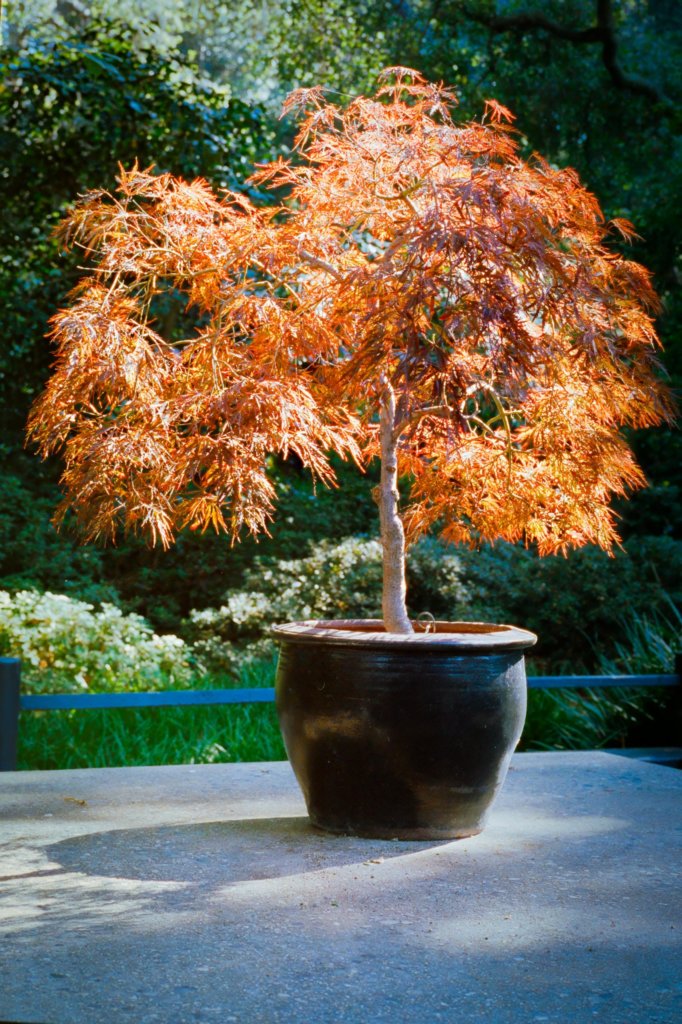
Maple bonsai face stress from heat, cold, pests, and fungal disease. You protect your tree by adjusting care with the seasons and by checking it often for early warning signs.
Temperature, Humidity and Winter Care
Japanese maple bonsai prefer mild temperatures and steady moisture. In summer, strong sun and high heat can scorch leaves. You may see brown, dry edges or curled tips.
Move your tree to a spot with morning sun and light afternoon shade. Increase watering during heat waves, but avoid soggy soil. Good drainage prevents root rot.
Low humidity can dry leaf tips. For humidity, use a tray with water and gravel, ensuring the pot sits above the water line.
In winter, maples need dormancy. Most varieties tolerate cold, but roots in shallow bonsai pots freeze faster than garden trees.
When temperatures drop below freezing for long periods, place the tree in an unheated garage or cold frame. Keep soil slightly moist. Do not let it dry out or stay wet.
Common Pests and Disease Prevention
Inspect your maple bonsai every week during the growing season. Look under leaves and along stems.
Common pests include:
- Aphids
- Spider mites
- Scale insects
These pests feed on sap. You may notice sticky residue, pale spots, or fine webbing. Remove small infestations by hand or with a strong spray of water. Use insecticidal soap if needed.
Fungal problems can also affect maple bonsai. Overwatering and poor airflow increase the risk.
Verticillium wilt is a serious soil-borne disease. It causes sudden wilting, yellowing leaves, and branch dieback. There is no cure. You must remove infected parts with clean bonsai tools and avoid reusing contaminated soil.
Prevent disease by using well-draining soil, sterilizing bonsai tools, and avoiding heavy pruning during humid weather. Strong, balanced bonsai care reduces stress and lowers the risk of pests and infection.
Frequently Asked Questions
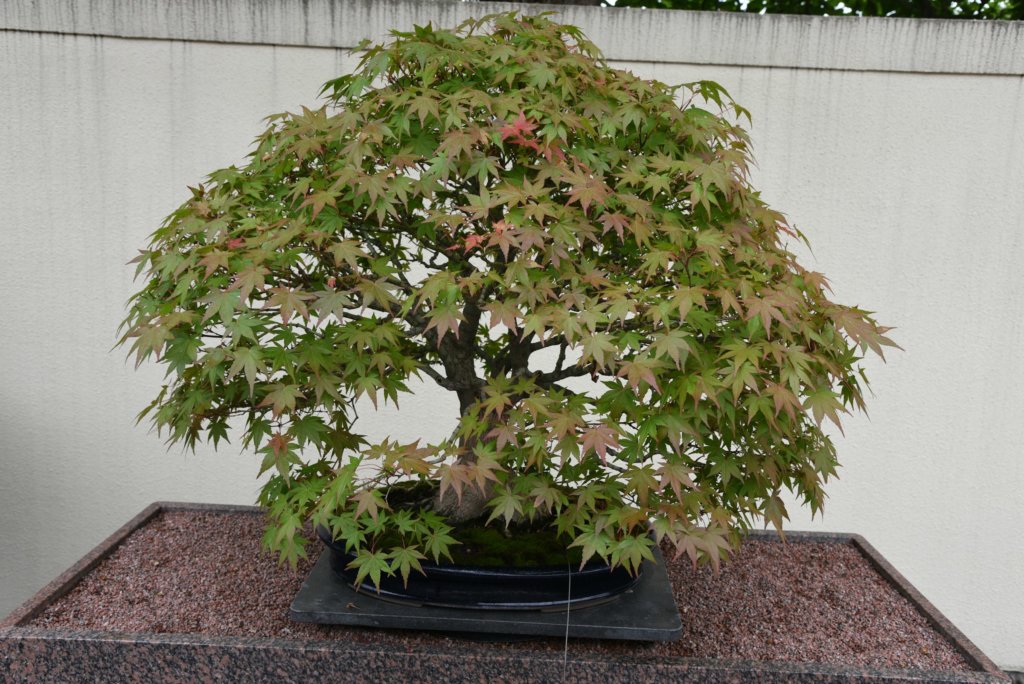
Maple bonsai trees need steady watering, well-draining soil, careful pruning, strong light, timely repotting, and basic pest control. When you manage these areas with care, you support healthy roots, balanced growth, and bright seasonal color.
How often should I water my Maple Bonsai tree?
Water your maple bonsai when the top layer of soil feels slightly dry. In spring and summer, check it multiple times daily; high heat or wind may require watering 2–3 times a day.
During dormancy in fall and winter, reduce frequency as the tree consumes less, but never let the root ball dry out completely.
Always water deeply until water drains from the bottom holes. Do not let the soil dry out fully, but avoid keeping it soaked.
What is the ideal soil mixture for a Maple Bonsai?
Use a fast-draining soil mix that holds moisture without staying wet. A common blend includes akadama, pumice, and lava rock in equal parts.
You can adjust the mix based on your climate. In hot, dry areas, add slightly more akadama to hold moisture. In wet climates, increase pumice or lava rock to improve drainage.
Avoid regular garden soil. It compacts easily and can cause root rot.
How do I prune a Maple Bonsai to maintain its shape and health?
Prune new shoots during the growing season to keep the tree compact. Cut back to one or two pairs of leaves to control size and shape.
Remove dead, weak, or crossing branches at any time. This improves air flow and reduces disease risk.
Perform heavy structural pruning in late summer or early winter. Maples bleed heavily in spring; pruning during dormancy or after growth slows ensures better healing and less sap loss.
What lighting conditions are necessary for a Maple Bonsai to thrive?
Place your maple bonsai outdoors where it gets bright, indirect sunlight. Morning sun with afternoon shade works well, especially in hot climates.
Too much strong midday sun can scorch delicate leaves. Too little light can cause weak growth and large leaves.
As a temperate species, maples require a cold winter dormancy to survive. They cannot live indoors year-round. They must be moved to a cold, unheated area (like a garage) during winter to rest.
When is the best time to repot a Maple Bonsai, and how should it be done?
Repot your maple bonsai in early spring, just before buds open. This timing reduces stress and supports quick root recovery.
Gently remove the tree from its pot and trim about one-third of the root mass. Focus on thick roots and keep fine feeder roots.
Place the tree in fresh, well-draining soil and secure it firmly in the pot. Water thoroughly after repotting and protect it from strong sunlight for a few weeks.
How can I protect my Maple Bonsai from pests and diseases?
Inspect your tree often for aphids, spider mites, and scale insects. Check the undersides of leaves and along stems.
Treat small infestations with a strong spray of water or insecticidal soap. Repeat as needed.
Prevent fungal problems by avoiding overwatering and ensuring good air flow. Remove fallen leaves and debris from the soil surface to reduce disease risk.