
Best Cactus For Office Desks
Adding a cactus to your desk brings a touch of nature to your workspace without creating extra chores. These hardy plants thrive with minimal water and care, making them perfect for busy schedules. The best cactus for an office desk is small, easy to maintain, and capable of thriving in indoor light conditions.
You can choose from many types that fit your style and space, from spiky globes to soft, leaflike shapes. Some even produce small, colorful flowers that add quiet charm to your work area. Each type brings a bit of life while staying practical and low maintenance.

With the right cactus, you can improve focus, add visual interest, and make your desk feel more inviting. The rest of this guide explores how to select the ideal cactus and which varieties thrive best in office environments.
Key Criteria for Choosing the Best Cactus for Office Desks
Selecting the right cactus for your desk involves balancing space, light, and maintenance. By understanding these simple but important factors, you can choose indoor plants that thrive in a work environment and stay healthy with little effort.
Space and Size Considerations
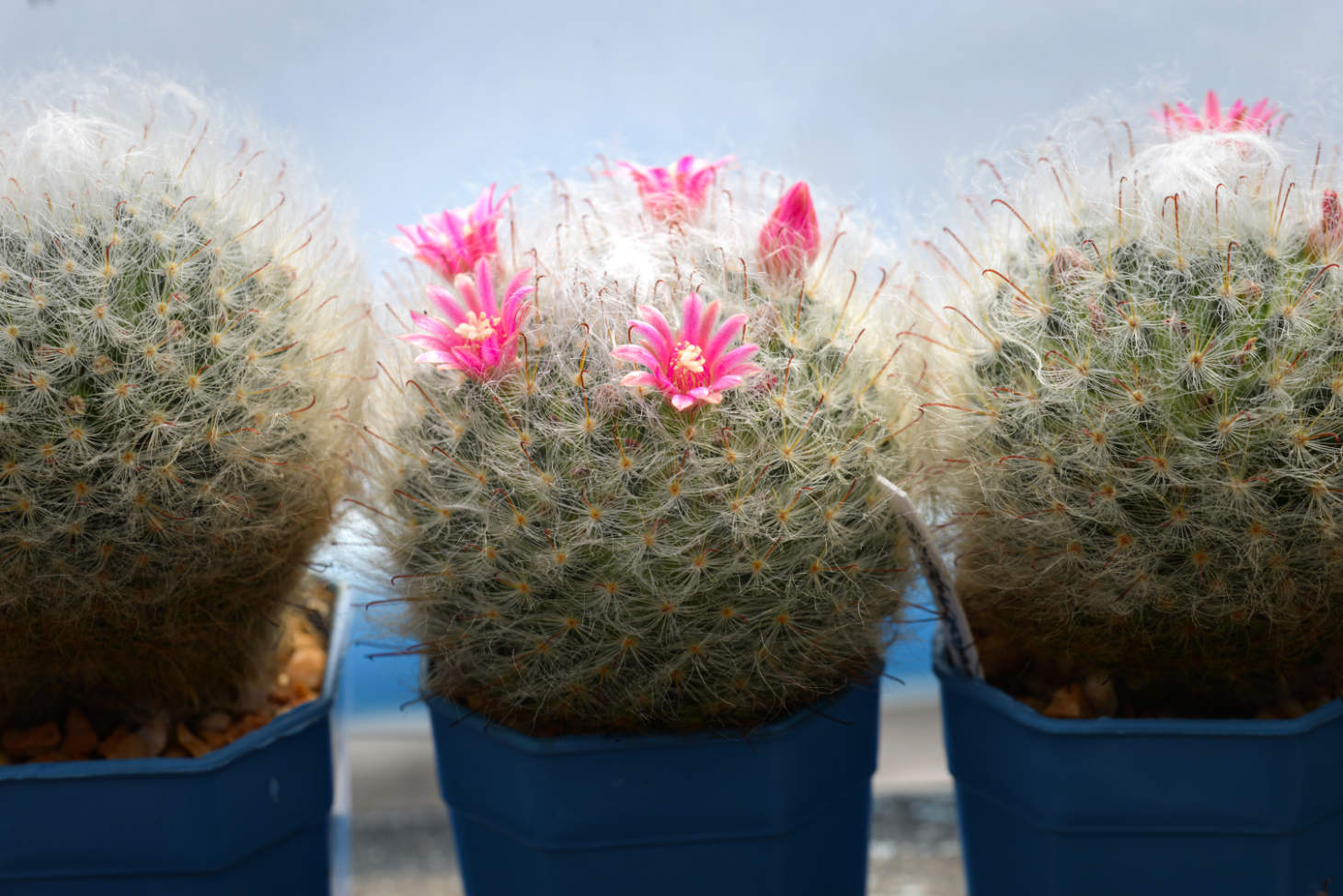

A desk cactus should fit your workspace without crowding it. Compact types such as mammillaria, ball cactus, or living rock cactus (Ariocarpus fissuratus) stay small and leave room for office supplies. Larger, columnar cacti may fit better in corners or open areas where they can grow freely.
Measure your workspace before choosing a plant. A cactus that’s too large can block light or limit your working area. When grouped together, small cacti can form a mini garden tray using shallow dishes, sand, and small stones.
You can use a simple guideline:
| Desk Space | Ideal Cactus Size | Example Varieties |
|---|---|---|
| Small desk (under 3 ft wide) | Under 6 in tall | Mammillaria, Rebutia |
| Medium desk | 6–10 in tall | Echinopsis, Parodia |
| Large surface or shelf | Over 10 in tall | Cereus |
These proportions help your workspace look balanced while keeping the plants easy to manage.
Light Requirements in Office Environments
Most cacti need plenty of light to grow well. A bright window with indirect or filtered sunlight suits most office plants. Desks near south- or west-facing windows provide enough brightness for most cactus types.
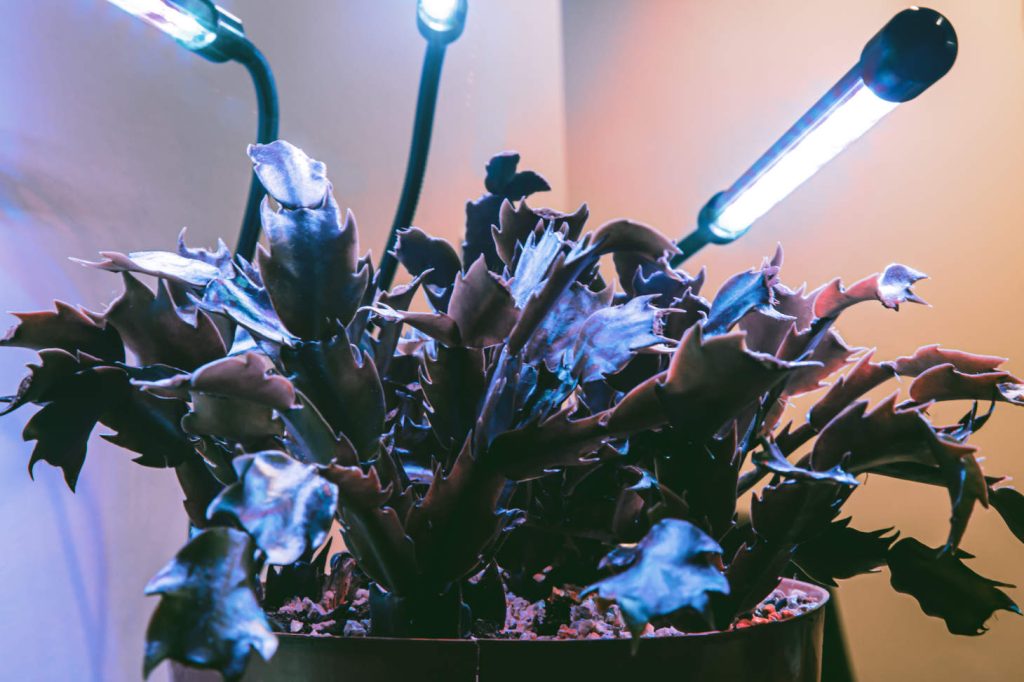
If your office lacks natural light, use a small LED grow lamp placed about 6–12 inches above the plant. Avoid dim corners or spaces with no windows, since low light can cause stretching, pale growth, or slow health decline.
Rotate your cactus every few weeks so all sides receive equal light. This prevents one-sided growth and helps maintain a compact, even shape. For areas with minimal daylight, consider low-light-tolerant succulents as an alternative.
Watering and Maintenance Needs
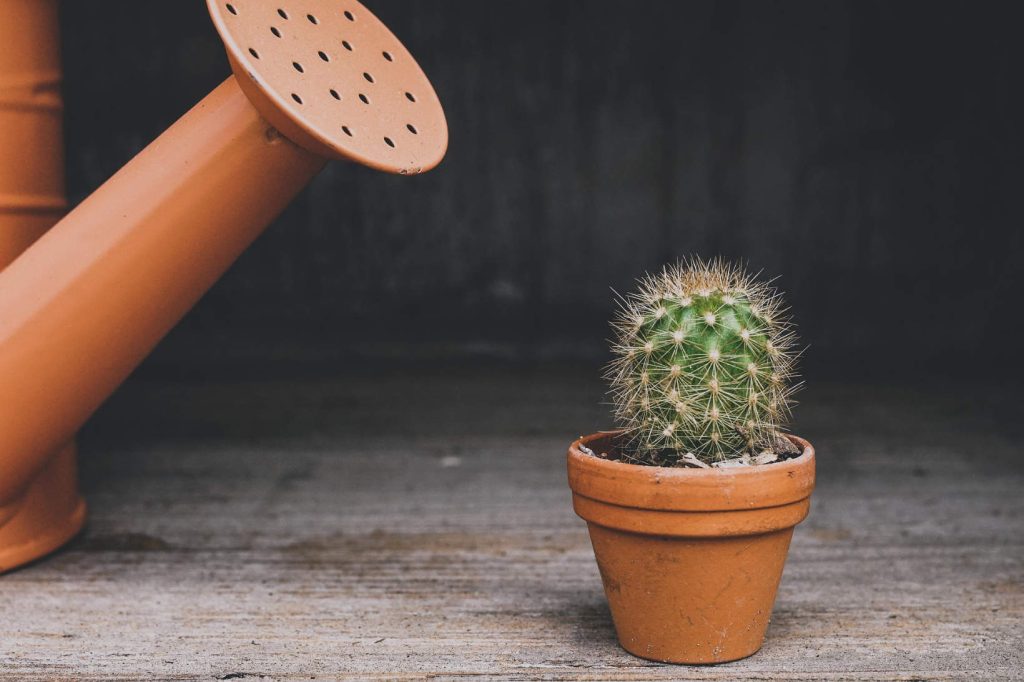
Cacti survive long dry periods, making them reliable office plants. Water only when the top inch of soil feels dry. Too much water leads to root rot, especially in pots without drainage holes.
Use a well-draining cactus mix and containers made of terracotta or ceramic to allow moisture to evaporate. During cooler months or in air-conditioned offices, reduce watering even more.
A light feeding with cactus fertilizer once or twice a year supports slow, steady growth. Remove dust from the surface with a soft brush to keep the plant clean and able to breathe. These simple tasks keep your desk plants healthy without daily upkeep.
Top Cactus Varieties for Office Desks
You can choose from several compact indoor cactus varieties that add structure and texture to your workspace. These options need very little water, thrive under bright or artificial light, and stay small enough to fit neatly on your desk without taking up too much space.
Golden Barrel Cactus
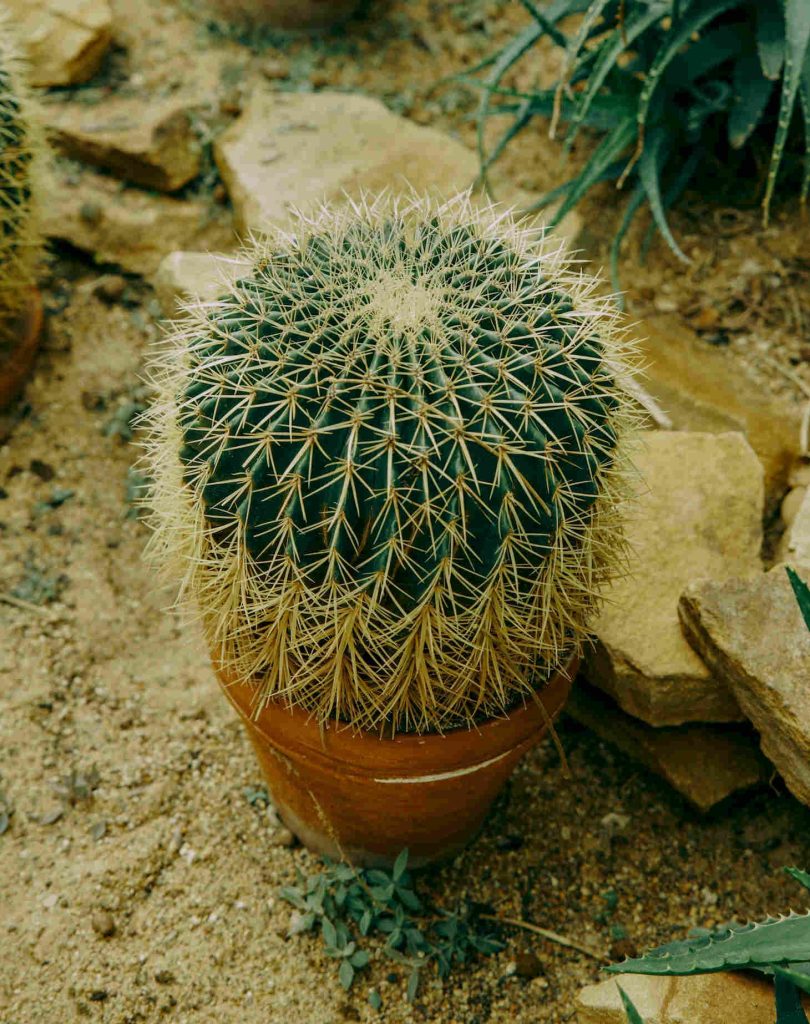
The Golden Barrel Cactus (Echinocactus grusonii) grows slowly and forms a round, ribbed shape covered with golden-yellow spines. It tolerates bright indirect or direct light, making it a smart pick if your desk sits near a sunny window.
You only need to water it once every few weeks. Allow the soil to dry completely between waterings to prevent root rot. Use a gritty, well-draining mix and a pot with a drainage hole.
This cactus usually stays between 4 and 10 inches across indoors, so it fits comfortably on a desk. Its symmetrical look and sharp texture contrast nicely with soft office décor. Over time, you may notice it turning more striking gold as it matures.
Bunny Ear Cactus
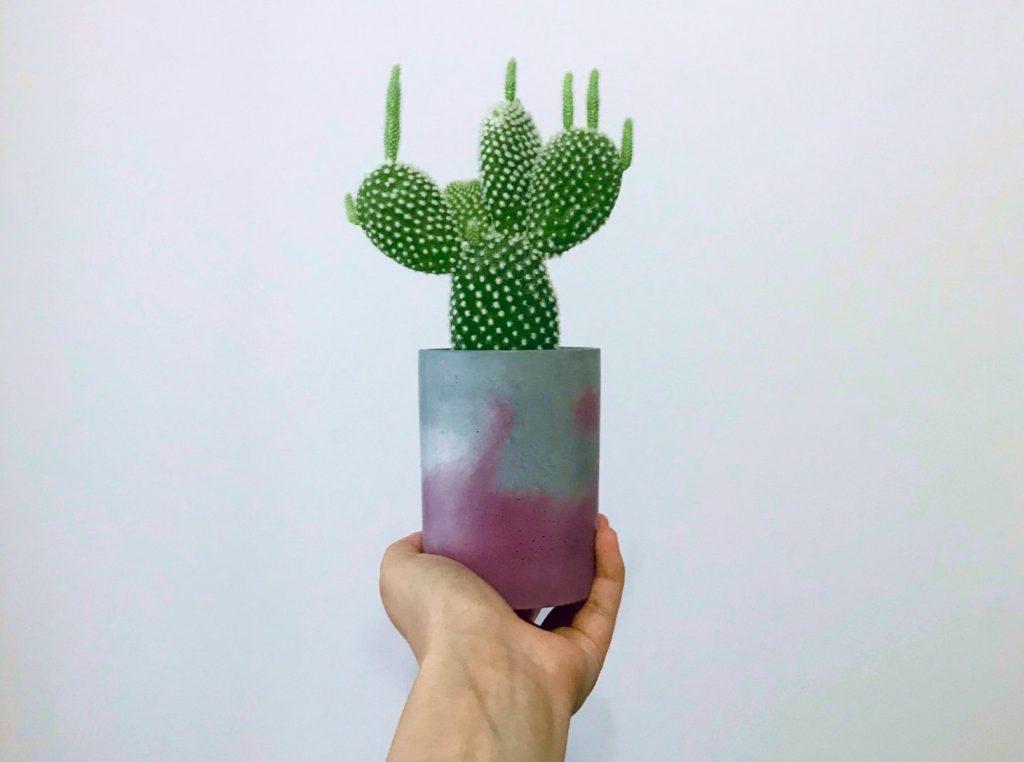
The Bunny Ear Cactus (Opuntia microdasys) forms flat, pad-shaped stems that grow in pairs resembling rabbit ears. It looks playful but needs careful handling because the small spines, called glochids, detach easily.
You can keep it on a sunny desk or under fluorescent light. It prefers warm, dry air and minimal watering. In winter, water less often to mimic its natural desert rest period.
This cactus grows slowly, reaching about 12–18 inches tall over several years. The pads sometimes develop small yellow or red dots, adding color variation. Its neat form suits minimalist or modern office setups.
Quick tips:
- Keep it near a sunny window.
- Avoid frequent watering.
- Handle with gloves when repotting.
Parodia Cactus
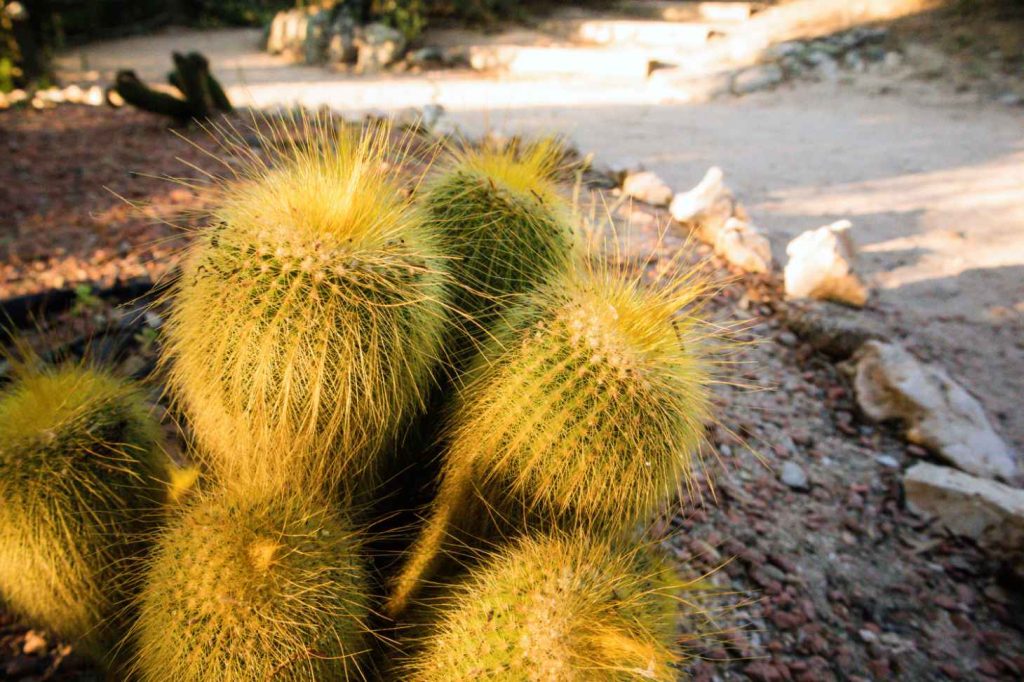
The Parodia Cactus group includes several small, round species with spines ranging from bristle-like to sharp, and seasonal yellow or orange flowers. These cacti adapt well to indoor light conditions, even if your office doesn’t receive strong sunlight all day.
You should place it in a spot with bright, indirect light and rotate the pot every few weeks for even growth. Use a cactus-specific soil mix and water lightly, allowing the surface to dry before adding more.
Parodia cacti usually stay under 6 inches high, making them easy to fit on shelves or desks. They add subtle color when they bloom, which often happens during summer if the plant receives enough light.
Moon Cactus
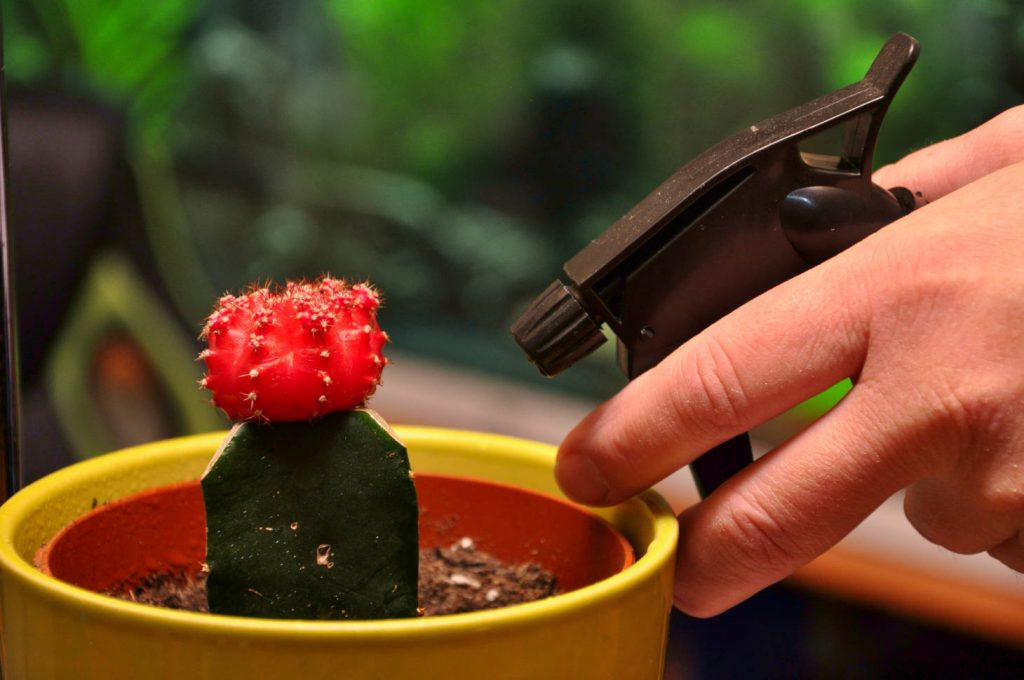
The Moon Cactus (Gymnocalycium mihanovichii) stands out for its brightly colored top, red, yellow, or pink, grafted onto a green rootstock. The top part cannot produce its own chlorophyll, so it relies on the green base to survive.
It is important to note that due to the unusual nature of this specific graft, Moon Cacti typically have a limited lifespan of only one to a few years. This is because the vibrant top (Gymnocalycium mihanovichii) and the green base are two different species, and the connection eventually fails.
The green rootstock is often sourced from the Dragon Fruit Cactus (Hylocereus or Selenicereus species), which is commonly used due to its fast-growing nature.
It does well in moderate to bright indoor light but avoid full sun for long periods, as it can fade the bright colors. Water sparingly and let extra moisture drain away. This cactus prefers temperatures between 65°F and 80°F and enjoys some humidity, making it suitable for typical office climates.
You can find Moon Cacti in many small pot sizes, often 2–4 inches tall. Their vivid tops add instant visual interest to your desk without needing much care.
Unique Options: Low-Light and Flowering Desk Cacti
Some cacti grow well with less sunlight and can brighten your desk with flowers and unusual shapes. They need little care, stay compact, and handle indoor air conditions better than most desert varieties.
Christmas Cactus
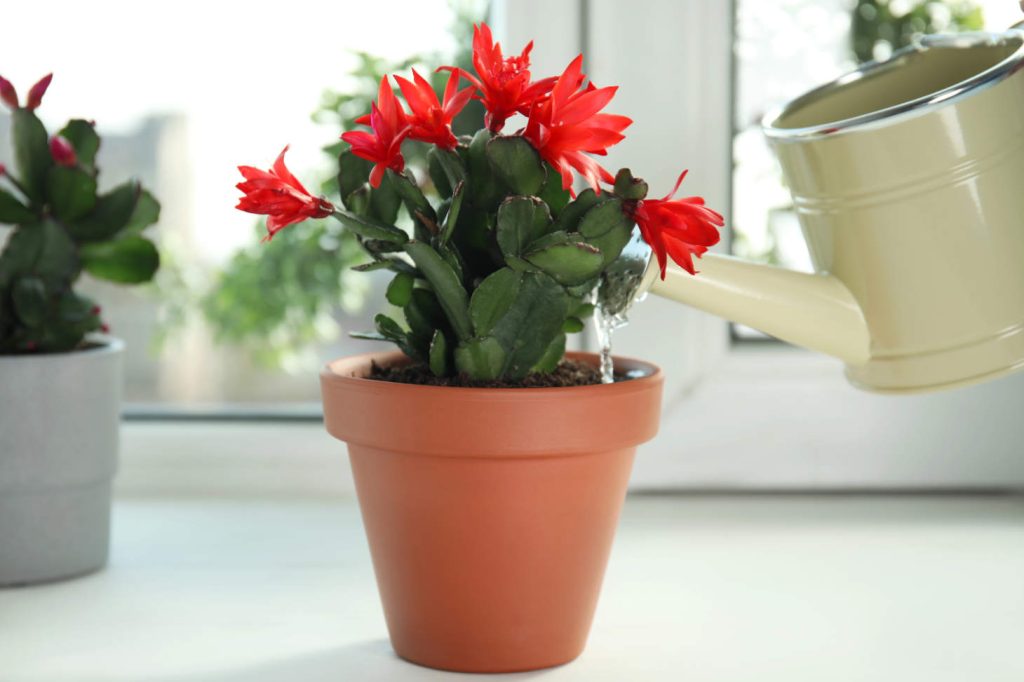
The Christmas Cactus (Schlumbergera) thrives in bright, indirect light and moderate indoor temperatures. Unlike desert cacti, it comes from tropical forests and absorbs moisture from humid air. You can keep it near a window that doesn’t get direct afternoon sun.
Its segmented stems store water like succulents but stay soft instead of spiny. When healthy, it produces red, pink, or white flowers that bloom around late November or December. These blooms last for several weeks and make your desk look lively during winter.
Water this plant when the top inch of soil feels dry. Too much water can cause root rot, so use a well-draining potting mix, preferably made for indoor plants. Fertilize every month from spring to early fall with a balanced liquid fertilizer. During its dormant period after flowering, reduce watering and let it rest.
Easter Cactus
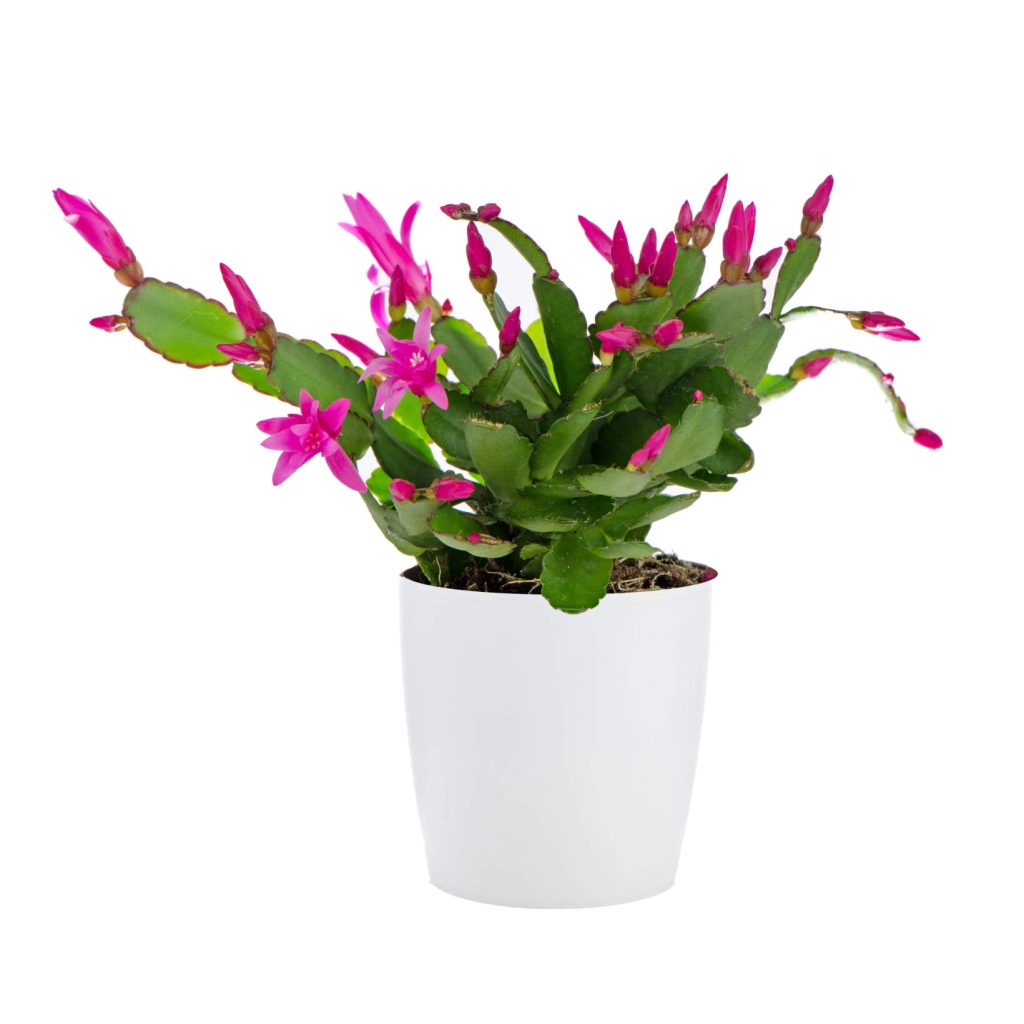
The Easter Cactus (Hatiora gaertneri) suits office settings with filtered light and stable temperatures. It differs from the Christmas Cactus in both texture and bloom time, producing star-shaped flowers in spring.
Its stems are slightly thicker and have rounded edges. The flowers come in pink, red, or coral shades that open for several days at a time. You can place it in the same type of indirect light as other indoor cactus plants.
Keep the soil lightly moist, especially as buds begin to form. If the plant dries out too much, blossoms may drop early. Fertilize with a diluted cactus formula every few weeks during the growing season. It also appreciates more humidity than a desert cactus but less than tropical foliage.
For dependable flowering, let the plant rest in cooler, darker conditions for about six weeks in late winter. This break supports future blooming.
Mistletoe Cactus
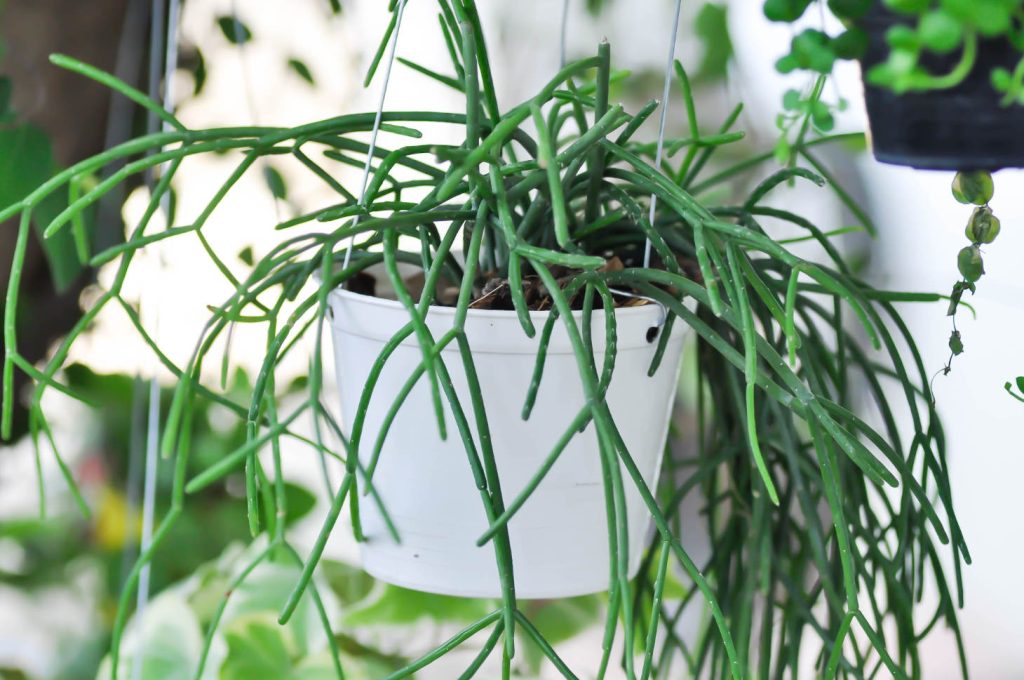
The Mistletoe Cactus (Rhipsalis baccifera) stands out with long, trailing stems that look attractive in hanging pots or small desk planters. It grows naturally in shady forests where it clings to trees, making it one of the few true low-light cacti.
Unlike typical spiny species, its stems are soft and cylindrical. It produces small, white or greenish-white flowers, generally followed by translucent, mistletoe-like berries. This plant adapts to indoor environments with ease and stays compact enough for small spaces.
Water it sparingly but more often than desert types. Let excess water drain fully to prevent fungal issues. It prefers bright, indirect light but tolerates lower light. A mix of peat and perlite helps it stay aerated without drying out too quickly.