
Best Cactus for Small Apartments
You want plants that fit your space, not ones that crowd it. Small apartments call for cacti that stay compact, grow slowly, and handle indoor light without fuss. With the right pick, you add green style without extra work.
The best cactus for small apartments includes Moon cactus and Bunny Ear cactus because they stay small, grow well indoors, and need little care. These cacti work on shelves, desks, and windowsills. Many also handle bright indirect light, which suits most apartments.
This guide helps you choose the right cactus and place it well. You learn which types work best, how to mix a few together, and how to style them so your space feels calm and balanced.
Key Takeaways
- Choose compact cacti that grow slowly and stay small.
- Mix a few easy indoor varieties for visual interest.
- Use simple pots and smart placement to save space.
Top Cactus Varieties for Small Apartments
Some cactus plants stay compact, grow slowly, and adapt well to indoor life. The cactus varieties below fit small spaces, handle limited care, and work well as indoor cacti in apartments.
Bunny Ear Cactus (Opuntia microdasys)

The Bunny Ear cactus is prized for its oval pads that resemble rabbit ears. This mini cactus stays compact and works well on shelves or windowsills. It prefers bright light but handles filtered sun from an apartment window.
You should avoid touching the pads. They hold tiny hair-like spines that stick to skin. Use gloves when you move or repot it.
Water sparingly and let the soil dry out between waterings. Use a pot with drainage and a gritty cactus mix. This opuntia microdasys grows slowly indoors, which helps keep its size under control in small spaces.
Quick care notes
- Light: Bright, indirect to direct light
- Water: Only when soil is bone-dry (approx. every 3–4 weeks, less in winter)
- Size: Small to medium, slow growth
Moon Cactus (Gymnocalycium mihanovichii)
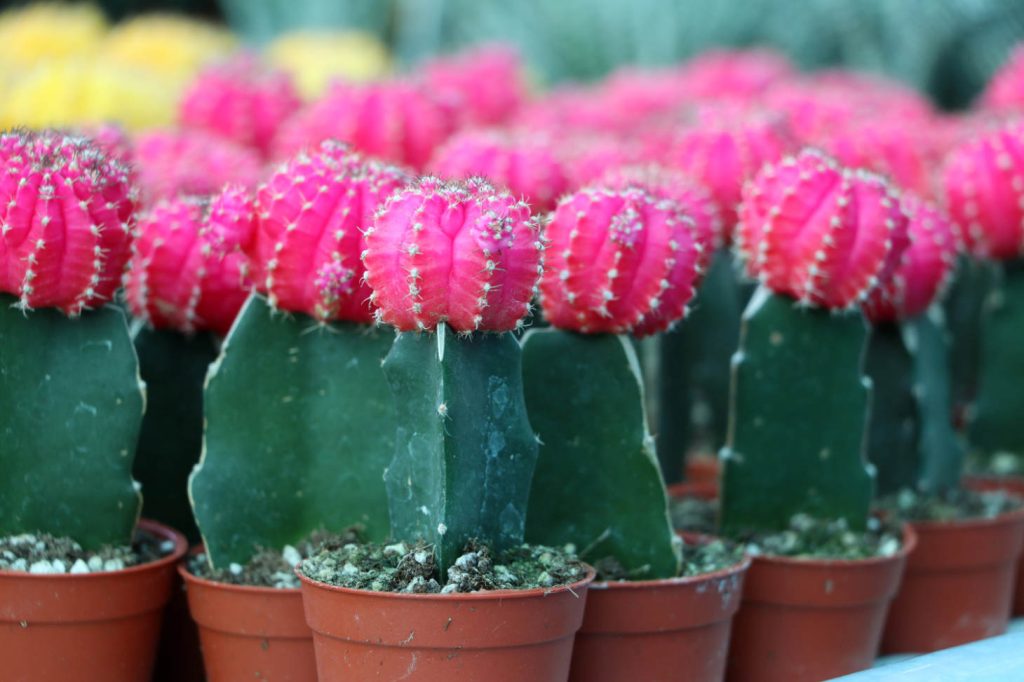
The moon cactus draws attention with its bright red, yellow, or orange top. Because the colorful top lacks chlorophyll, it is grafted onto a green rootstock cactus to survive. This pairing remains naturally small, making it perfect for desks or shelves.
Moon Cacti typically live for only a few years due to the inherent instability of their graft. This symbiotic pairing involves a vibrant Gymnocalycium mihanovichii scion and a vigorous Dragon Fruit Cactus (Hylocereus) rootstock. Eventually, the physiological differences between these species cause the graft union to fail, leading to the plant’s decline.
You should place it in bright but indirect light. Too much direct sun can fade the color or cause damage. This feature makes it useful for apartments without strong sunlight.
Water lightly and only when the soil feels dry. Because gymnocalycium mihanovichii lacks chlorophyll, it depends on the base cactus to survive. Handle it gently and avoid overwatering to prevent rot.
Quick care notes
- Light: Bright, indirect light
- Water: Light and infrequent
- Size: Very small, no spreading
Star Cactus (Astrophytum asterias)
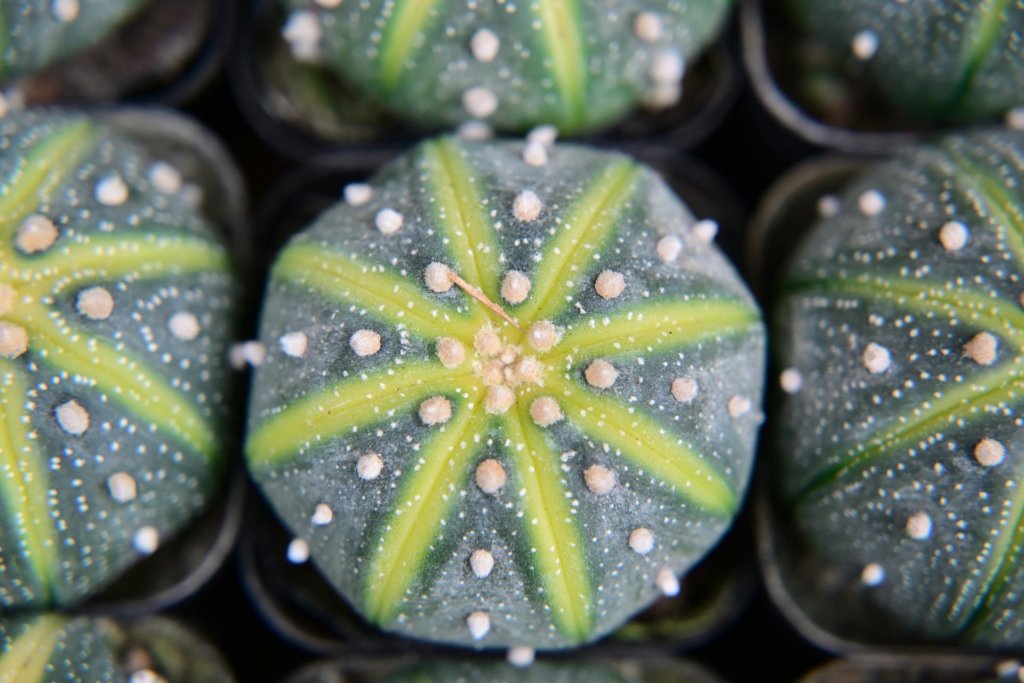
The star cactus has a round, flat shape with white speckles. It grows low and wide instead of tall, which fits well in shallow pots. This cactus looks neat and stays small for many years.
You should give astrophytum asterias bright light with some protection from harsh sun. A south- or east-facing window with a sheer curtain works well. While striking, it is more sensitive to overwatering and poor airflow than other desert cacti.
Water sparingly and keep the soil fast-draining. This cactus dislikes sitting in damp soil. Its slow growth and simple shape make it a strong choice for calm, tidy apartment displays.
Quick care notes
- Light: Bright light with light shade
- Water: Low, allow full drying
- Size: Small, very slow growth
Fairy Castle Cactus (Acanthocereus tetragonus)
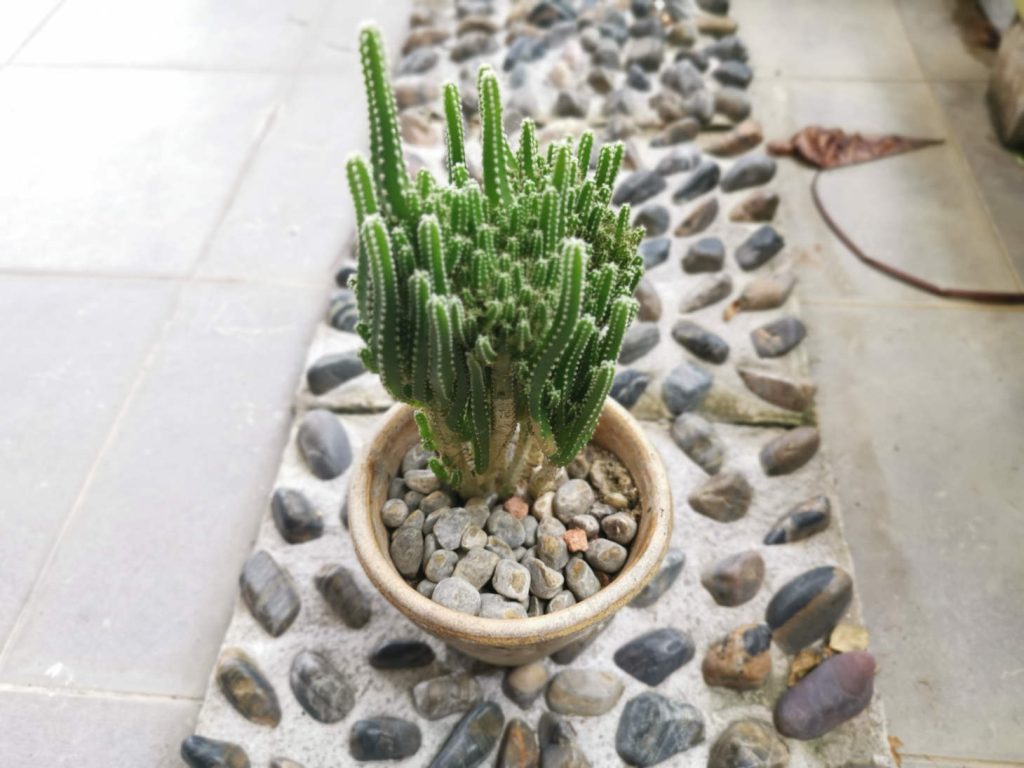
The fairy castle cactus grows upright with multiple thin stems. The stems form shapes that resemble small towers, adding height without taking much floor space. This makes it useful for corners and narrow surfaces.
You should place it in bright, indirect light. It can handle some direct sun but grows best with steady indoor light. This cactus adapts well to apartment conditions.
Water only when the soil is completely dry. Acanthocereus tetragonus grows faster than many indoor cacti, so you may need to prune or repot over time. Even so, it remains manageable in small spaces with basic care.
Quick care notes
- Light: Bright, indirect light
- Water: Moderate, well-spaced
- Size: Tall but narrow, easy to shape
Other Recommended Compact Cacti for Apartments
These compact cacti stay small, grow well in containers, and handle indoor conditions with ease. Each option offers a distinct shape, texture, or bloom that fits well on shelves, desks, or windowsills.
Ladyfinger Cactus (Mammillaria elongata)
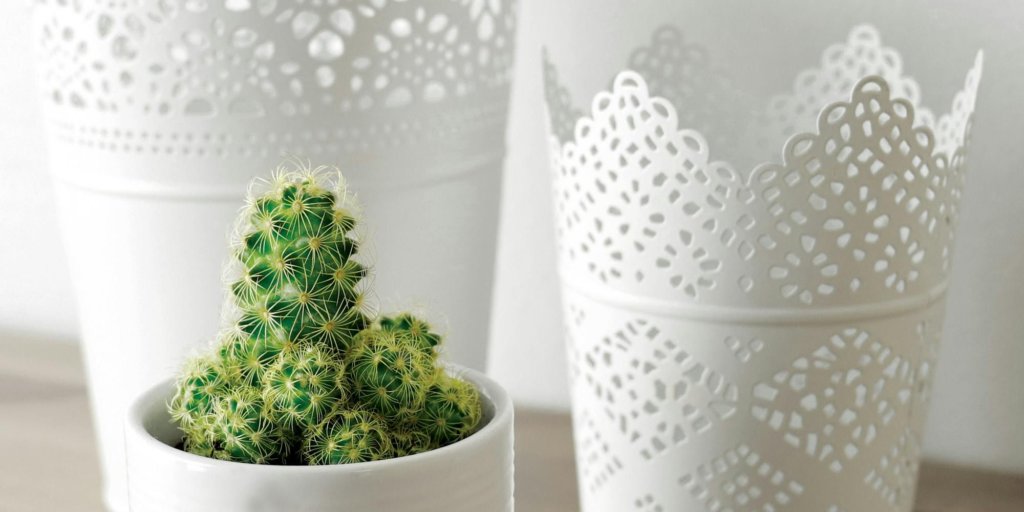
The ladyfinger cactus, also known as Mammillaria elongata, forms clusters of thin, finger-like stems. It grows wider over time but stays low, which makes it ideal for shallow pots.
You can place it in a bright window with indirect light. Water only when the soil dries fully. Too much water causes root rot fast.
This mammillaria may produce small white or pale yellow cactus flowers in a ring near the stem tips. While the golden spines appear decorative, they are stiff and prickly; keep this plant away from curious pets and children.
Key care points
- Light: Bright, indirect light
- Size: Low-growing clumps
- Water: Sparse, only when dry
Old Lady Cactus (Mammillaria hahniana)
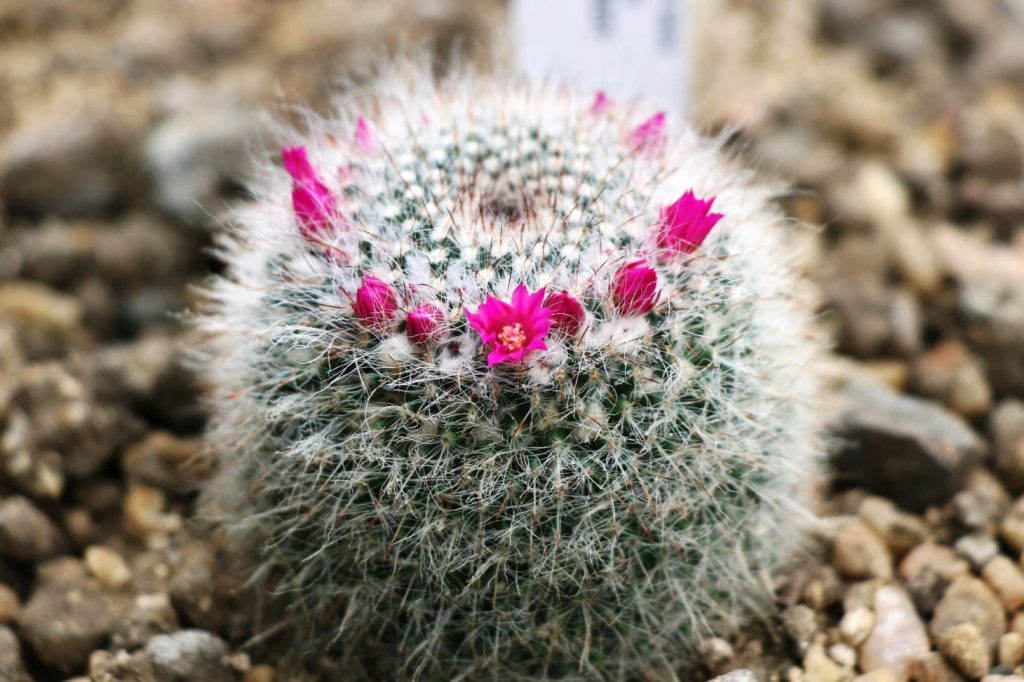
The old lady cactus, or Mammillaria hahniana, has a round shape covered in fine white hairs. These hairs protect it from light and help reduce water loss.
You can keep this pincushion cactus in a small pot on a sunny windowsill. Rotate it every few weeks to keep the growth even.
In spring, it often blooms with bright pink cactus flowers that form a crown. The contrast between white hairs and vivid blooms stands out in small apartments.
Why it works indoors
- Compact, slow growth
- Handles dry indoor air
- Strong visual texture
Golden Barrel Cactus (Echinocactus grusonii)
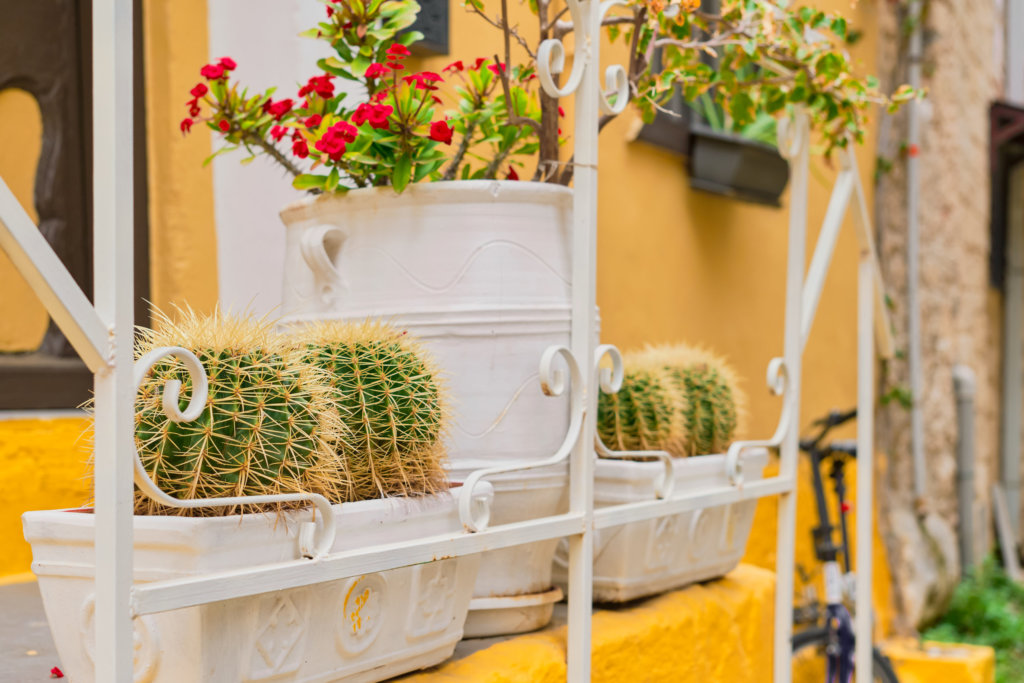
The golden barrel cactus, Echinocactus grusonii, has a bold, ribbed shape and golden spines. It grows slowly, making it a long-term indoor companion that remains a manageable size for decades.
You should place it in strong light, including some direct sun. Use a heavy pot to prevent tipping as it gains weight.
This barrel cactus rarely flowers indoors, but its form alone makes it a statement plant. It shines whether displayed as a singular focal point or arranged in a textured group.
Important notes
- Needs bright light
- Very slow growth indoors
- Sharp spines, handle with care
Bishop’s Cap (Astrophytum myriostigma)
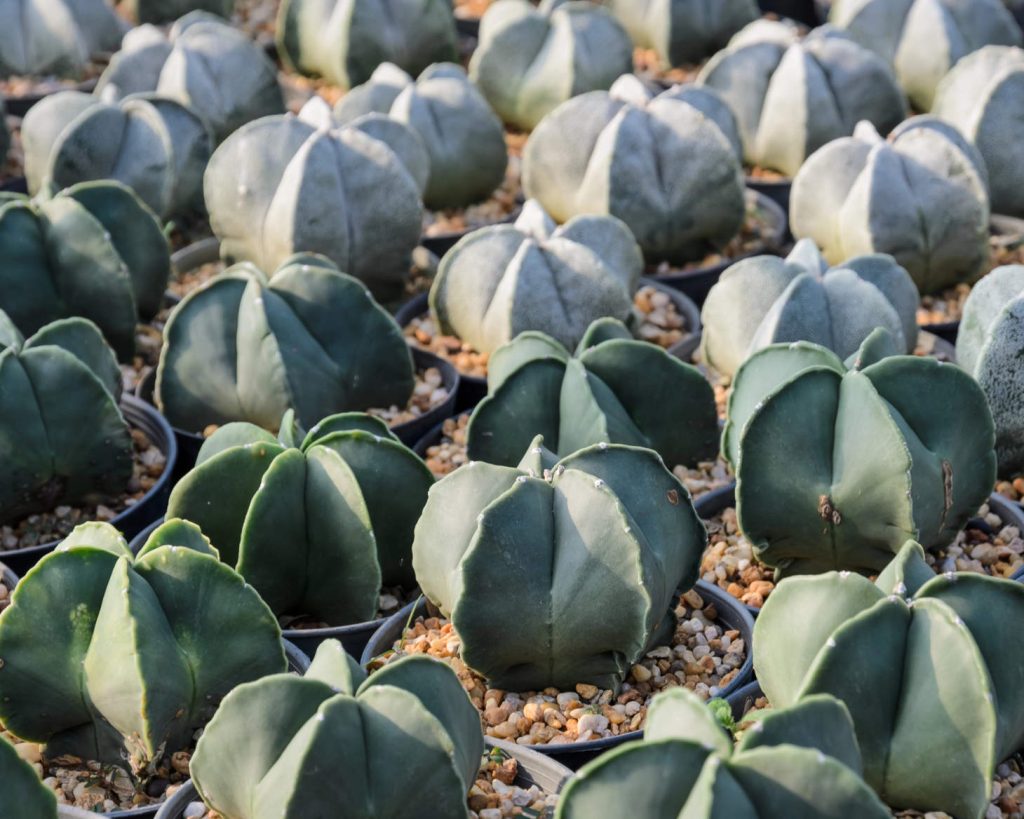
Bishop’s cap, or Astrophytum myriostigma, has a smooth, spineless body with clear ribs. Its star-like shape fits well in modern or minimal spaces.
You can grow it in a small pot with gritty soil and excellent drainage. It prefers bright light but not harsh afternoon sun.
This cactus may produce pale yellow cactus flowers when mature. It shares care needs with species like Parodia leninghausii but stays more compact and tidy.
Best features
- No spines
- Clean, geometric form
- Low watering needs
Creative Styling and Arrangement Tips
Smart styling helps cactus plants fit small apartments without crowding your space. The right containers, plant pairings, and size choices let you add indoor cactus plants while keeping shelves, windowsills, and desks clean and usable.
Choosing Decorative Containers
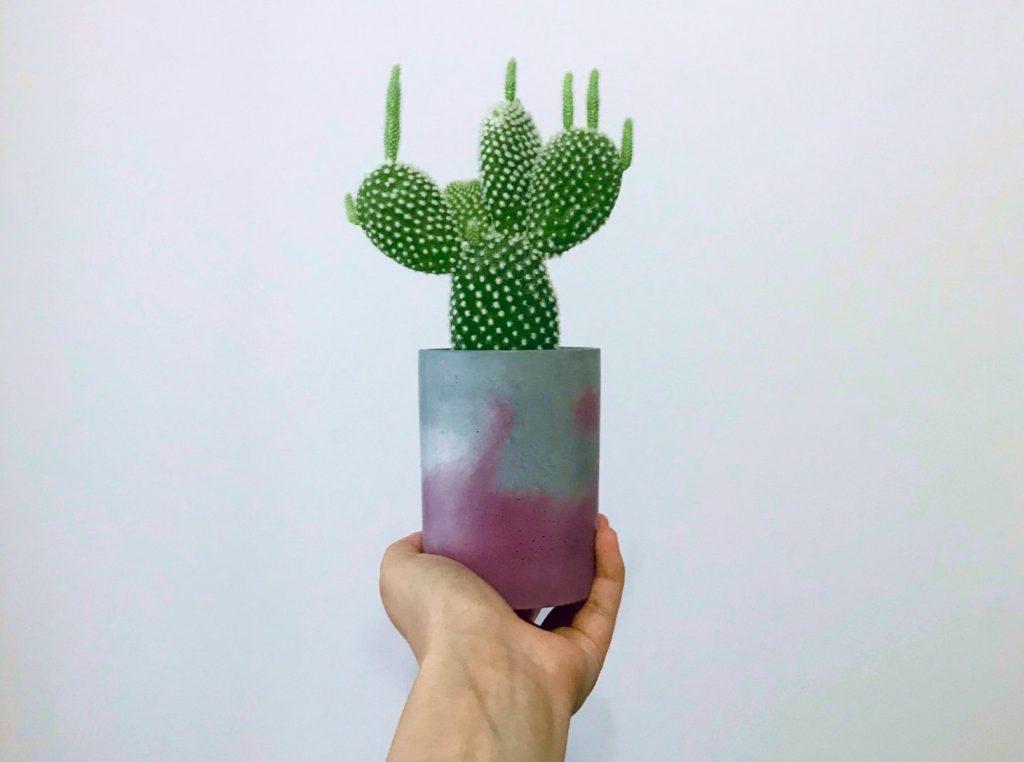
Choose containers that balance style and function. Pots should include a drainage hole to prevent root rot, a primary killer of both indoor and outdoor cacti.
Neutral colors like white, gray, or tan work well in small rooms. They keep attention on the plant, not the pot. Matte finishes reduce glare near windows.
Match pot size to the cactus. A pot that is too large holds extra moisture. Use shallow containers for mini cactus and deeper ones for taller types.
Good container options for apartments
- Ceramic pots with drainage
- Concrete planters for stability
- Hanging pots for vertical space
Combining Cactus with Succulents
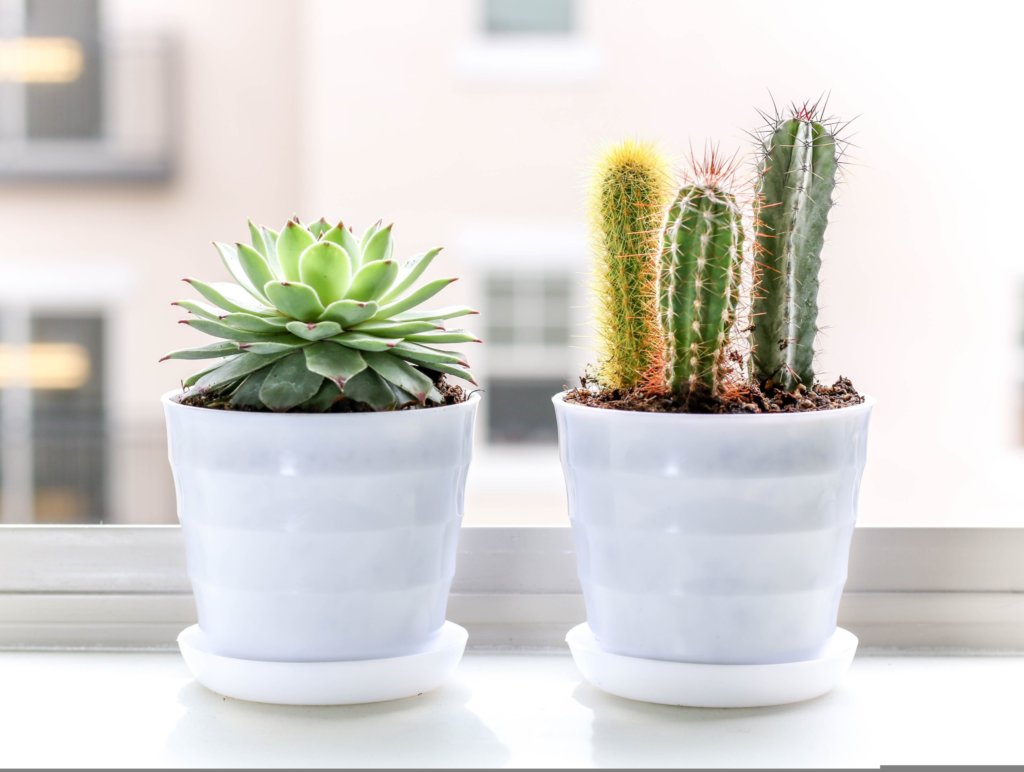
Cactus and succulents work well together when their care needs match. Choose drought-tolerant succulents that prefer bright, indirect light indoors.
Vary height and shape to avoid a flat look. Pair tall column cactus with low rosette succulents. This mix adds contrast without clutter.
Provide ample spacing between plants. Airflow helps prevent pests, which can spread fast among houseplants indoors.
Easy pairings
- Mini cactus + haworthia
- Barrel cactus + echeveria
- Prickly pear + jade plant
Always use a gritty, well-draining soil for the entire container to ensure consistent moisture levels.
Maximizing Space with Mini Cacti
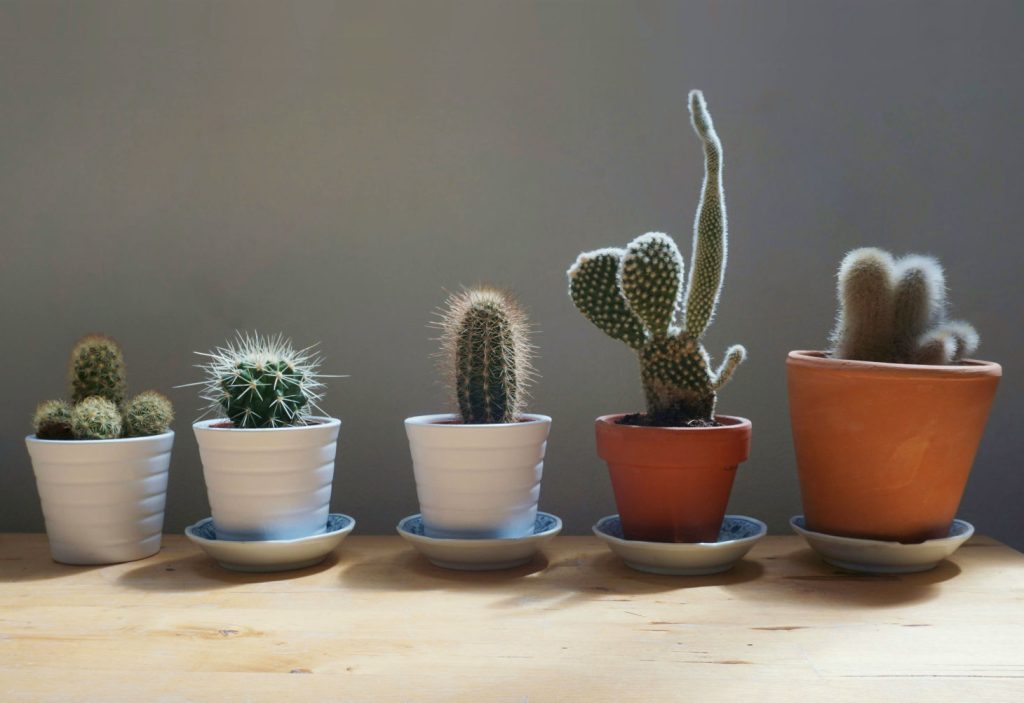
Mini cactus plants fit well in small apartments. You can place them on desks, shelves, or narrow window ledges.
Group three to five mini cactus in a single tray to save space. Use similar pots to keep the display clean and simple.
Rotate plants every few weeks so all sides get light. This keeps growth even and prevents leaning.
Best spots for mini cactus indoors
- South-facing windowsills (for maximum sun)
- Kitchen windows away from heat
- Wall-mounted plant ledges
Mini cactus let you enjoy indoor plants without giving up usable space.