
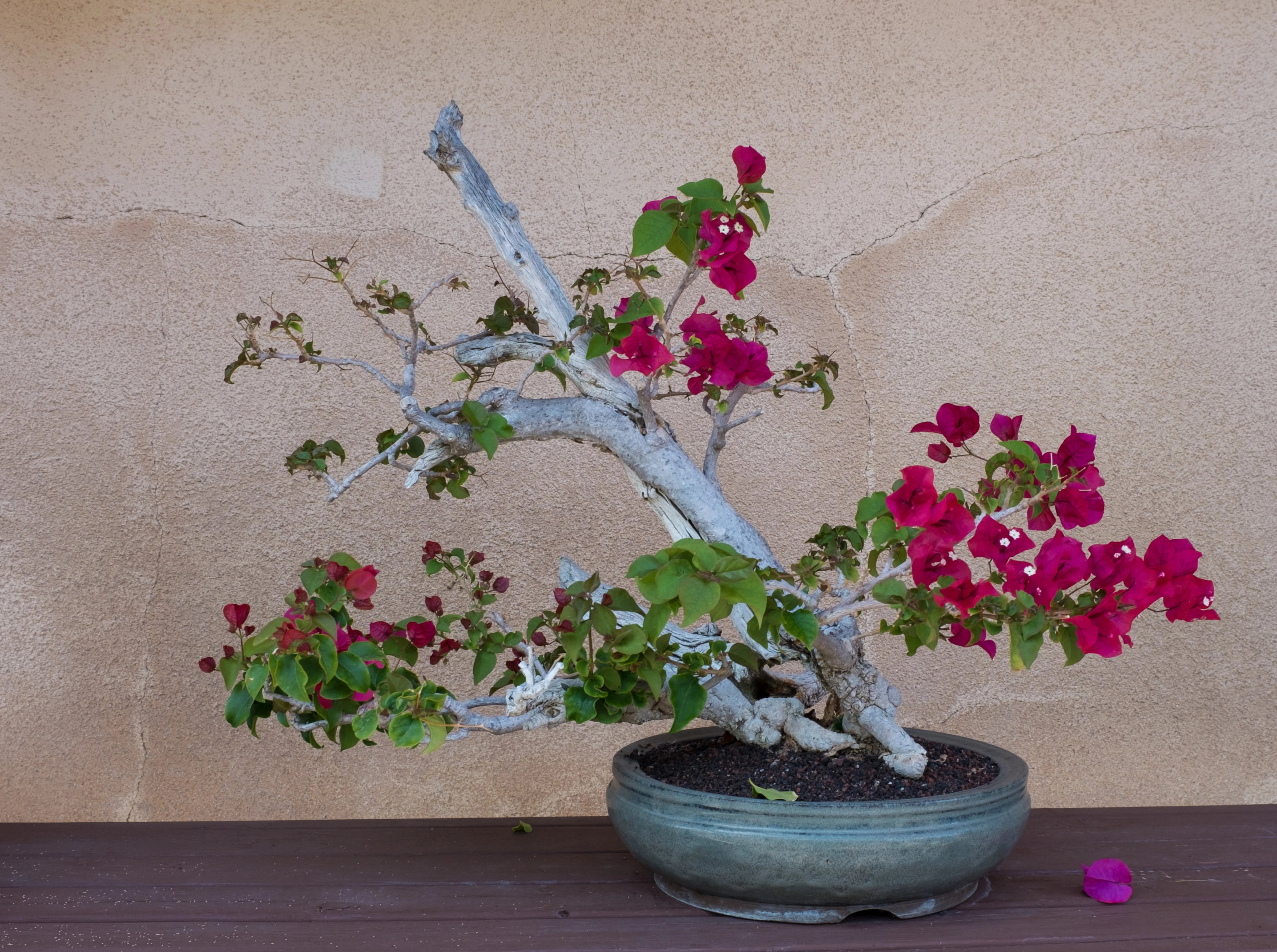
Bougainvillea Bonsai Care
Bougainvillea bonsai care rewards you with bright color and fast growth when you meet its basic needs. This tropical plant loves sun, strong pruning, and careful watering. If you give it the right setup, it can bloom many times a year and stay healthy for decades.
To care for a bougainvillea bonsai, place it in full sun, use well-draining soil, water only when the soil is nearly dry, and prune often to control shape and boost blooms. These trees grow fast and respond well to firm trimming. You must also feed them during the growing season to support steady flowering.
When you understand how light, water, pruning, and repotting work together, you gain full control over its shape and color. With steady care, you can turn a simple plant into a compact tree covered in bright bracts.
Key Takeaways
- Give strong sunlight, fast-draining soil, and careful watering to keep it healthy.
- Prune and train often to shape the tree and promote blooms.
- Repot, feed, and monitor growth to support long-term success.
Fundamentals of Bougainvillea Bonsai Care
You need strong light, warm temperatures, and fast-draining soil to keep your bougainvillea bonsai healthy. When you control these three factors, you support steady growth, bright bracts, and strong roots.
Optimal Light and Placement
Place your bougainvillea bonsai where it receives at least 6 hours of direct sunlight each day. Full sun drives blooming. Without enough light, the plant will grow leaves but produce few bracts.
Outdoors, set it in a south- or west-facing spot. Make sure air moves freely around the plant. Good airflow lowers the risk of pests and fungal issues.
Indoors, place it directly in front of a bright south-facing window. If natural light is weak, use a grow light for 10-12 hours daily.
Avoid frequent moves. Bougainvillea reacts to sudden changes in light by dropping leaves. Keep placement stable whenever possible.
Temperature and Humidity Requirements
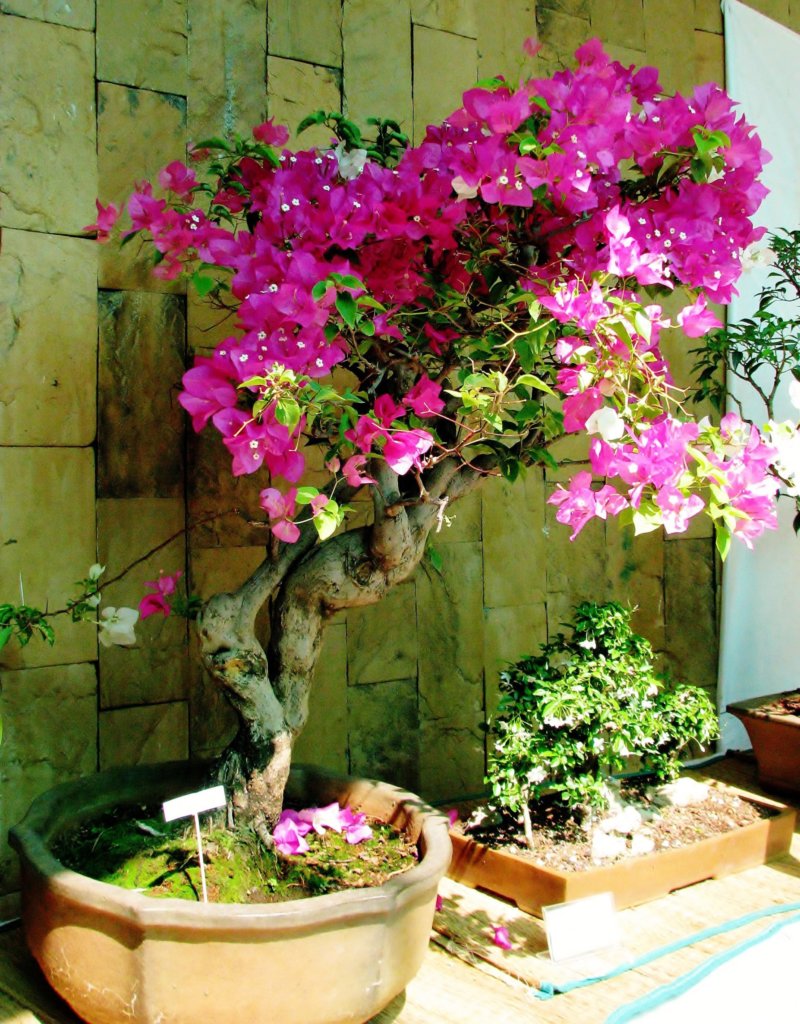
Bougainvillea is a tropical bonsai, so you must protect it from cold. Keep temperatures between 65°F and 95°F (18°C-35°C) for active growth.
Do not expose it to temperatures below 40°F (4°C). Cold stress can cause leaf drop and slow recovery.
During summer, outdoor warmth helps the plant thrive. Bring it inside before the first frost. Sudden temperature swings weaken the plant.
Bougainvillea tolerates average humidity levels. You do not need constant misting. In dry indoor air, place the pot on a humidity tray filled with water and gravel. This method raises moisture around the plant without soaking the roots.
Bougainvillea Soil Mix Essentials
Use a fast-draining bonsai soil mix. Bougainvillea roots rot easily in dense or soggy soil.
Choose a mix that includes:
- Coarse sand or grit
- Pumice or perlite
- Pine bark or similar organic matter
This structure allows water to flow through quickly while holding enough moisture for root health.
Avoid heavy garden soil. It compacts in small pots and blocks oxygen to the roots.
Water thoroughly, then allow the soil to dry significantly before watering again. Proper soil and careful watering form the base of strong bougainvillea bonsai care.
Watering and Fertilization Best Practices
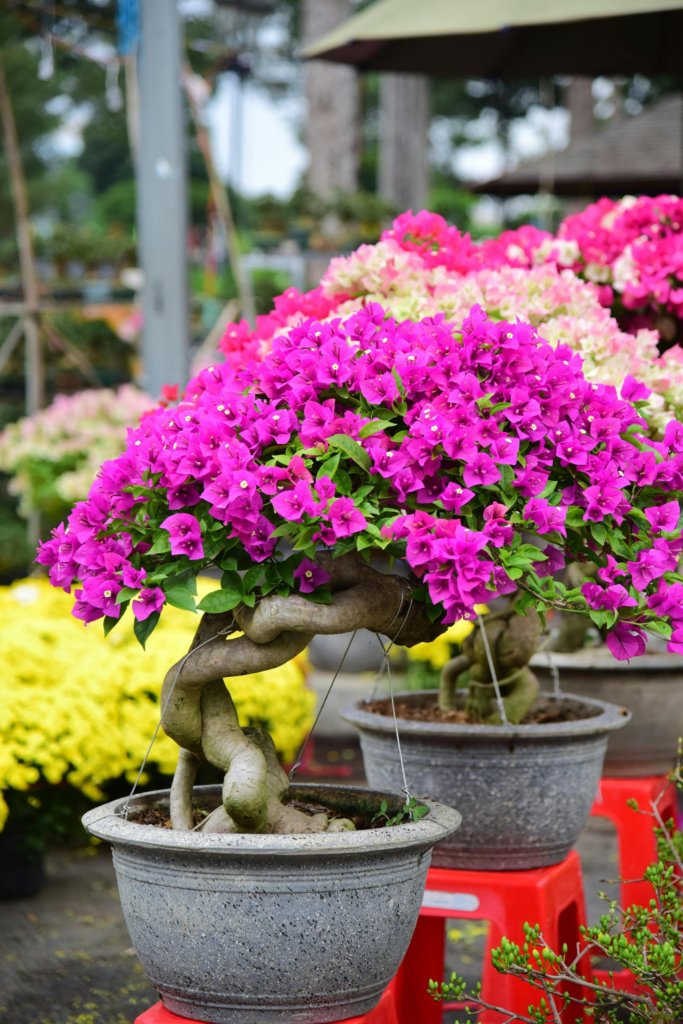
You must provide intermittent dryness with strong light and timely feeding to keep your bougainvillea bonsai healthy. Careful watering and a simple fertilizer plan support steady growth and reliable blooms.
Proper Watering Techniques
Water your bougainvillea bonsai deeply, then let the soil dry slightly before you water again. Check the top half-inch of soil with your finger. If it feels dry, water until it drains from the bottom holes.
Do not follow a fixed schedule. Temperature, pot size, and sunlight all affect how fast the soil dries. In hot summer weather, you may need to water every day. In cooler months, you may water only once or twice a week.
Place your bonsai in a spot with at least five hours of direct sun each day. Strong light helps the soil dry at a healthy rate and supports flowering.
Always use a pot with good drainage. Empty the drip tray after watering so roots do not sit in water.
Bougainvillea Fertilizer Regimen
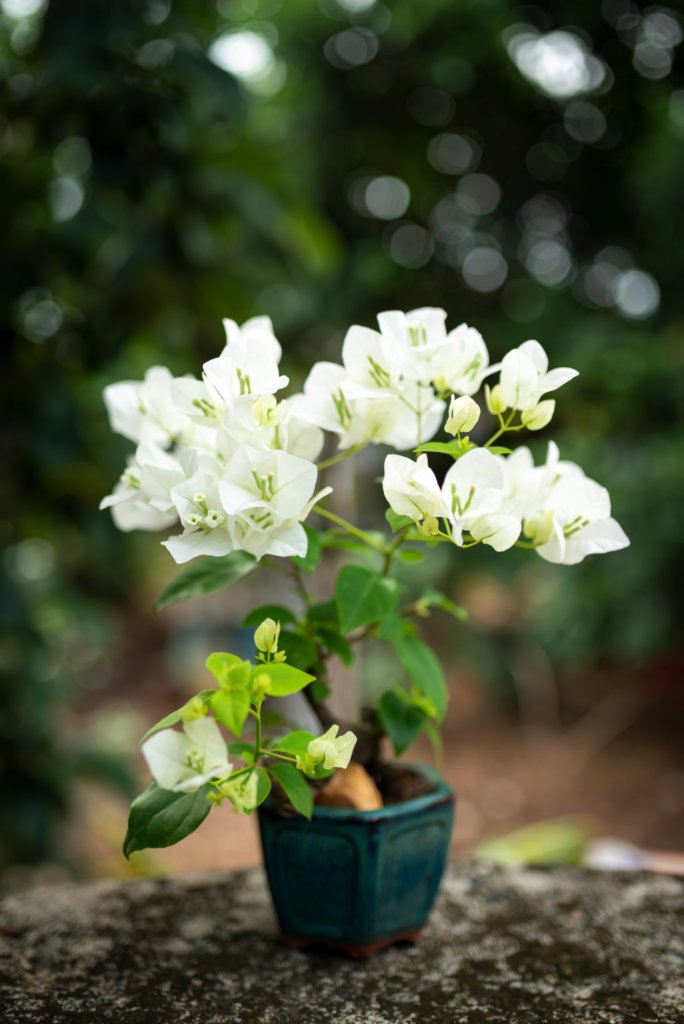
Feed your plant during active growth, usually from spring through early fall. Apply fertilizer every 4-6 weeks while the plant grows and blooms.
Use a balanced formula or one higher in potassium and phosphorus to encourage vibrant flowering. Avoid formulas that are very high in nitrogen. Too much nitrogen causes leafy growth with fewer blooms.
You can use liquid fertilizer at half strength to avoid root burn. Apply it to moist soil, not dry soil.
In late fall and winter, reduce or stop feeding if growth slows. Adjust your plan based on how your bougainvillea bonsai responds. Healthy leaves and steady blooms show that your bougainvillea care routine works.
Common Watering Mistakes to Avoid
Overwatering is the most common problem in bonsai care. Constantly wet soil can lead to root rot, yellow leaves, and weak growth.
Avoid shallow watering. If you only wet the top layer, roots stay near the surface and weaken over time. Always water until excess drains out.
Do not let the soil stay bone dry for long periods. Severe drying can cause leaf drop and stress the plant. While mild drying can support blooming, extreme stress harms long-term health.
Poor air flow also raises the risk of fungal issues. Keep your bougainvillea bonsai in a bright area with good air movement to support strong, healthy growth.
Pruning, Wiring, and Training Techniques
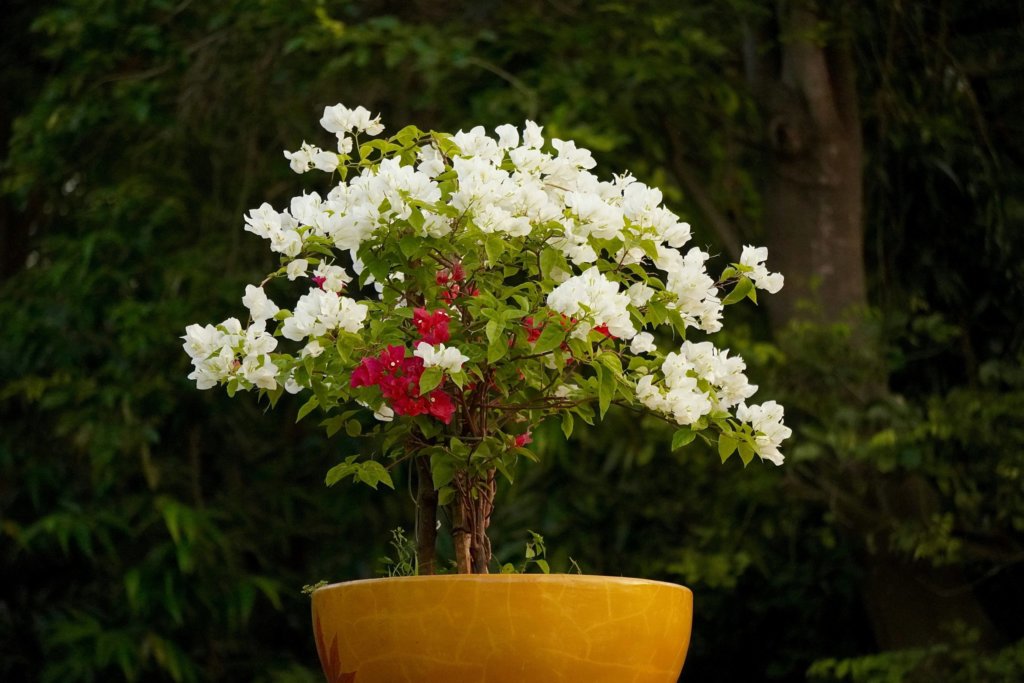
You shape a bougainvillea bonsai tree through careful pruning and controlled wiring. Each cut and bend affects flowering, branch strength, and the overall balance of your design.
Pruning for Shape and Flowering
Pruning bougainvillea keeps your bonsai bougainvillea compact and encourages more blooms. Bougainvillea glabra and similar types flower on new growth, so regular trimming supports repeat flowering.
Trim long shoots back to 2-4 leaves after each flush of growth. This keeps the canopy tight and builds fine branching. Remove:
- Crossing branches
- Weak interior growth
- Straight vertical shoots that break the design
Use sharp pruning shears. Clean cuts heal faster and lower the risk of disease.
You can prune lightly almost year-round in warm climates. Do heavier structural pruning in late spring or early summer when growth is strong. Avoid heavy cuts during cold periods, since bougainvillea bonsai trees slow down and recover more slowly.
Wiring Bougainvillea Bonsai Safely
Wiring bougainvillea helps you set branch direction and create movement. Young branches bend easily, but older wood becomes stiff and brittle.
Wire when shoots are still green and flexible. Use aluminum bonsai wire and wrap it at a 45-degree angle around the branch. Apply firm but gentle pressure. Do not squeeze the bark.
Check the wire every two to three weeks. Bougainvillea grows fast, and wire can bite into the bark quickly. Remove it as soon as the branch holds its shape.
Avoid wiring during heavy flowering. The branches are most brittle during this phase, and handling can damage the delicate, colorful bracts. This is because wiring during flowering should be avoided; not because the plant lacks “energy” (Bougainvillea is incredibly vigorous). It’s because the branches are most brittle during the bloom cycle and you risk knocking off the delicate bracts.
Styling and Bonsai Design Principles
Start with a clear front view of your bougainvillea bonsai tree. Choose the angle that shows the best trunk movement and root spread.
Common styles for bougainvillea include:
- Informal upright
- Slanting
- Cascade or semi-cascade
Bougainvillea glabra works well in cascade forms because of its flexible young shoots and heavy flowering.
Keep the design simple. Build a strong trunk line first, then develop primary branches. Space branches so light reaches the inner canopy. In botany and bonsai, “improving” leaf size usually means making them smaller (reduction) to match the tree’s scale.
High light exposure actually reduces leaf size, making them smaller and more compact, while low light causes leaves to grow larger and “leggy” as the plant tries to capture more solar energy. Therefore, maintaining good light not only supports steady blooming but is essential for achieving the proper proportions for your miniature tree.
Train slowly. Make gradual changes over several growing seasons to protect the health and strength of your bonsai bougainvillea.
Repotting, Propagation, and Ongoing Maintenance
You keep bougainvillea bonsai trees healthy by repotting at the right time, using proper soil, and watching for pests. You can also grow bougainvillea bonsai from cuttings with simple tools and steady care.
When and How to Repot Bougainvillea Bonsai
Repot bougainvillea bonsai in early spring when new growth begins. Most trees need repotting every 2 to 3 years, while older trees can wait longer.
Look for clear signs:
- Roots circle the pot
- Water pools on the surface
- Growth slows without other cause
Untangle the delicate roots gently and trim about one-third of the length. Trim thick roots more than fine feeder roots. Always use sharp, clean scissors.
Use a fast-draining mix. A simple blend works well:
- 50% akadama
- 50% pumice or lava rock
Place the tree at the same depth as before. Water deeply after repotting, then keep the tree in bright shade for one to two weeks. Avoid heavy pruning at the same time, since bougainvillea bonsai trees do not like root and top stress together.
Propagation by Cuttings and Seeds
You can grow bougainvillea bonsai from cuttings with good success. Seeds work, but they grow slower and may not match the parent plant.
For cuttings, follow these steps:
- Take a 4-6 inch semi-hardwood cutting in spring or early summer.
- Remove lower leaves.
- Dip the base in rooting hormone.
- Plant in moist, well-draining soil.
Keep the cutting warm and in bright, indirect light. Maintain light moisture, not soggy soil. Roots often form in 4-8 weeks.
Seeds require warmth and steady moisture. Germination can take several weeks. If you want predictable flower color and faster results, choose cuttings over seeds when you grow bougainvillea bonsai.
Pest and Disease Management
Bougainvillea bonsai care includes regular pest checks. Inspect leaves, stems, and soil every week.
Common pests include:
- Aphids
- Spider mites
- Whiteflies
- Mealybugs
- Scale insects
Wash small infestations off with water. Use insecticidal soap if pests return. Treat early to prevent leaf drop and weak growth.
Root rot is the most common disease. It starts from poor drainage or overwatering. Use well-draining soil and water only when the top half-inch feels dry.
Good airflow, full sun, and careful watering help you grow bougainvillea bonsai that stay strong and bloom well.
Frequently Asked Questions
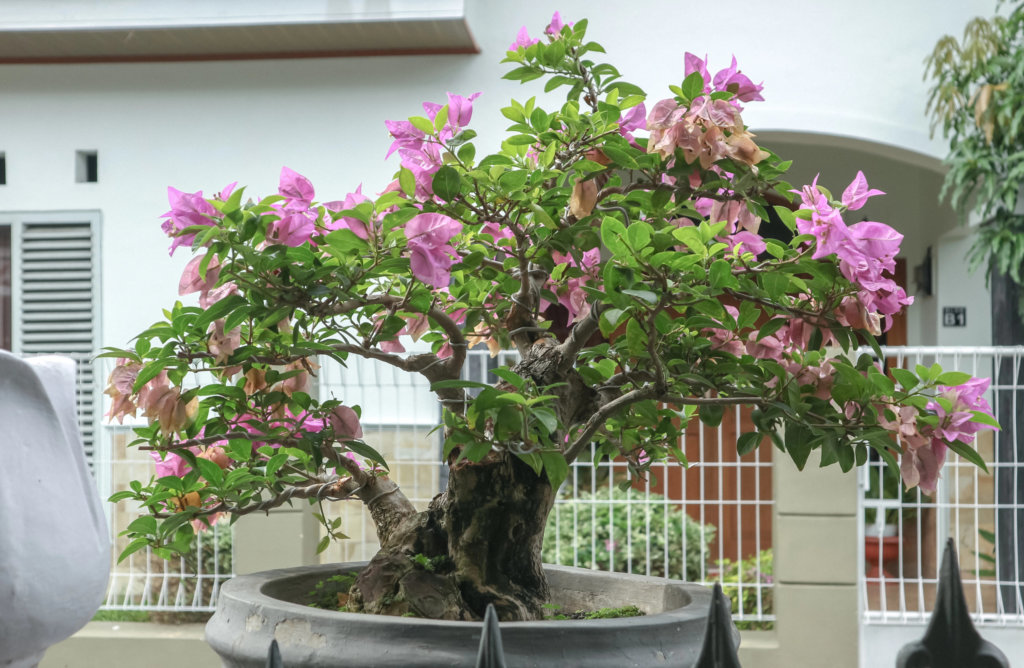
Bougainvillea bonsai need strong light, careful watering, regular feeding, and timed pruning to bloom well. You must also use fast-draining soil and watch closely for pests and root problems.
What is the optimal watering schedule for a bougainvillea bonsai?
Water your bougainvillea bonsai when the top half-inch of soil feels dry. Do not water on a fixed calendar. Check the soil with your finger each day in hot weather.
Water deeply until it runs from the drainage holes. Then let the soil dry slightly before you water again. Bougainvillea prefer short dry periods and do not tolerate soggy roots.
In summer, you may water several times a week. In winter, reduce watering and keep the soil slightly moist, not wet.
How often should bougainvillea bonsai be fertilized, and what type of fertilizer is best?
Feed your bougainvillea every two weeks during active growth in spring and summer. Use a balanced liquid fertilizer, such as 10-10-10 or 12-12-12, at half strength.
Switch to a fertilizer higher in phosphorus, such as 10-30-10, to support blooming. Avoid high nitrogen formulas because they promote leaf growth over flowers.
Stop or reduce feeding in late fall and winter when growth slows.
What are the ideal light conditions for a bougainvillea bonsai to thrive?
Place your bougainvillea bonsai in full sun. It needs at least 6 hours of direct sunlight each day to bloom well.
If you grow it indoors, set it in your brightest south-facing window. Weak light causes poor flowering and long, thin shoots.
During warm months, move your bonsai outdoors to increase light and air flow.
How should I prune and shape my bougainvillea bonsai for optimal growth?
Prune after each strong bloom cycle. Cut back long shoots to 2–4 leaves to keep the shape compact.
Use sharp scissors and remove crowded or crossing branches. This improves light and air movement inside the canopy.
You can wire young branches to guide their shape. Check the wire often because bougainvillea branches thicken fast and can scar easily.
What is the recommended soil mix for planting a bougainvillea bonsai?
Use a fast-draining soil mix. Mix akadama with pumice or lava rock in equal proportions to ensure stability.
The mix should hold some moisture but drain quickly. Bougainvillea roots rot in dense or heavy soil.
Repot every 2–3 years in spring. Trim roots lightly and avoid removing too much at once.
How can I protect my bougainvillea bonsai from common pests and diseases?
Inspect your plant often for aphids, spider mites, and whiteflies. These pests gather on new growth and under leaves.
Rinse the foliage with water or use insecticidal soap if needed. Treat early to prevent spread.
Prevent root rot by avoiding overwatering and using well-draining soil. Good sunlight and air flow also reduce fungal problems.