
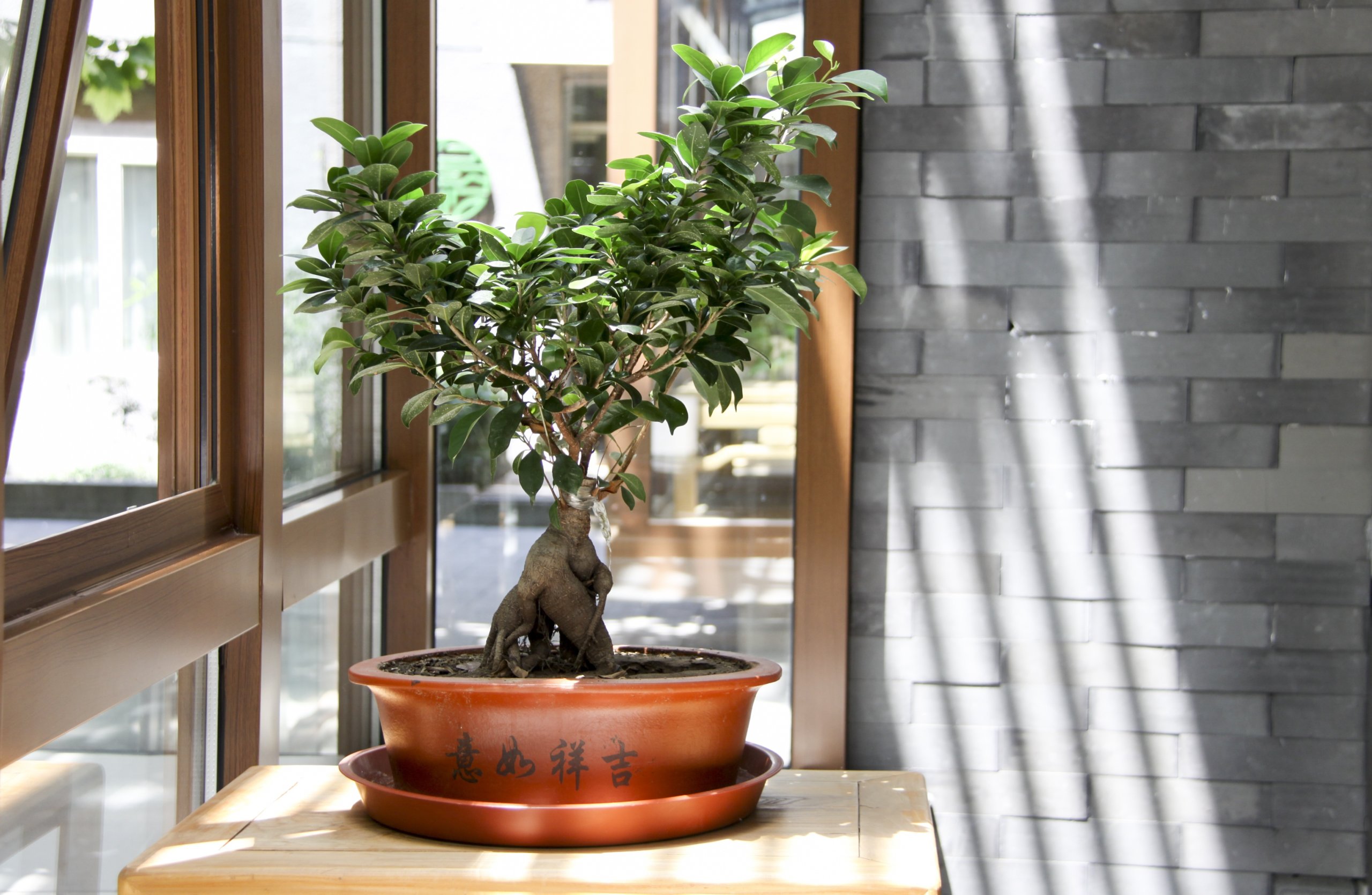
How to Grow a Bonsai Tree at Home
Growing a bonsai tree at home lets you shape a living plant into a small, balanced form that fits your space. You do not need special talent, but you do need patience and steady care. With the right steps, you can turn a young plant into a healthy bonsai that reflects your style.
To grow a bonsai tree at home, choose the right tree, plant it in proper bonsai soil, give it correct light and water, and shape it through careful pruning and training. Each part matters. When you control these basics, your tree stays strong and grows in the shape you guide it toward.
You will learn how to select a good starter tree, set it up for success, and use simple care and styling methods to keep it healthy. Clear answers to common questions will also help you avoid mistakes and build confidence as you grow.
Essential Steps to Grow a Bonsai Tree at Home
You grow a bonsai tree by choosing the right species, using proper pots and soil, and managing roots and water with care. Each step affects how well your bonsai tree stays small, healthy, and balanced.
Selecting Indoor vs Outdoor Bonsai Species
Start by deciding if you will keep your bonsai indoors or outdoors. This choice affects the tree’s health more than any other step.
Indoor bonsai usually come from tropical or subtropical species. Common choices include:
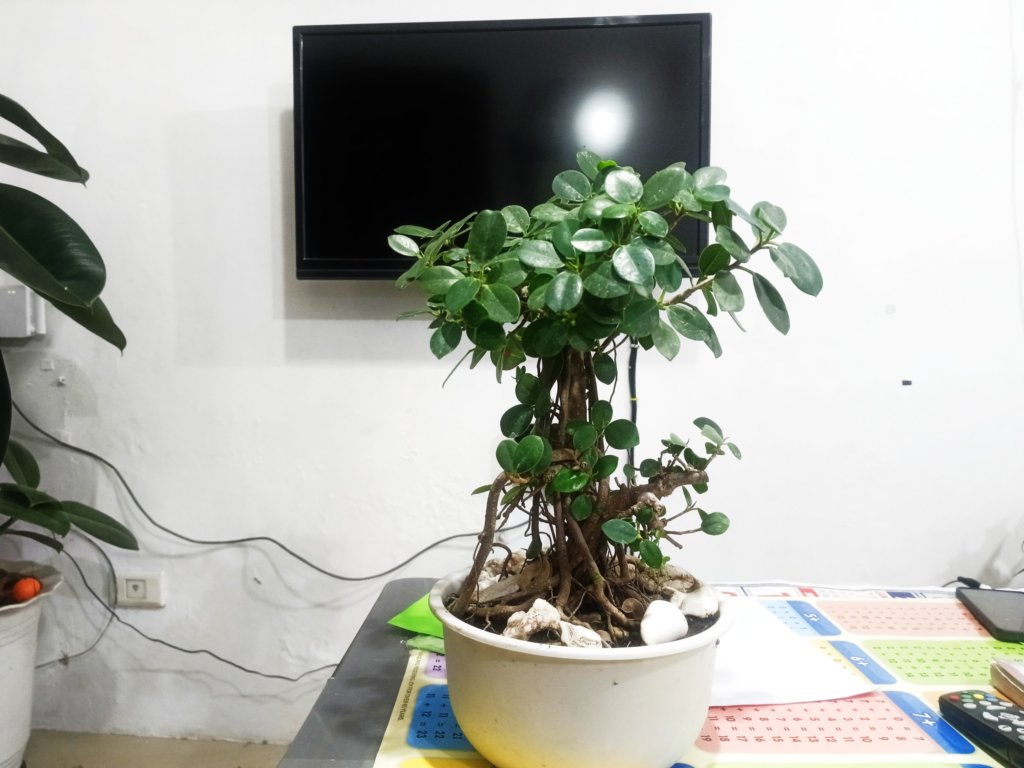
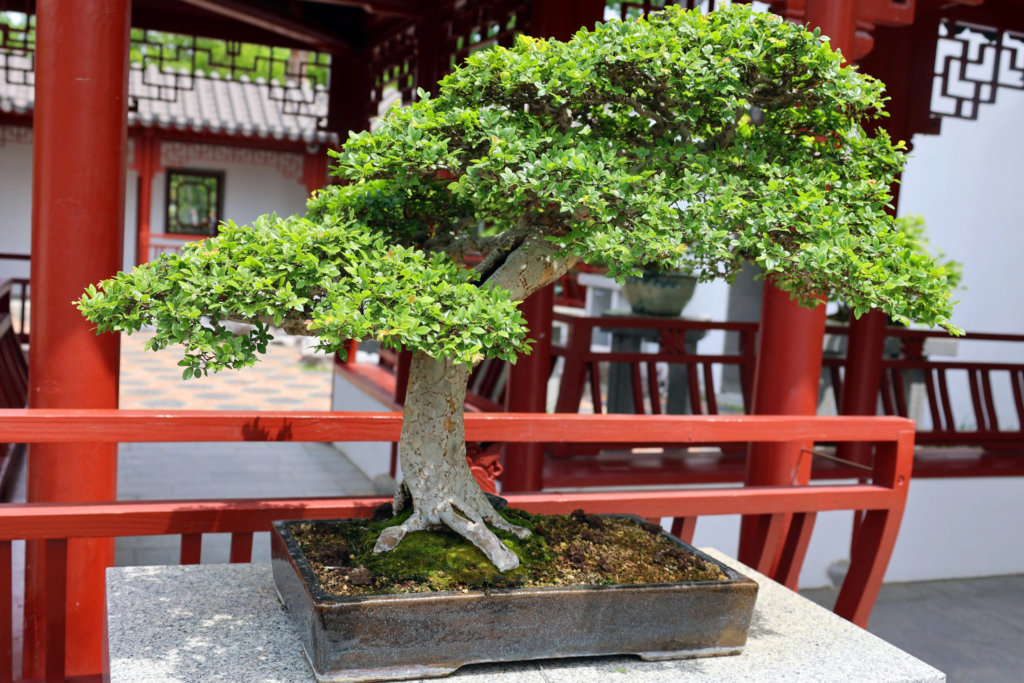
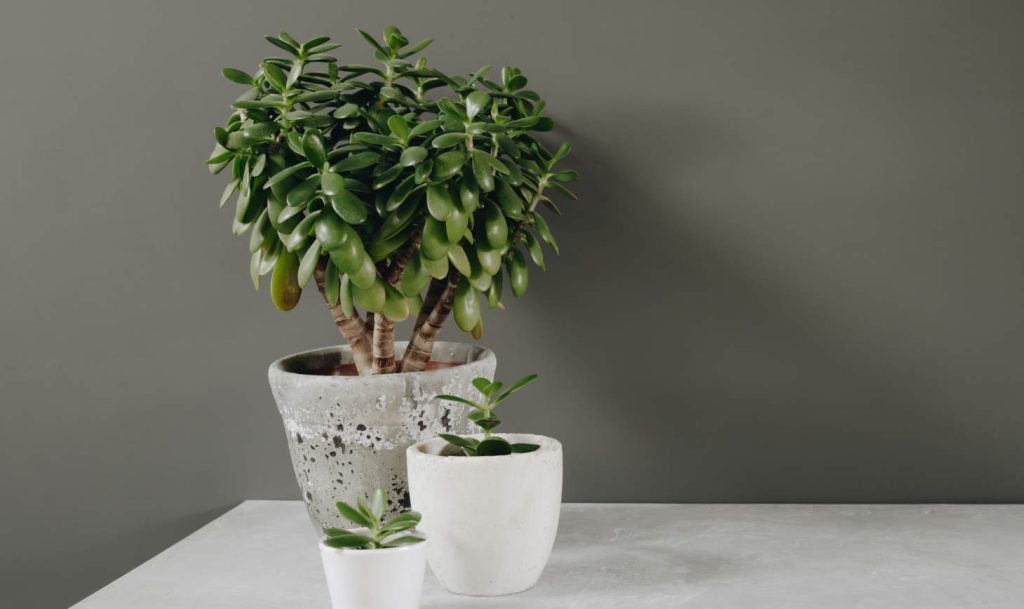
These bonsai tree species tolerate steady indoor temperatures and lower light. Place them near a bright window, ideally facing south or west.
Outdoor bonsai need natural seasons. Juniper, Pine, and Maple require cold winters to rest. If you keep them inside all year, they weaken and may die.
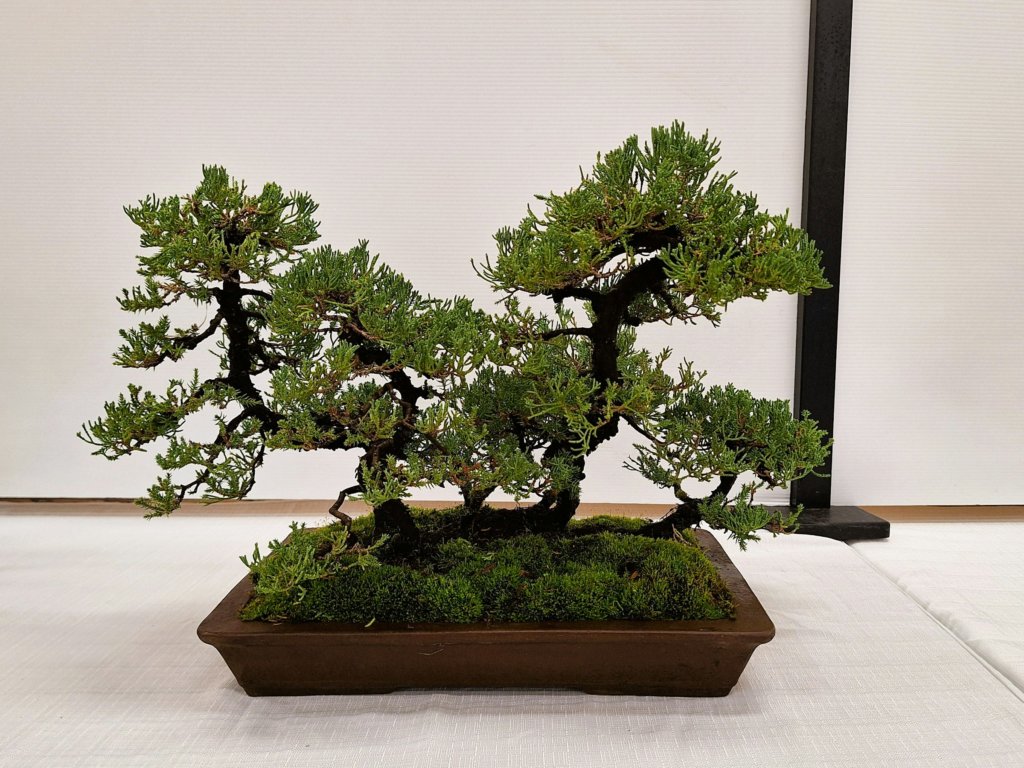
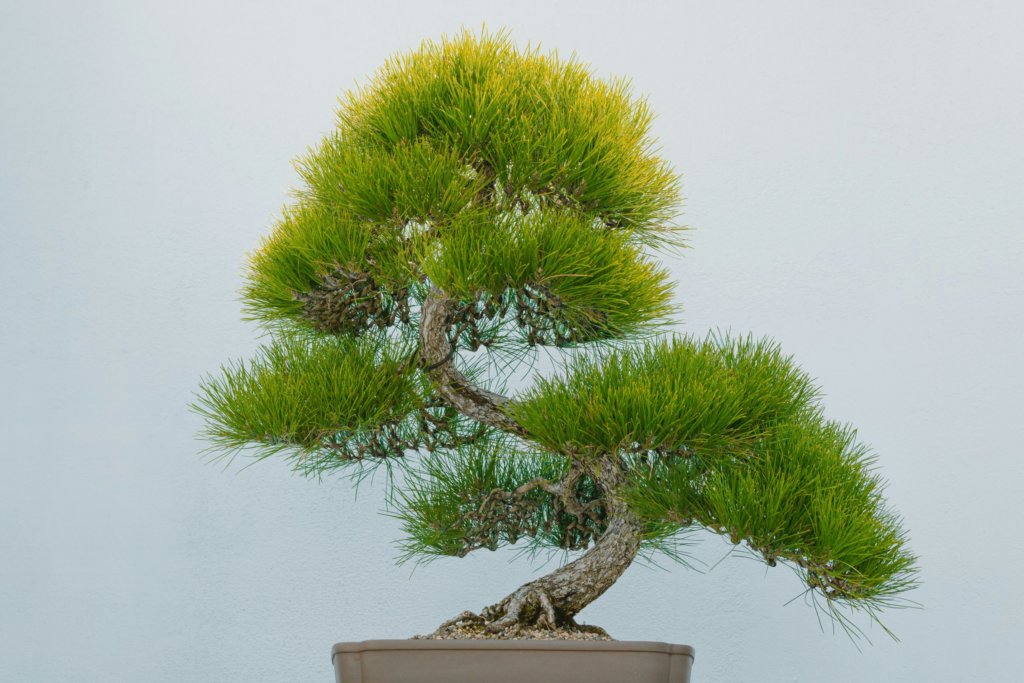
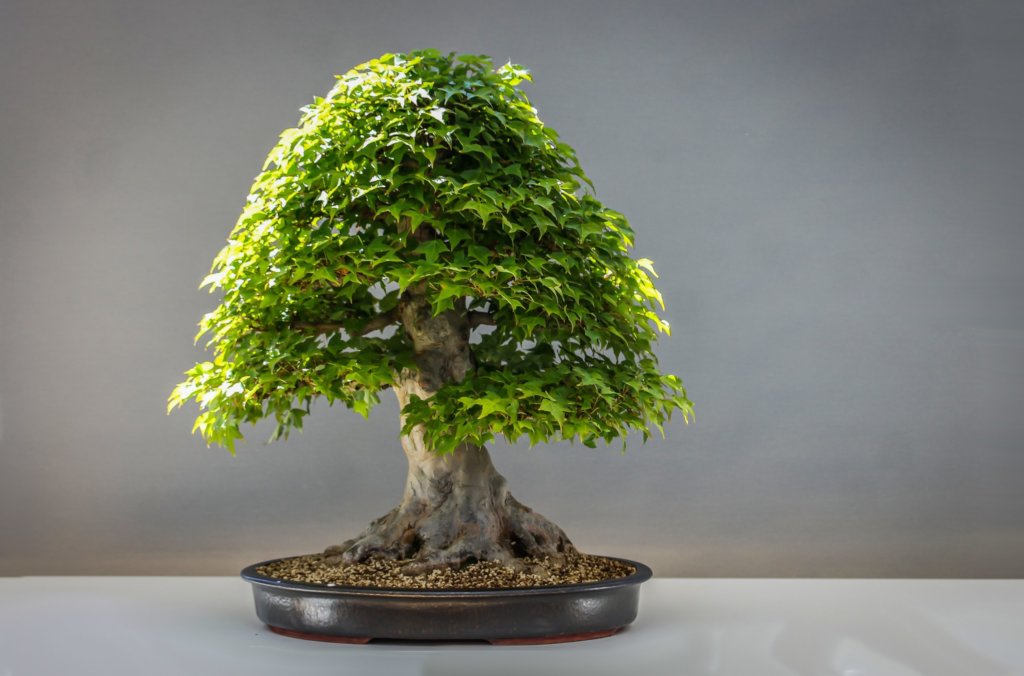
You can grow a bonsai tree from seed, from nursery stock, or from pre-bonsai material. Bonsai kits often include seeds and basic tools, but seeds take years to shape. Beginners often succeed faster with a young plant or pre-bonsai tree.
Choose a species that matches your climate and the space you have.
Preparing Bonsai Pots and Soil Mix
Bonsai pots are shallow and have drainage holes. Good drainage protects roots and helps prevent root rot.
Choose a pot where the length is roughly two-thirds the tree’s height. The depth should generally match the diameter of the trunk’s base. Always use mesh over drainage holes to keep soil in place.
Bonsai soil is not regular garden soil. It must drain fast but still hold some moisture.
A common bonsai soil mix includes:
- Akadama for water retention
- Pumice for airflow and root growth
- Lava rock for structure and drainage
You can adjust the mix based on your climate. In dry areas, use more akadama. In wet areas, increase pumice or lava rock.
Avoid dense potting soil. It traps water and limits oxygen, which damages roots.
Planting, Repotting, and Root Pruning Techniques
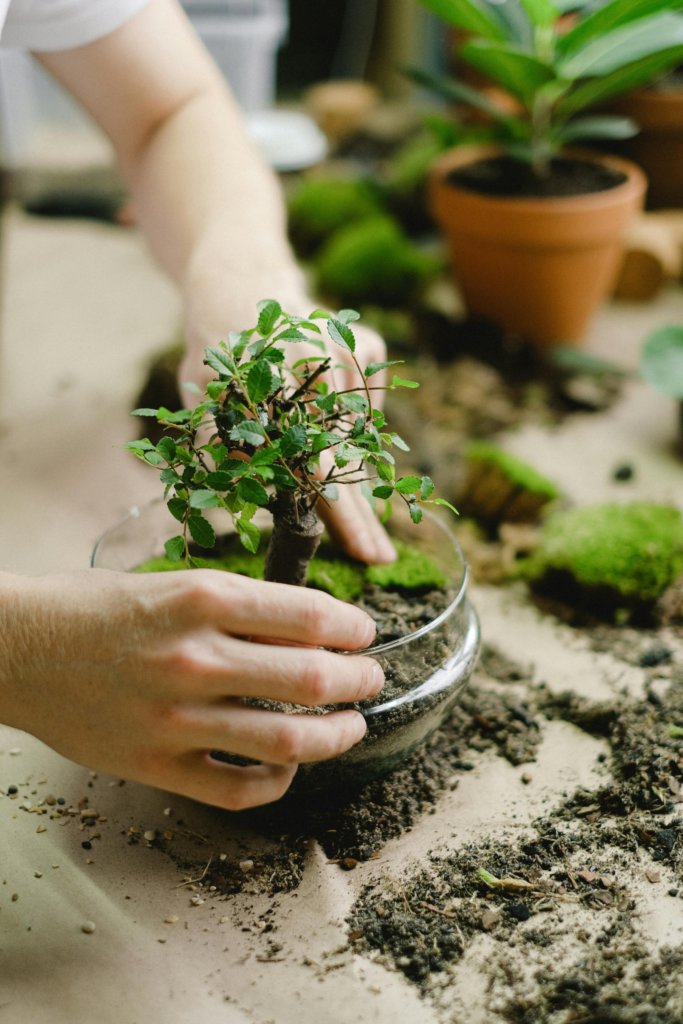
When you first plant your bonsai, spread the roots outward instead of letting them circle. This creates a stable base and improves nutrient flow.
Use aluminum or copper wire to anchor the tree in the bonsai pot. A secure tree grows stronger roots.
Repot most bonsai every 1–3 years. Fast-growing species need more frequent repotting. Slow growers need less.
During repotting, perform root pruning. Trim long, thick roots and remove up to one-third of the root mass. Keep fine feeder roots because they absorb water and nutrients.
Root pruning controls size and supports the shallow pot system. Always use clean, sharp tools to reduce stress and disease risk.
Repot in early spring for outdoor bonsai, just before new growth begins. For indoor bonsai, repot during active growth.
Watering and Preventing Root Rot
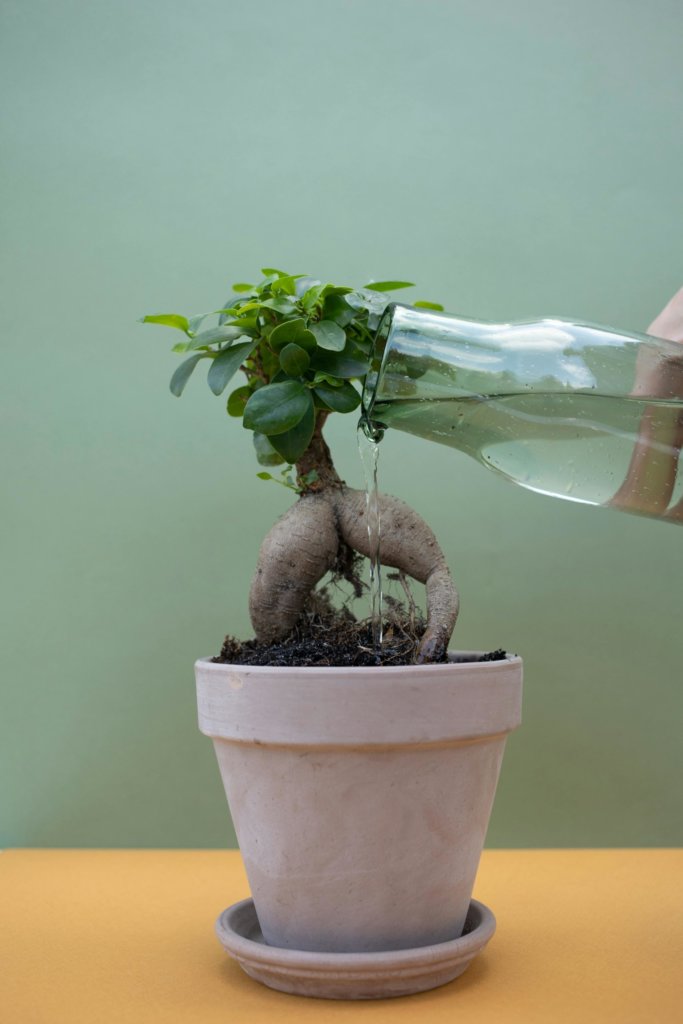
Watering is one of the most important parts of bonsai care. Both overwatering and underwatering cause problems.
Check the soil daily. Insert your finger about half an inch deep. If it feels slightly dry, water thoroughly.
When you water, soak the entire soil surface until water drains from the bottom holes. This flushes out salts and ensures full root coverage.
To prevent root rot, follow these rules:
- Use a well-draining bonsai soil mix
- Never let the pot sit in standing water
- Empty drip trays after watering
- Adjust watering based on season and light
Indoor bonsai may need water every few days. Outdoor bonsai in summer may need water once or twice a day.
Healthy roots stay firm and light in color. Soft, dark, or foul-smelling roots often signal rot. Adjust your soil and watering routine quickly if you see these signs.
Core Techniques for Bonsai Care and Styling
You shape a bonsai through steady pruning, careful wiring, and proper daily care. Focus on clean cuts, balanced structure, and consistent light, water, and feeding to guide healthy growth.
Pruning and Shaping Using Bonsai Tools
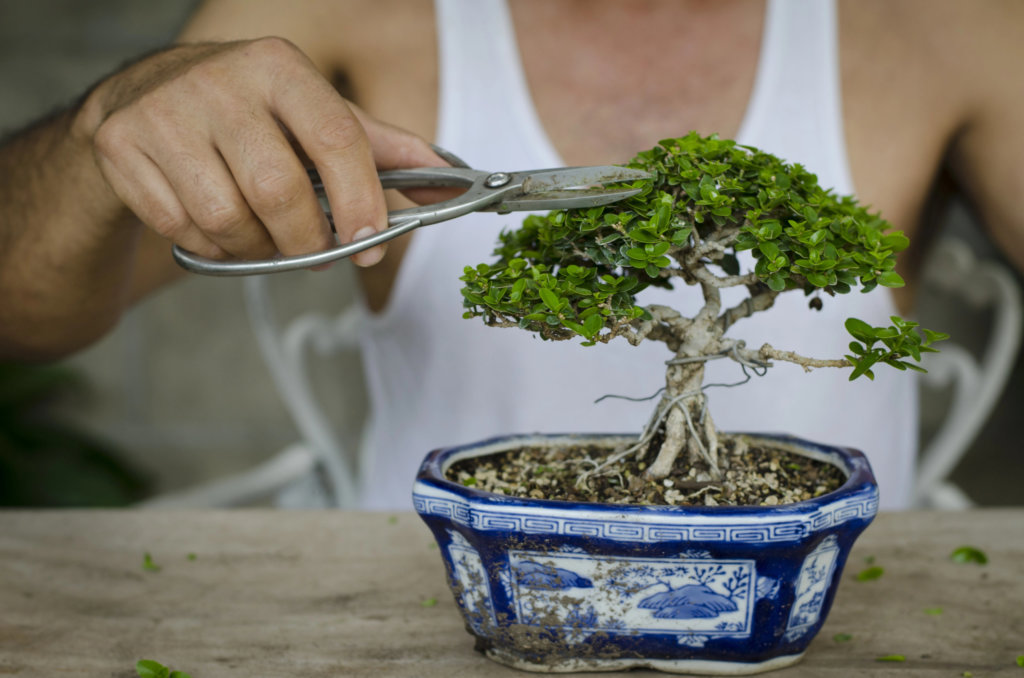
Pruning controls size and builds structure. You remove unwanted growth so light and air reach all parts of the tree.
Use pruning shears for small shoots and soft stems. For thicker branches, use a concave cutter. This tool makes a slight hollow cut that heals flatter and leaves less visible scars.
Trim new growth during the growing season to keep your tree compact. Cut back to two or three leaves after a branch grows six to eight leaves. This method supports fine branching.
Root work also matters. During repotting, use a root rake to loosen soil and untangle roots. Then trim long or thick roots to fit the pot and improve root balance.
Clean and sharp bonsai tools prevent damage and disease. Good tools support long-term bonsai cultivation.
Wiring and Bonsai Styling Principles
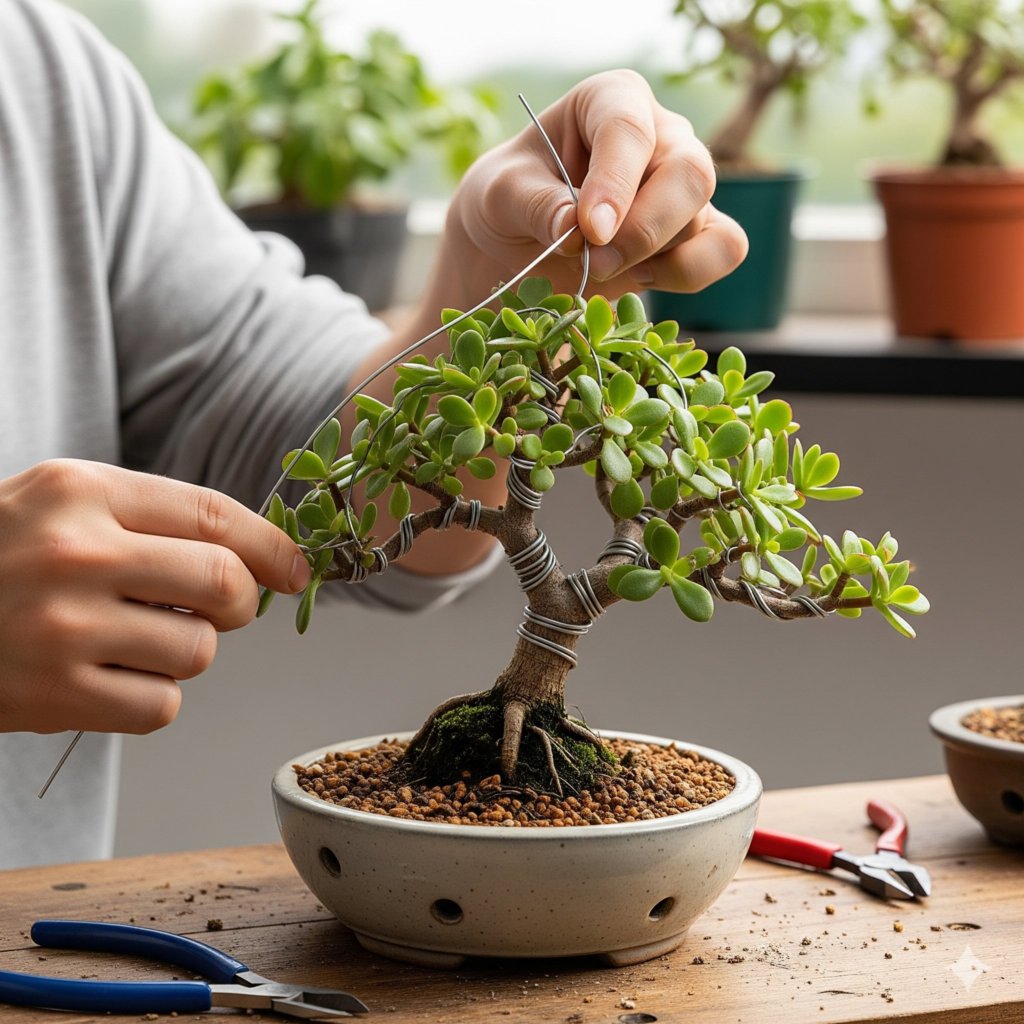
Wiring lets you guide the branch position and shape. You wrap bonsai wire around branches to bend them into place.
Choose aluminum wire for beginners because it bends easily. Use copper wire for a stronger hold on thicker branches. The wire should be about one-third the thickness of the branch.
Wrap the wire at a 45-degree angle. Do not wrap too tightly. Bend the branch slowly to avoid cracks.
Follow basic bonsai techniques such as creating a clear front, balanced branches, and a visible trunk line. Avoid crossing branches or blocking the trunk.
Check wired branches every few weeks. Remove the wire before it cuts into the bark. Careful timing protects your tree’s health and shape.
Seasonal Care, Lighting, and Fertilization
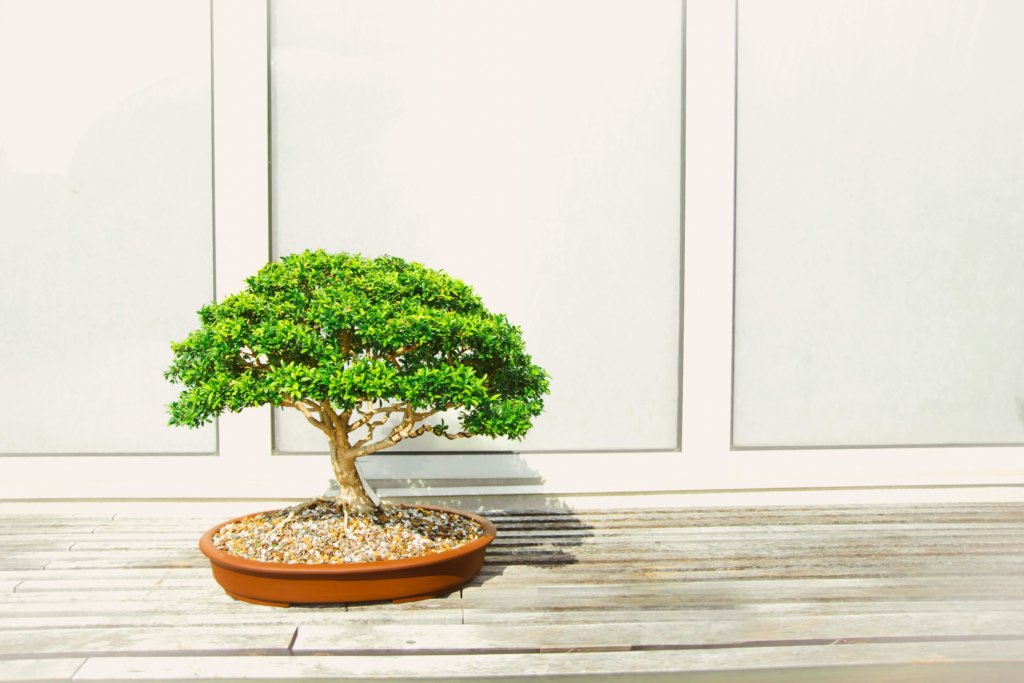
Light drives growth. Most bonsai trees need bright light, and many species grow best outdoors.
Place outdoor bonsai where they receive morning sun and some afternoon shade. Indoor bonsai need the brightest window you have, often south-facing. Turn the pot every week so growth stays even.
Water when the top soil feels slightly dry. Do not follow a fixed schedule. Water deeply until it drains from the bottom.
Feed during active growth in spring and summer. Use a balanced fertilizer at reduced strength every two to four weeks. Reduce feeding in fall and stop during winter dormancy for temperate trees.
Adjust care by season. Many bonsai society guides and bonsai garden displays show how local climate affects bonsai tree care.
Frequently Asked Questions
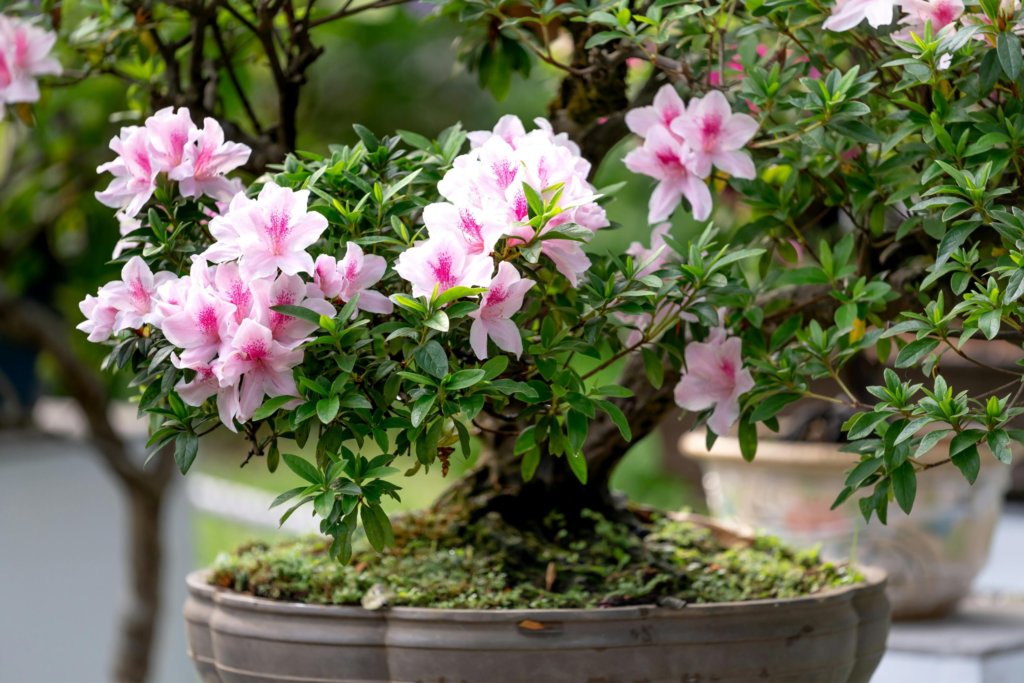
Growing bonsai indoors requires the right light, water, soil, pruning, and pest control. You also need to choose a tree species that fits your space and skill level.
What are the optimal conditions for growing a bonsai tree indoors?
Place your bonsai near a bright window with plenty of indirect sunlight. Most indoor trees need at least 4–6 hours of light each day.
Keep the room temperature between 60°F and 75°F. Avoid cold drafts, heaters, and air vents.
Maintain moderate humidity. You can set the pot on a humidity tray filled with water and pebbles to raise moisture around the tree.
Good air flow also helps prevent mold and pests. Do not keep the tree in a closed, dark room.
Which species of trees are best suited for beginners looking to start a bonsai?
Choose species that handle indoor conditions well and tolerate small mistakes. Ficus trees are a common choice because they adapt to low humidity and steady indoor light.
Carmona, also called Fukien tea, works well indoors if you provide strong light.
If you plan to grow outdoors, consider juniper, maple, or pine. These trees need natural seasonal changes and should not stay inside all year.
How often should I water my bonsai tree and what is the best technique?
Water your bonsai when the top layer of soil feels slightly dry. Do not water on a fixed schedule.
Check the soil daily by touching it with your finger. If it feels dry about half an inch down, water the tree.
Pour water slowly over the soil until it drains from the holes at the bottom of the pot. This method ensures the roots receive enough moisture.
Do not let the tree sit in standing water. Empty the drainage tray after watering.
What are the correct soil and fertilization requirements for healthy bonsai growth?
Use a well-draining bonsai soil mix. Standard garden soil holds too much water and can cause root rot.
A good mix often includes components like akadama, pumice, or lava rock. These materials allow air to reach the roots.
Feed your bonsai with a balanced liquid fertilizer during the growing season, usually spring through early fall. Apply fertilizer every two to four weeks, following the label directions.
Reduce or stop fertilizing in winter if your tree is not actively growing.
How do I prune and shape a bonsai tree to maintain its miniature size?
Prune new growth regularly to control size and shape. Trim back long shoots to maintain the tree’s outline.
Use sharp, clean bonsai scissors to make precise cuts. Remove dead or weak branches to improve structure.
You can shape branches with bonsai wire. Wrap the wire around the branch and bend it gently into position.
Check wired branches often. Remove the wire before it cuts into the bark.
What common pests and diseases should I look out for when caring for a bonsai at home?
Inspect your tree often for aphids, spider mites, and scale insects. These pests feed on sap and weaken the plant.
Look for yellow leaves, sticky residue, or fine webbing. These signs often point to insect problems.
Root rot can occur if you overwater or use poor soil. Leaves may turn brown or drop.
Treat pests early with insecticidal soap or neem oil. Adjust watering habits to prevent fungal and root issues.