
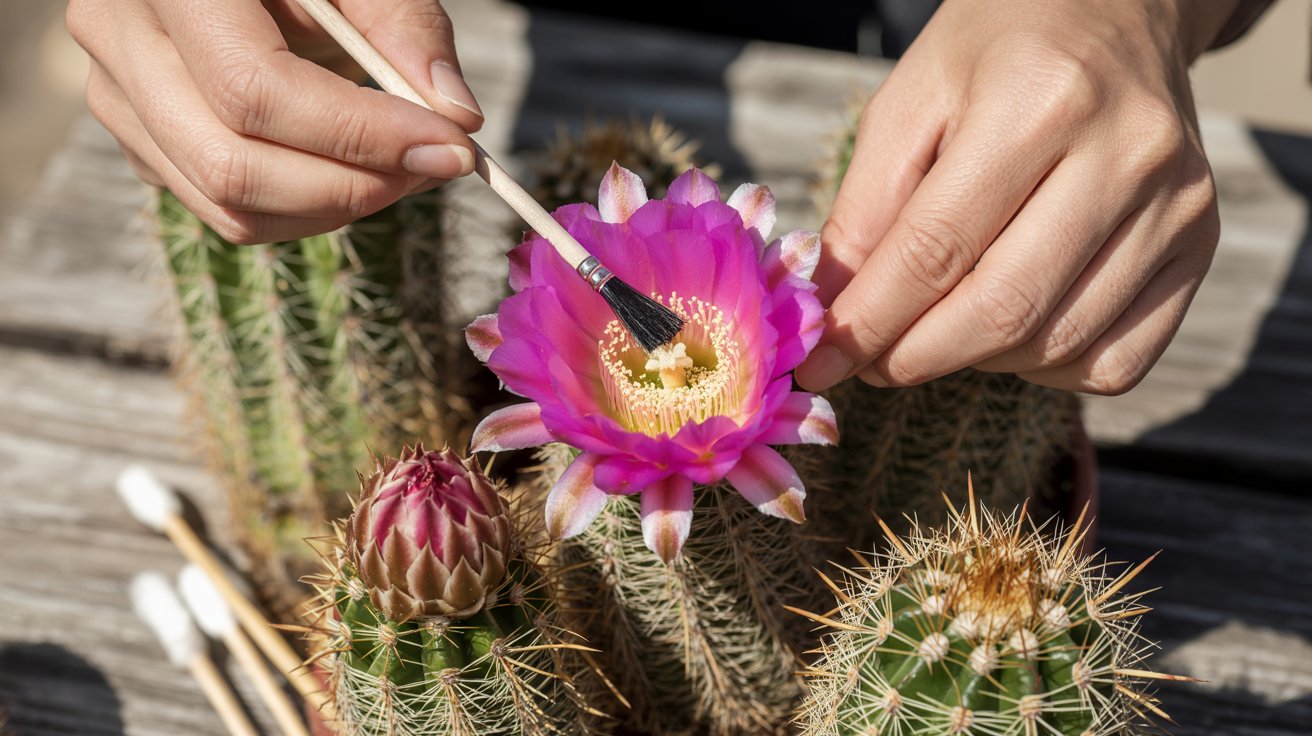
How To Hand Pollinate Cactus Flowers
Cactus flowers bloom for only a short time, making successful pollination a race against the clock. Whether you grow cacti indoors or in a garden, knowing how to hand pollinate helps ensure healthy seed production and new growth. You hand pollinate cactus flowers by moving pollen from one flower’s anther to another’s stigma using a small brush or cotton swab.
This simple approach allows you to create unique hybrids, preserve rare species, or just guarantee fruit and seeds when natural pollinators aren’t around. With a few basic tools and attention to timing, you can take control of the process and see results that nature sometimes misses.
Understanding when each flower is ready and transferring pollen gently can make all the difference. By learning this careful technique, you’ll enhance your success in growing stronger, more diverse cacti from your collection.
Key Takeaways
- Learn what makes cactus flowers ready for hand pollination.
- Use simple tools and gentle methods for effective pollen transfer.
- Improve seed production and diversity through consistent technique.
Cactus Flower Anatomy and Pollination Basics
Cactus flowers contain both male and female parts that allow pollination to take place within a single bloom. Knowing how pollen moves from the anther to the stigma helps you improve the success of hand pollination and produce viable seeds or fruit.
Key Floral Structures for Pollination
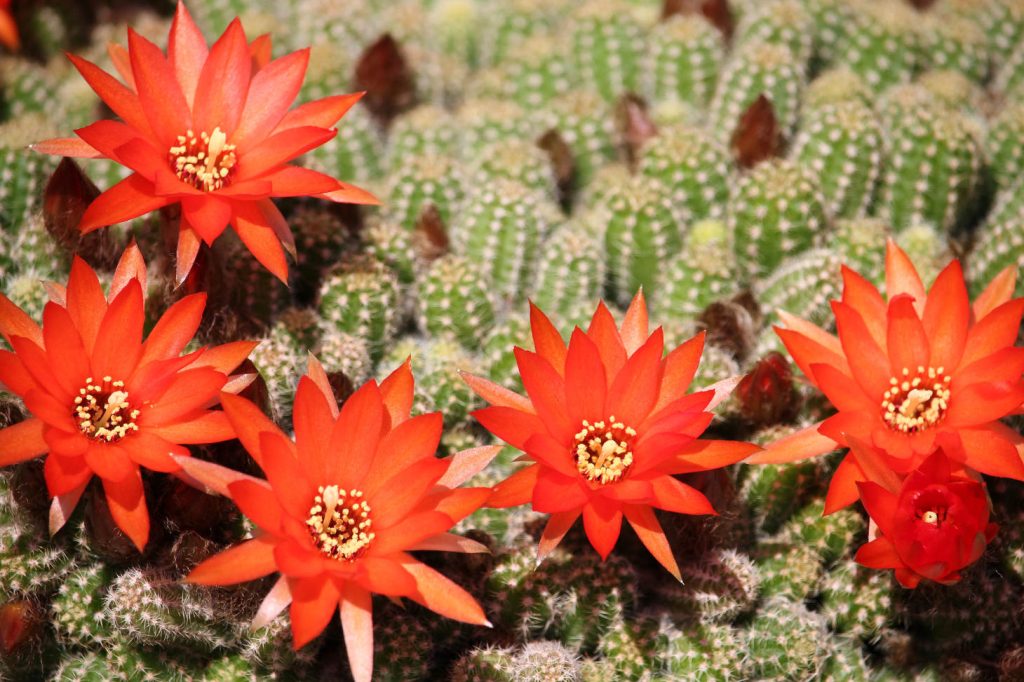
Cactus flowers are usually hermaphroditic, meaning both the stamens (male parts) and the pistil (female part) exist in the same flower. The stamens hold slender filaments topped with anthers that release yellow or white pollen. The pistil consists of the stigma, style, and ovary, which connect to form the reproductive center.
| Part | Function |
|---|---|
| Anther | Produces and holds pollen grains |
| Filament | Supports the anther |
| Stigma | Receives pollen |
| Style | Links stigma to ovary |
| Ovary | Forms seeds after fertilization |
You can easily see the bright stamens circling the central pistil. Recognizing these parts helps you know where to collect pollen and where to apply it.
Understanding Pollen and Stigma Roles
Pollen carries the male reproductive cells that fertilize the ovules inside the ovary. When you tap or brush a flower, the fine powder on your tool is usually pollen from the anther. Transferring these grains to the stigma, the sticky tip of the pistil, begins the fertilization process.
A receptive stigma often looks moist or shiny. This surface allows pollen to attach and germinate. Once the pollen grain settles, a small tube grows down the style, reaching the ovary to deliver the male cells. You can improve pollination by using a clean brush or cotton swab and applying pollen gently without damaging the floral structures.
Self-Pollination Versus Cross-Pollination
Some cactus species self-pollinate, meaning their own pollen can fertilize their stigma. This method works for cacti that bloom briefly or have limited pollinators. However, self-pollination can reduce genetic diversity and produce weaker seedlings over time.
Cross-pollination, which uses pollen from another cactus of the same species, usually results in stronger plants and more variety in offspring. When hand pollinating, to ensure genetic crossing, use pollen from a different plant. Labeling your crosses and noting which flowers you used helps track results and improve future pollination efforts.
Essential Tools and Preparation for Hand Pollination
Successful hand pollination of cactus flowers requires clean tools, proper timing, and careful handling. You need basic supplies to transfer pollen accurately, and your timing must match the brief period when cactus blooms are open and fertile.
Selecting the Right Equipment
Use clean, precise tools to move pollen without damaging the flower. Tweezers, small paintbrushes, or cotton swabs work best. Choose soft-bristled brushes for delicate blooms and fine-tipped tweezers for tighter or smaller flowers.
If you work with multiple plants, label each tool or clean it between use to prevent mixing pollen from different species. A magnifying glass can help you see fine flower details, especially in small cactus varieties. You might also keep a few petri dishes or wax paper squares nearby to gather and store pollen temporarily.
Keep your tools in a shallow tray or small container to stay organized. Avoid heavy or metal-tipped instruments that may bruise stamens or stigma surfaces. Lightweight, gentle tools give you better control and reduce damage to the delicate floral parts.
| Tool Type | Purpose | Notes |
|---|---|---|
| Tweezers | Handle or expose floral parts (e.g., anthers, petals) | Ideal for small or tightly closed flowers |
| Paintbrush | Transfer pollen without contact damage | Use soft natural bristles |
| Cotton Swab | Use soft, natural bristles | Replace after each plant |
Timing and Flower Readiness
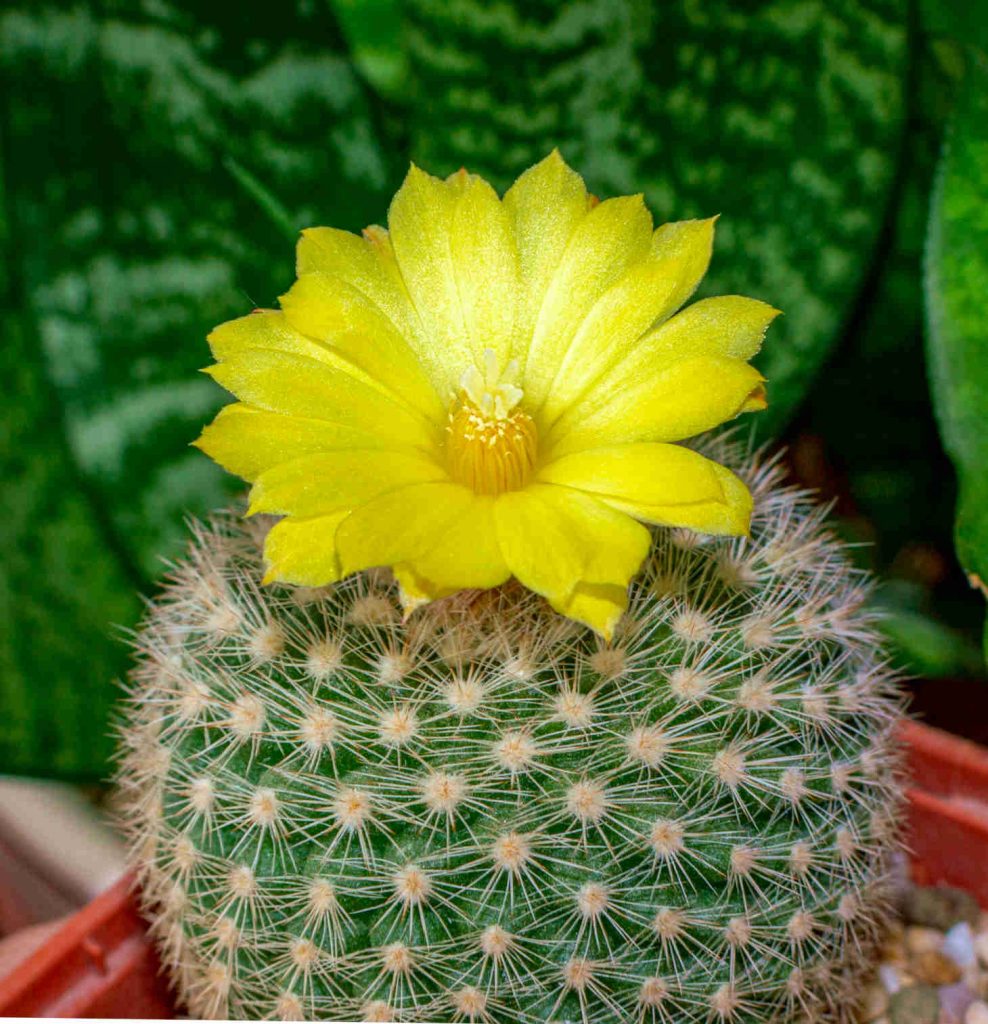
Accurate timing is crucial, as many cactus flowers are short-lived, blooming from a few hours to several days. You should hand pollinate during the morning hours, when pollen is dry but still fresh. Flowers are most receptive right after they open, so check your plants early to catch them at the right moment.
Look for visible pollen on the stamens and a slightly sticky stigma, which indicates readiness for pollination. Some cactus species bloom at night, so prepare lighting if you need to work after dark.
Avoid windy or hot conditions that can dry or blow away pollen. For future use, collect excess pollen and store it in a desiccated, sealed container at cold temperatures (4°C or below) to maintain viability.
Safety and Sterilization Practices
Clean tools help you prevent contamination that might affect seed quality. Before each session, wipe tweezers and brushes with 70% isopropyl alcohol and let them air dry. If you move between individual plants, repeat the sanitation process to prevent both pathogen spread and unwanted cross-pollination.
Wear gloves when handling cactus flowers with spines or when using alcohol for cleaning. Choose thin gloves that maintain dexterity. Keep a small first aid kit nearby in case of minor punctures or scratches.
Store your tools in a dry space to prevent rust or mold. Replace worn or damaged tools promptly. Good sanitation practices protect the health of both you and your plants and improve your success when transferring pollen.
Step-by-Step Guide to Hand Pollinating Cactus Flowers
Successful hand pollination depends on identifying flower parts, collecting viable pollen, and moving it carefully to ensure fertilization. Timing and gentle handling help protect the blooms and improve the chances of developing seeds or fruit.
Identifying Male and Female Flower Parts
Cactus flowers hold both male and female structures in most species, making it possible to pollinate a single bloom or mix pollen between compatible plants. The male parts include the stamens, which end in small anthers that release pollen. The female part is the stigma, located at the tip of the central pistil, often sticky to catch pollen.
Use a small flashlight or magnifying glass to inspect each flower. In open blooms, the stamens usually surround the stigma like thin filaments topped with yellow dust. When working with species that open only at night, such as some Echinopsis or Epiphyllum, rely on soft artificial light so you can see without stressing the plant.
Record which flowers are producing pollen and note the opening time, since cactus flowers may last only a day. Pollinate while the petals are fully open and the pollen appears dry but bright in color.
Collecting and Handling Pollen
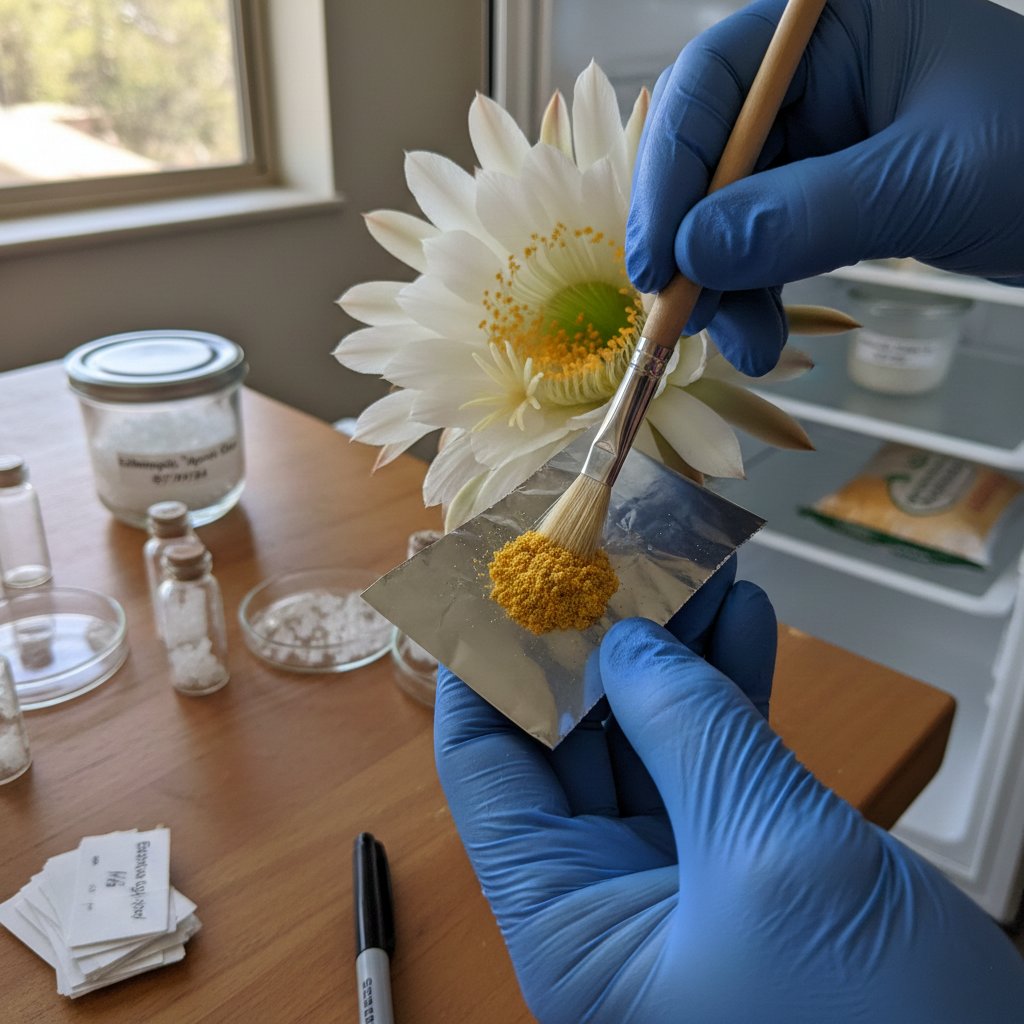
Use a clean, soft brush, cotton swab, or tweezers to collect pollen from mature anthers. The best time to collect is early in the bloom period, when pollen grains are loose and powdery. Avoid touching with your fingers since moisture and oils can cause clumping.
If you plan to store pollen for later use, place it on a small piece of paper or foil and let it dry for a few hours in a shaded, indoor spot. Then, seal it in a labeled container with silica gel or rice to reduce humidity. Store the sealed samples in a refrigerator (short-term) or a freezer (long-term) to maximize viability.
Keep pollen from different species separated. Labeling each sample prevents cross-contamination and helps you track successful crosses for seed collection.
Transferring Pollen to the Stigma
When the receiving flower fully opens and the stigma looks moist or slightly sticky, it’s ready for pollination. Dip a clean brush or swab into the collected pollen and gently tap or brush it onto the center of the stigma. Work slowly to avoid damaging petals or reproductive parts.
Repeat this step two or three times over several hours if the flower stays open. This increases the chance of successful pollen transfer, especially if humidity or temperature affects pollen stickiness.
For species that close quickly, act fast once the flower opens. After pollination, you may cover the bloom lightly with mesh or a paper cap to prevent insects or wind from disrupting the process. Watch for signs of fruit development over the following weeks.
Maximizing Pollination Success and Addressing Challenges
Strong pollination depends on timing, flower condition, and the plants’ environment. Success improves when you understand how cactus flowers respond to temperature, light, and natural pollinators while also learning how to correct common mistakes in technique.
Optimizing Pollination Conditions
Cactus flowers often open for only one day, so paying attention to timing is essential. Many species, particularly day-bloomers, release viable pollen early, but many others are night-blooming. Hand-pollinate during this period with a small brush or by gently dabbing the anthers to collect pollen and transferring it to the stigma.
Keep the environment stable. Temperatures above 90°F or below 60°F can reduce pollen viability. Maintain moderate humidity, and avoid wetting the flower since moisture can clump or wash away pollen.
If you grow multiple cactus species, note whether they prefer self-pollination (using pollen from the same flower) or cross-pollination (using pollen between plants). Labeling flowers or using small bags to isolate blooms helps control which flowers receive pollen. These steps improve fruit set and increase seed reliability.
| Condition | Ideal Range | Impact on Pollination |
|---|---|---|
| Temperature | 70–85°F | Best pollen activity |
| Humidity | 40–60% | Prevents clumping |
| Time of Day | Morning | Flowers open, viable pollen |
Natural Pollinators and Their Role
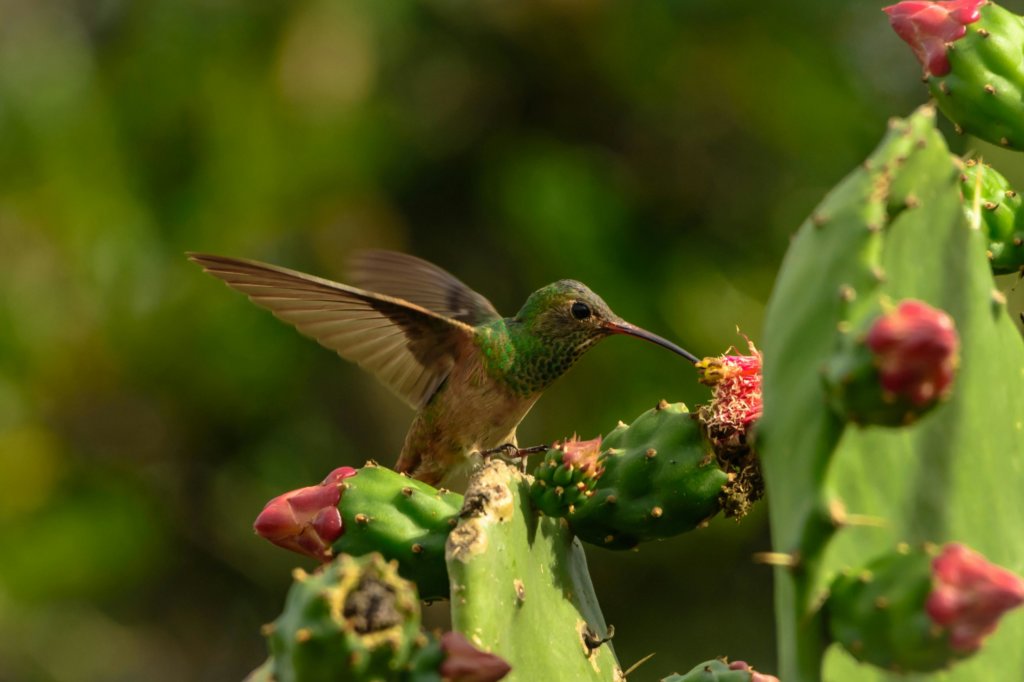
In nature, cactus flowers rely on bees, hummingbirds, butterflies, and even moths for pollination. These animals move pollen between flowers, promoting genetic diversity through cross-pollination. When natural pollinators visit your garden, they can reduce the need for manual work.
Encourage them by providing shallow water dishes, avoiding pesticides, and planting nectar-rich native plants nearby. Even if your cactus is primarily self-pollinating, visiting insects often increase fruit production.
However, some indoor or isolated cactus collections lack access to natural pollinators. In that case, hand pollination serves as a substitute. Observing how natural pollinators behave can still help refine your technique, for example, noting how they target the deepest part of the bloom where the stigma is most receptive.
Troubleshooting Common Problems
If flowers drop without fruit forming, pollen transfer may have failed. Ensure you use pollen from a fully open bloom and check that the pollen is not dull or sticky, which suggests it is past its prime. The timing for hand-pollination must match the specific flower’s period of receptivity (which varies by species, sometimes night or day).
Another issue is poor humidity control. Overly dry air makes pollen brittle, while excessive moisture causes it to clump. Instead of misting, use a humidity tray or humidifier in dry settings. A small fan in humid areas improves air circulation to stabilize conditions.
You might also see uneven results between cactus species. Some are self-fertile, while others strictly require cross-pollination. Keeping detailed notes on bloom times and pollination attempts helps identify patterns. Over time, you can fine-tune your technique to match the needs of each plant.