
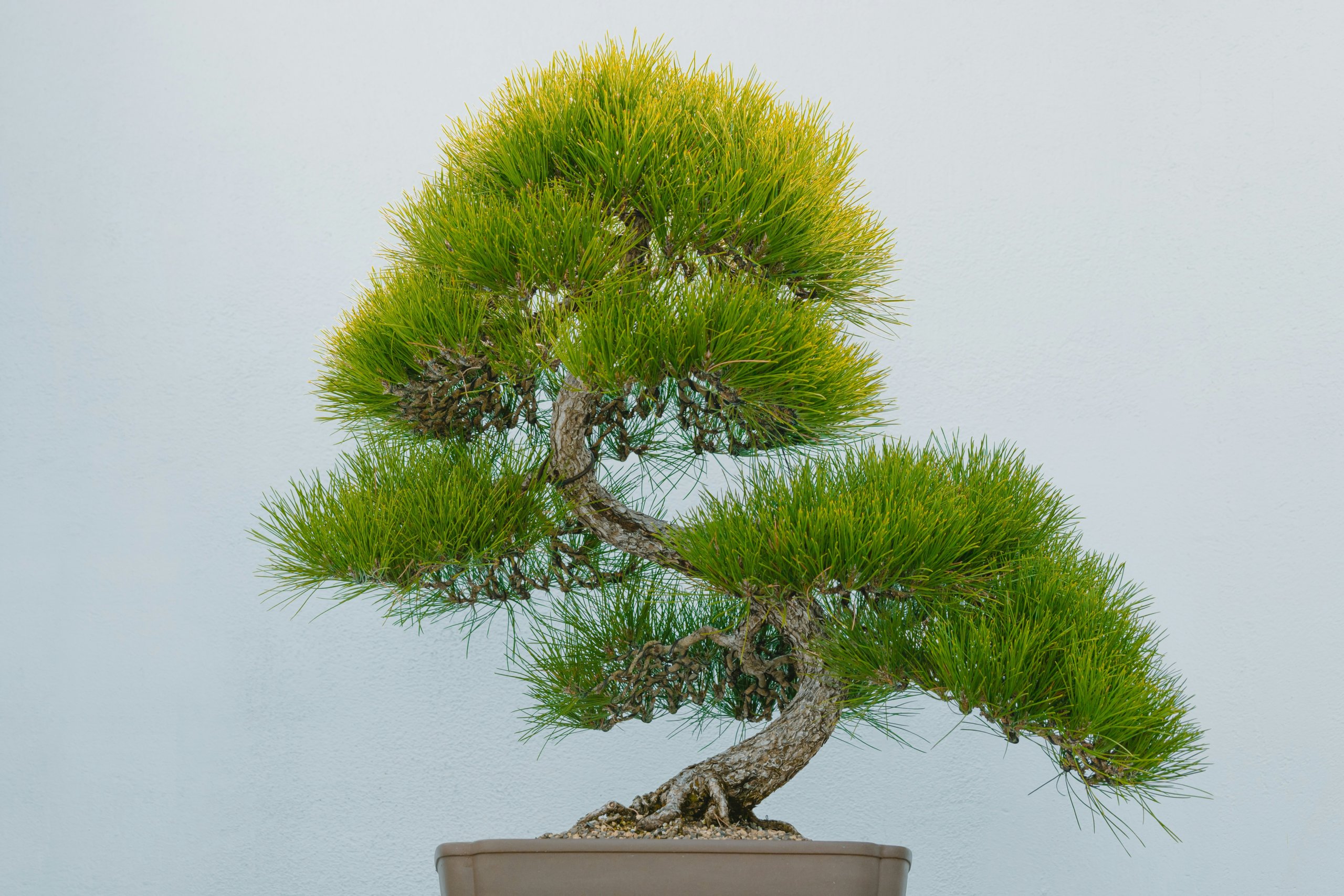
Pine Bonsai Care
Growing a healthy pine bonsai takes steady care and a clear plan. You shape a living tree that keeps its needles year-round and responds slowly to change. When you understand how pine species grow, you make better choices for watering, pruning, and placement.
You care for a pine bonsai by giving it full sun, watering when the soil dries slightly, pruning at the right time, and repotting in well-draining soil every few years. Pines prefer outdoor conditions, fresh air, and strong light. They also need careful needle control and wiring to keep their compact shape.
When you match your care to the type of bonsai pine you grow, you prevent common problems like weak growth, long needles, and pests. With steady attention, your pine bonsai tree can stay healthy and balanced for many years.
Key Takeaways
- Give your pine bonsai proper light, water, soil, and timely pruning to keep it healthy.
- Adjust your care based on the pine species and the season.
- Shape and repot your bonsai pine carefully to maintain size and structure.
Essential Pine Bonsai Care Techniques
Strong light, careful watering, fast drainage, and steady feeding keep your pine bonsai tree healthy. You must control each factor with care because pines react quickly to stress in a shallow bonsai pot.
Light Requirements and Placement
Place your pine bonsai tree outdoors in full sun. Most pine species, including Japanese black pine and Scots pine, need at least 6–8 hours of direct sunlight daily.
Strong light keeps needles short and dense. It also supports firm branch growth and balanced energy.
Avoid keeping your tree indoors for long periods. Indoor light is usually too weak and leads to long, thin needles and weak growth.
During extreme summer heat, protect the bonsai pot from overheating. Set the pot on a bench with airflow underneath, and provide light afternoon shade if temperatures rise above 95°F (35°C).
In winter, keep your pine outdoors. Most pine bonsai need cold dormancy. Protect roots from deep freezes by placing the pot on the ground or inside an unheated shelter when temperatures drop well below freezing.
Watering and Humidity
Water your pine bonsai when the top layer of soil feels slightly dry. Do not water on a fixed schedule. Check the soil daily during warm months.
Water thoroughly until it drains from the bottom holes of the bonsai pot. This method flushes out salts and keeps roots evenly moist.
Avoid constant wet soil. Poor control of watering and drainage leads to root rot, one of the most common causes of decline in pine bonsai care.
Pines prefer moderate humidity but tolerate normal outdoor levels. In very dry climates, place the pot on a humidity tray filled with gravel and water. Keep the pot above the water line so roots do not sit in water.
Reduce watering in winter. The tree uses less moisture during dormancy, but never let the root ball dry out fully.
Soil and Drainage
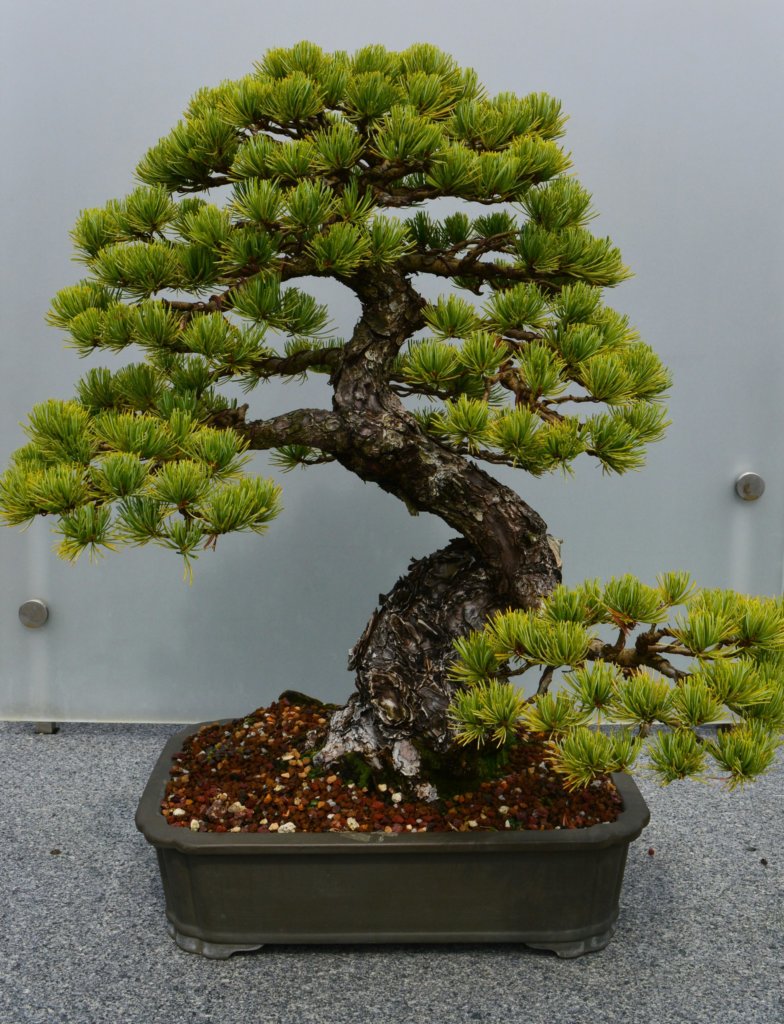
Use a fast-draining soil mix designed for bonsai. Pine roots need oxygen as much as water.
A common mix for pine bonsai care includes:
- Akadama for moisture control
- Pumice for root health
- Lava rock for structure and airflow
This blend prevents compacted soil and improves drainage.
Choose a bonsai pot with large drainage holes. Cover holes with mesh to keep soil in place while allowing water to flow freely.
Poor drainage leads to soggy soil, weak roots, and root rot. If water pools on the surface, your soil mix is too dense.
Repot young pine bonsai every 2–3 years. Repot mature trees every 3–5 years. Trim roots carefully and avoid removing too much at one time to keep a healthy bonsai.
Fertilization Practices
Feed your pine bonsai tree during the active growing season, usually from early spring through fall. Regular feeding supports strong needles and steady root growth.
Use one of these options:
- Slow-release fertilizer for steady nutrients over time
- Liquid fertilizer every 2–4 weeks
- Mild organic fertilizer, such as fish emulsion
Apply fertilizer to moist soil to avoid root burn.
Reduce feeding during extreme summer heat. Stop fertilizing in late fall as the tree enters dormancy.
Young trees in development need more feeding than refined bonsai. Adjust the amount based on your goals, but avoid overfeeding. Too much fertilizer causes long needles and coarse growth, which weakens the refined look of your pine bonsai tree.
Choosing and Understanding Pine Species
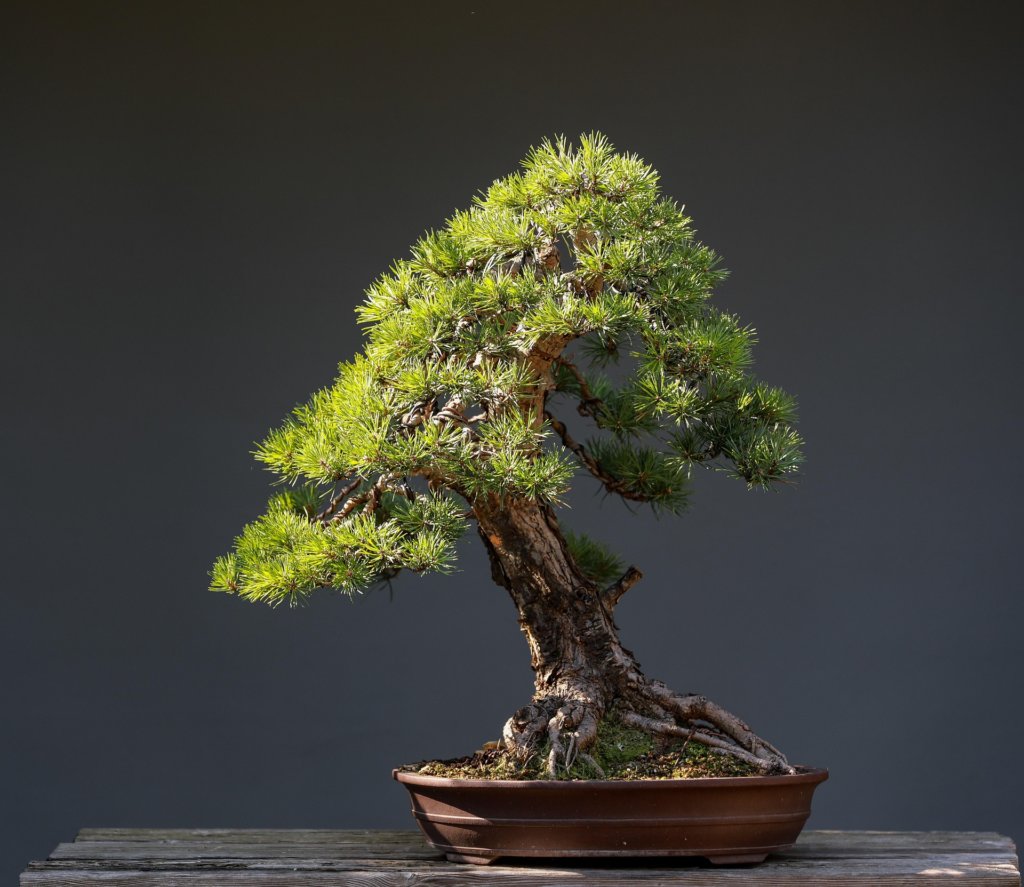
You need to match your care methods to the exact pine species you grow. Growth habits, needle type, and flush patterns all affect pruning, wiring, and long-term design.
Popular Species for Bonsai
Several pine species (Pinus) work well as bonsai, but each behaves differently.
Japanese black pine (Pinus thunbergii) is one of the most widely used. It is strong, tolerates heavy pruning, and supports detailed shaping. Many growers choose it for traditional Japanese-style bonsai pine designs.
Japanese white pine (Pinus parviflora), a five-needle pine, has softer needles and a refined look. It suits more delicate forms.
Scots pine (Pinus sylvestris) adapts well to colder climates and develops rugged bark.
Mugo pine (Pinus mugo), also called mountain pine, stays compact and works well for smaller trees.
Other options include Japanese red pine, Aleppo pine, Ponderosa pine, pitch pine, and Rocky Mountain Bristlecone Pine (Pinus aristata). Some of these, like Ponderosa, have long needles, which can limit design options.
Choose a species that fits your climate first. Then consider needle size, growth speed, and how much maintenance you can provide.
Single-Flush vs. Double-Flush Pines
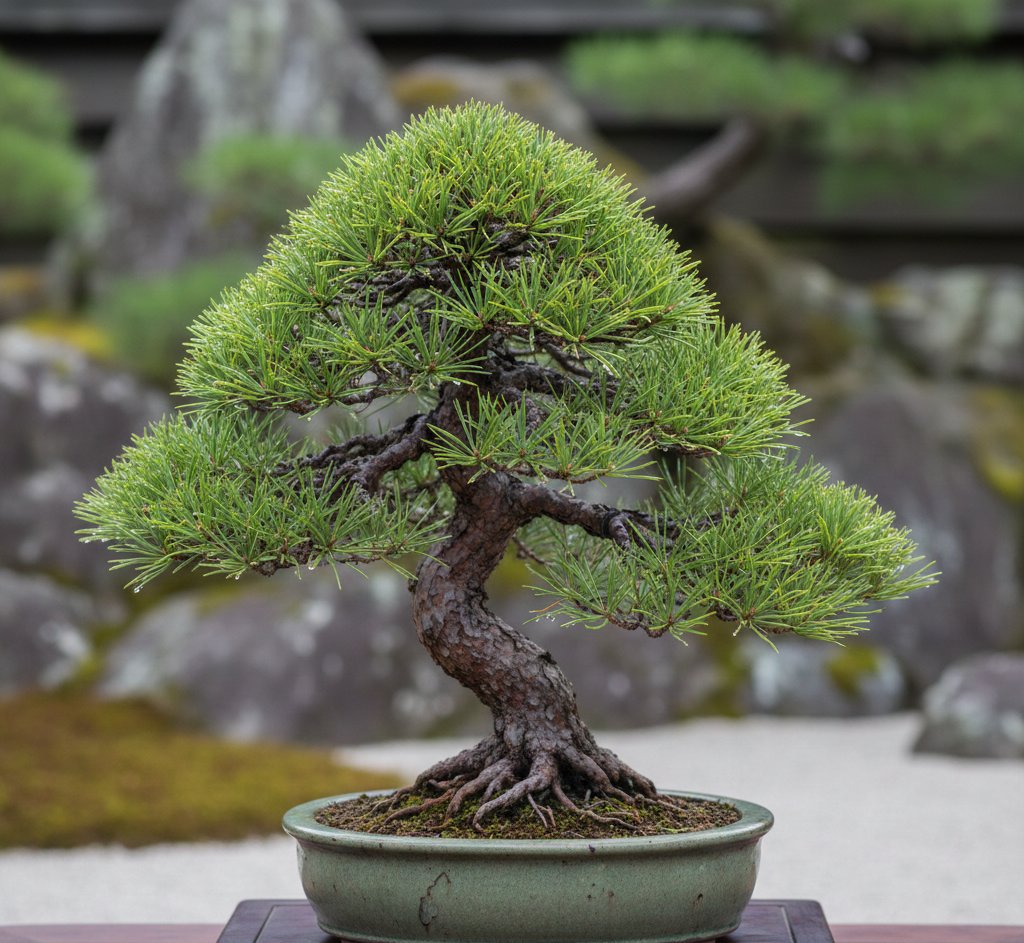
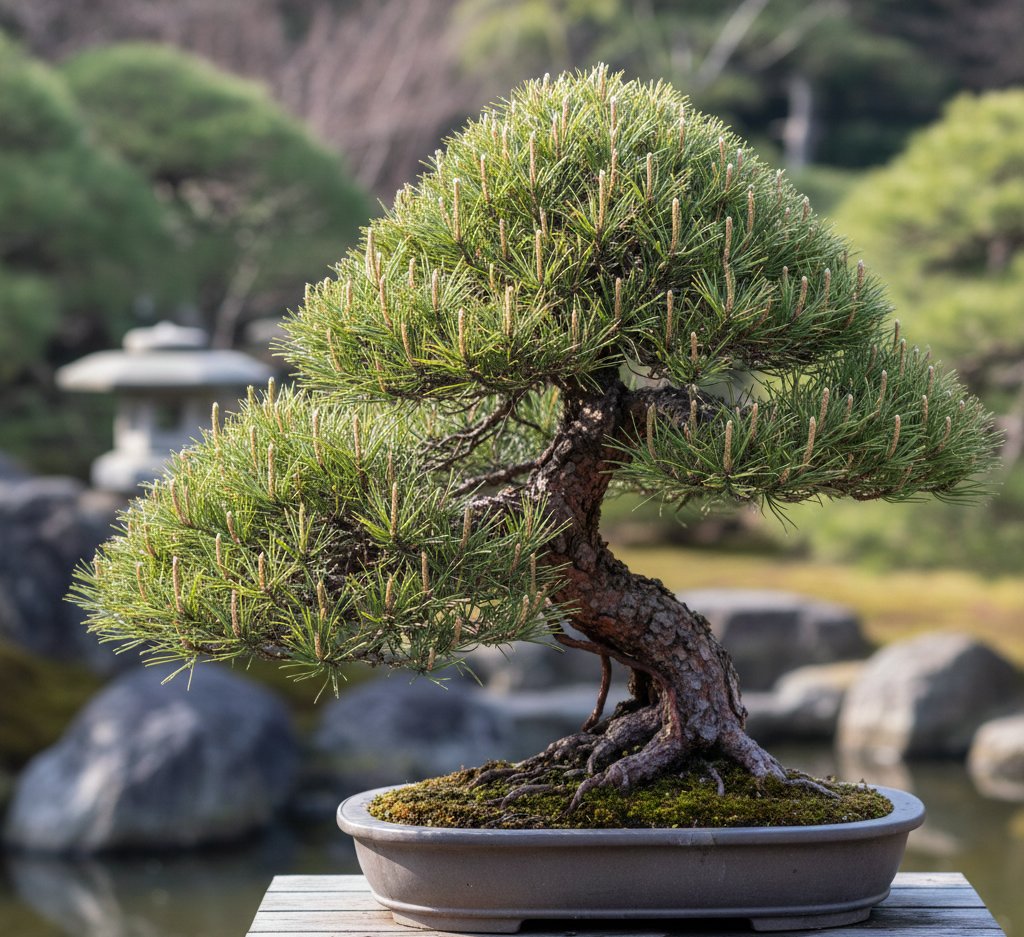
You must know whether your tree is a single-flush pine or a double-flush pine. This affects how and when you prune.
- Double-flush pines produce two growth cycles per year.
- Example: Pinus thunbergii (Japanese black pine).
- You can remove spring candles to trigger a second, smaller flush.
- This helps you reduce needle length and build dense ramification.
- Single-flush pines produce one growth cycle per year.
- Examples: Pinus parviflora (Japanese white pine), Pinus sylvestris (Scots pine), Pinus mugo, and bristlecone pine.
- You must rely on selective pruning and bud control instead of full candle removal.
If you treat a single-flush pine like a double-flush pine, you can weaken or damage it. Always confirm the species before applying seasonal techniques.
Selecting Pine Material
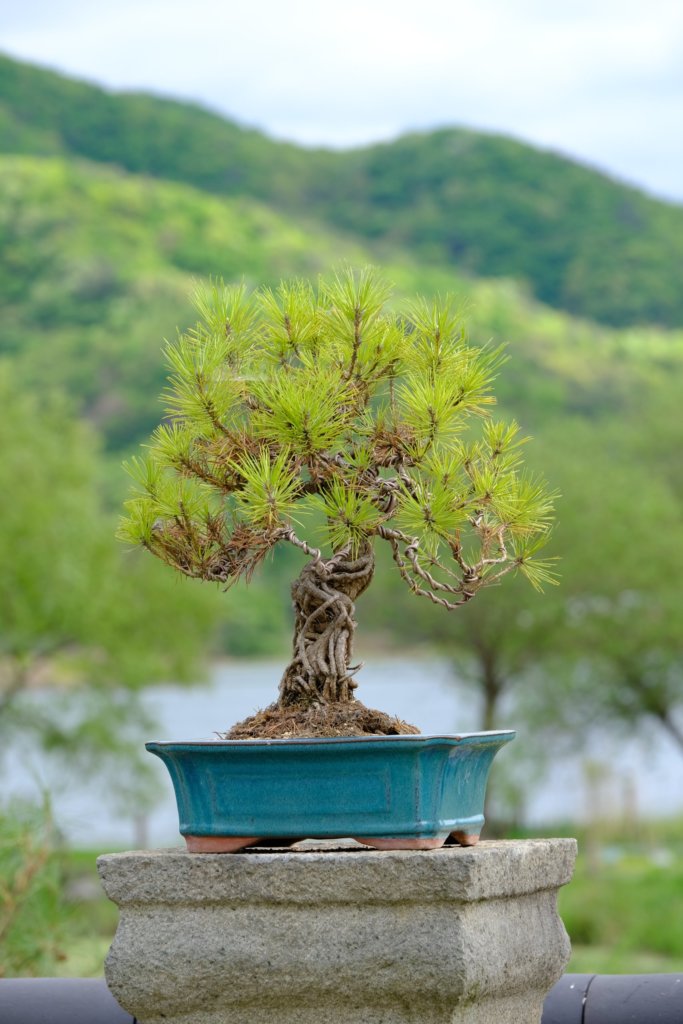
Start with healthy material. Strong roots and firm green needles matter more than trunk thickness at first.
Look for:
- Even needle color with no yellowing
- Visible buds close to the trunk
- A trunk with movement or taper
- No major scars or reverse taper
Avoid trees with very long bare sections and no interior buds. Pines do not always back-bud on old wood, especially weaker species.
When buying nursery stock, check the label for the full botanical name, such as Pinus mugo or Pinus sylvestris. This helps you apply the correct pruning schedule.
Young material gives you flexibility in shaping. Older collected trees may offer strong trunks but need careful recovery time.
Understanding Needle Length and Growth
Needle length shapes the final look of your bonsai pine. Shorter needles create a better proportion in small and medium trees.
Species choice plays a major role:
- Pinus parviflora (five-needle pine) often has naturally shorter, softer needles.
- Pinus thunbergii can reduce needle size with proper candle control.
- Ponderosa pine and Aleppo pine tend to have longer needles, which are harder to shorten.
You control needle size through balanced feeding, light exposure, and pruning. Strong spring growth often produces longer needles. Controlled feeding after candle pruning helps manage size.
Growth habit also matters. Vigorous species like Japanese black pine grow quickly and need regular maintenance. Slower species like bristlecone pine grow more gradually and require patience.
Match needle size to tree size. Smaller bonsai require naturally shorter needles or careful seasonal control to maintain proportion.
Pruning, Wiring, and Shaping Pine Bonsai
You control the form and health of your pine bonsai through careful pruning, timely wiring, and correct candle work. Each cut and bend directs energy, supports balanced growth, and shapes the structure for years to come.
Maintenance Pruning and Back-Budding
Use maintenance pruning to hold the tree’s shape and control size. Cut back long shoots to a pair of healthy needles or side branches. Remove weak, shaded growth under dense pads to improve light and air flow.
Pines do not back-bud easily on old, bare wood. You must leave some needles on a branch if you want back-budding. New buds often form at the base of needles or near existing buds, not on smooth bark.
To encourage adventitious buds, increase light to inner branches and reduce strong top growth. Trim the apex harder than the lower branches. This shifts energy downward and supports balanced growth across your Pinus bonsai.
Structural pruning is best done in early spring or late autumn. Maintenance pruning should occur throughout the growing season, from spring to late fall.
Wiring Timing and Techniques
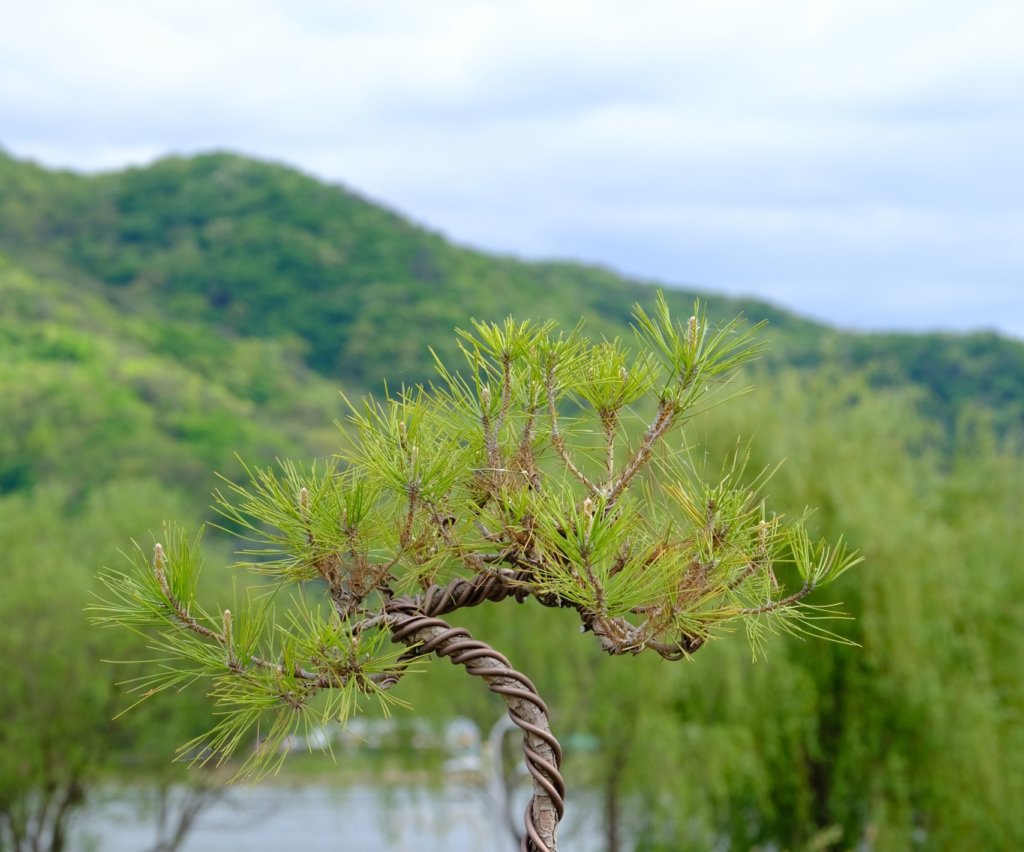
Wire your pine bonsai to set branch position and movement. Apply wire in late fall or winter when growth slows. The branches hold shape better, and you see the structure clearly.
Use annealed copper wire for superior holding power on stiff pine wood. While beginners use aluminum, the industry standard for pines is annealed copper wire. Pines are very strong; copper provides more holding power with a thinner gauge, which is necessary for the stiff wood of a pine.
Anchor the wire at the trunk and wrap it at a 45-degree angle along the branch. Bend slowly with steady pressure.
Follow these basic steps:
- Choose wire about one-third the branch thickness.
- Wrap firmly but do not crush the bark.
- Bend in small moves, not one sharp push.
Check the wire every few weeks during the growing season. Pines thicken fast, and wire can scar the bark. Remove it as soon as the branch holds its shape.
Candle Pruning and Decandling
In spring, pines push new shoots called candles. These candles control future needle length and branch strength. Managing them is key when learning how to bonsai a pine tree.
For strong areas, shorten or remove some candles. Leave weaker areas untouched. This balances energy across the tree.
Decandling means cutting off fully extended candles in early summer, most common with Japanese black pine. After you cut them, the tree often produces a second flush of shorter shoots. This creates tighter growth and smaller needles.
Do not decandle weak trees. Healthy roots and strong spring growth must come first.
White pines respond better to selective candle shortening rather than full decandling. Always match the method to your pine species.
Styling Considerations
Shape your pine bonsai with a clear structure in mind. Start with trunk line, then set primary branches, and finally refine smaller shoots.
Keep these points in focus:
- Build strong lower branches first.
- Reduce thick upper growth to prevent shade.
- Space branch pads so light reaches inner buds.
Avoid crowding. Pines need light on their needles to stay healthy and produce buds.
When you shape your tree, think long term. Pines grow slowly, and major changes take years. Careful pruning, steady wiring, and planned candle work help you create a stable design with balanced growth.
Repotting, Seasonal Care, and Troubleshooting
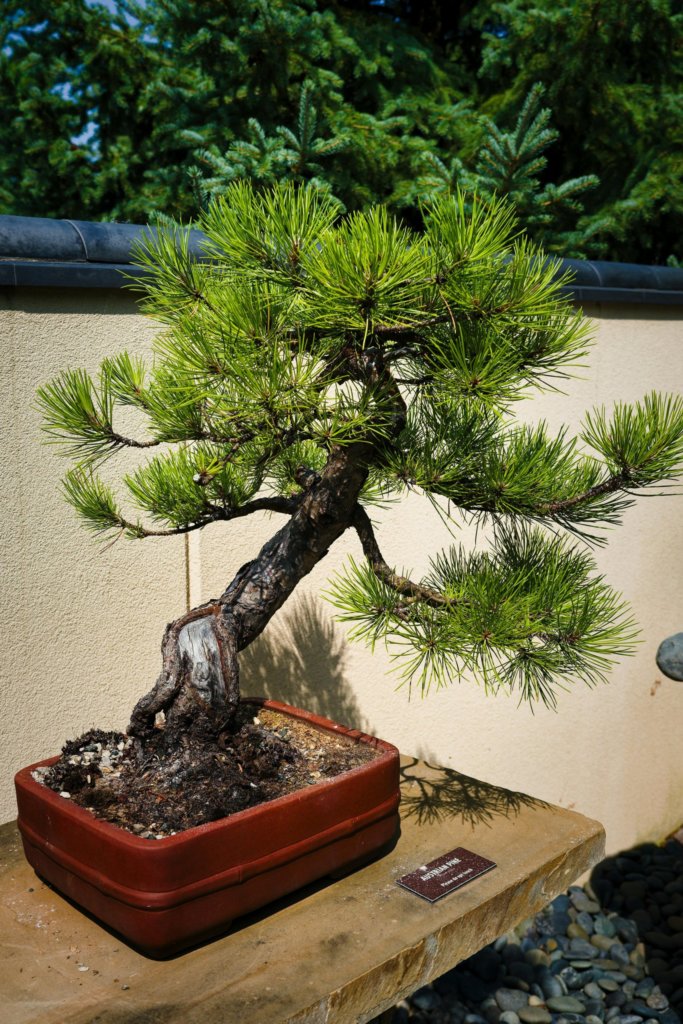
You keep a pine bonsai healthy by repotting at the right time, adjusting care with the seasons, and fixing problems early. Clear steps prevent stress, root rot, and weak growth.
Repotting Pine Bonsai Safely
Repotting pine bonsai protects root health and keeps growth steady. Most pines respond best to repotting in early spring just before new growth starts. In mild climates, you can also repot in early fall.
Avoid repotting in late spring or summer when candles extend and new needles form. Disturbing roots at this stage can weaken the tree.
Follow these steps:
- Remove the tree from its bonsai pot.
- Gently loosen the root ball with a root hook.
- Trim back long or circling roots, but keep fine feeder roots.
- Remove no more than 30% of the root mass.
- Place the tree in fresh, well-draining soil.
- Secure it firmly in the pot.
Use a bonsai pot with strong drainage holes. Poor drainage leads to root rot, which can kill a healthy bonsai.
After repotting, water deeply once. Keep the tree out of strong wind and full sun for two weeks. Do not fertilize for about a month.
Common Problems and Solutions
You can prevent most problems with steady care. The table below lists common issues and clear actions.
| Problem | Signs | Action |
|---|---|---|
| Root rot | Yellow needles, soft roots, sour soil smell | Improve drainage, reduce watering, repot in fresh soil |
| Weak growth | Short needles, stunted buds, pale color | Increase sun, adjust feeding schedule |
| Browning tips | Dry soil or salt buildup | Water thoroughly, flush soil, check drainage |
| Pests (aphids, spider mites) | Sticky residue or webbing | Rinse with water, use insecticidal soap |
Avoid overwatering. Pine roots need air as much as water.
Use light maintenance pruning to remove dead branches and balance the shape. Do not remove too many needles at once. Careful pruning, correct watering, and timely repotting support a healthy bonsai year after year.
Frequently Asked Questions
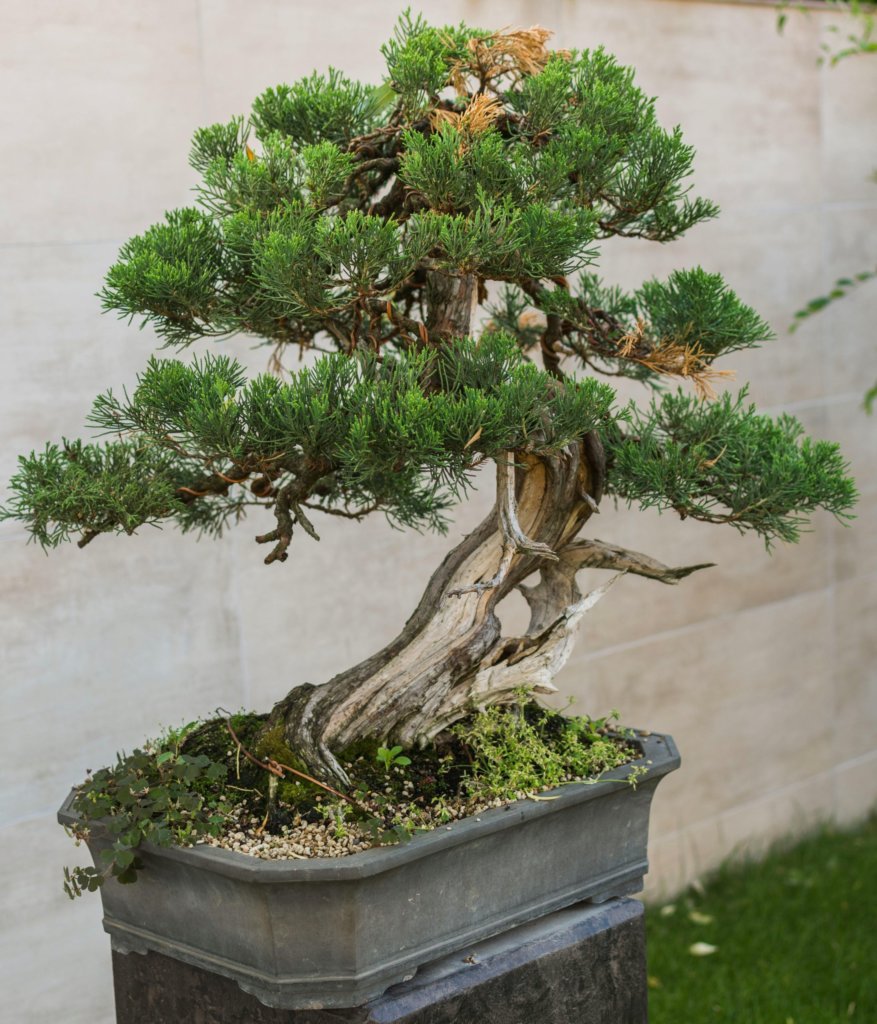
Proper watering, soil, light, pruning, pest control, and repotting keep your pine bonsai healthy and stable. You must adjust care based on season, tree age, and your local climate.
How often should I water my pine bonsai?
Water your pine bonsai when the top layer of soil feels dry to the touch. Do not water on a fixed schedule.
In warm months, you may need to water daily. In cooler seasons, you may only need to water every few days.
Water deeply until it drains from the bottom of the pot. Avoid letting the soil stay soggy, as pine roots do not tolerate constant wet conditions.
What is the best soil mixture for pine bonsai trees?
Use a fast-draining soil mix. Pines require strong drainage and good air flow around the roots.
A common mix includes akadama, pumice, and lava rock in roughly equal parts. In very wet climates, increase the amount of pumice or lava rock to improve drainage.
Avoid regular garden soil. It holds too much water and can cause root rot.
How much sunlight does a pine bonsai require?
Place your pine bonsai outdoors in full sun. Most pine species need at least 6-8 hours of direct sunlight each day.
Strong light supports dense needle growth and compact form. Weak light leads to long, thin shoots and poor health.
Protect the tree from extreme heat only if temperatures become excessive for your local species.
When is the proper time to prune a pine bonsai?
Prune single-flush pine candles from late spring to early summer. For two-flush pines, remove candles in early to mid-summer to encourage a second flush.
Perform structural pruning in early spring or late autumn, just before or after the growing season.
Use fingers to pinch candles rather than scissors to prevent brown, dead foliage at the tips.
How do I recognize and treat common pests and diseases in pine bonsai?
Check your tree often for aphids, caterpillars, mealybugs, and borers. Look for sticky residue, chewed needles, or small insects on stems.
Common diseases include needle cast, rust, and tip blight. You may see browning needles, black spots, or dieback at shoot tips.
Remove affected parts promptly. Use appropriate insecticides or fungicides labeled for pine trees, and improve air flow and sunlight to reduce disease risk.
What are the guidelines for repotting pine bonsai?
Repot young pine bonsai every 2 to 3 years. Repot older trees every 3 to 5 years.
Early spring, just before new growth starts, is the safest time. Prune no more than 30% of the roots, ensuring at least half the root mass remains untouched to protect essential mycorrhizal fungi.
After repotting, water thoroughly and protect the tree from strong sun and wind for several weeks.