
Totem Pole Cactus Care And Propagation
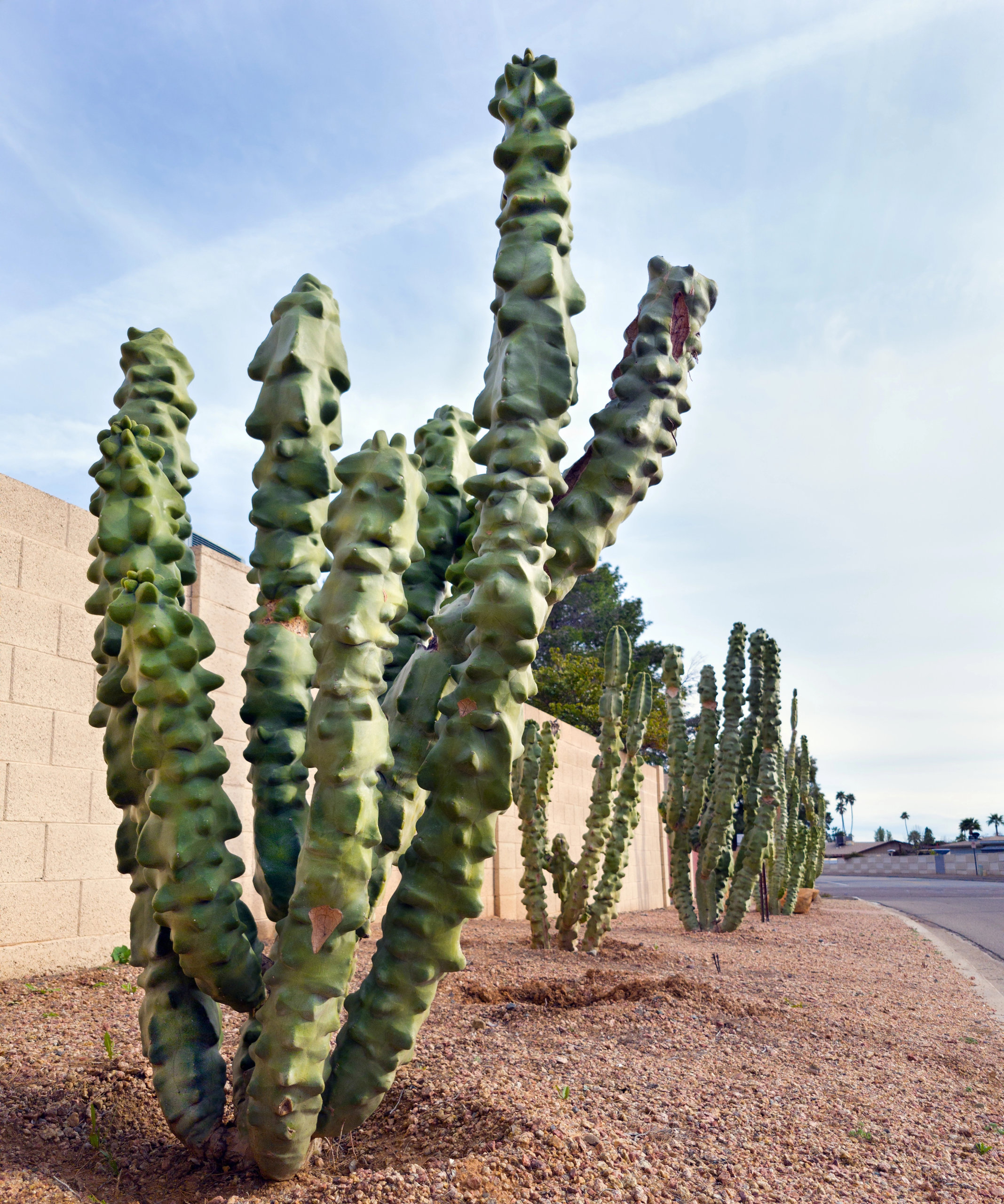
You want a cactus that looks bold but stays easy to manage. The totem pole cactus, also called Pachycereus schottii var. monstrosus or Lophocereus schottii monstrosus, stands out as a unique succulent with smooth, bumpy skin and no spines. It grows as a columnar cactus and fits well in warm outdoor spaces or bright indoor spots.
You care for a totem pole cactus by giving it strong light, fast‑draining soil, light watering, and warm temperatures, and you propagate it by rooting healthy stem cuttings. This plant grows slowly, but steady care keeps it healthy and well shaped. Often called a “monstrose” form of the Senita cactus, this unique mutation provides a sculptural aesthetic without the hazard of sharp spines.
You can expect clear guidance on daily care, long‑term growth, and common problems that affect this cactus. You will also learn how to propagate new plants with simple steps that work at home, even if you are new to cactus care.
Totem Pole Cactus Essentials
You care for the totem pole cactus by understanding its identity, shape, and light needs. This plant grows slowly, prefers strong light, and shows a rare, sculpted form that sets it apart from other columnar cactus types.
Botanical Classification and Varieties
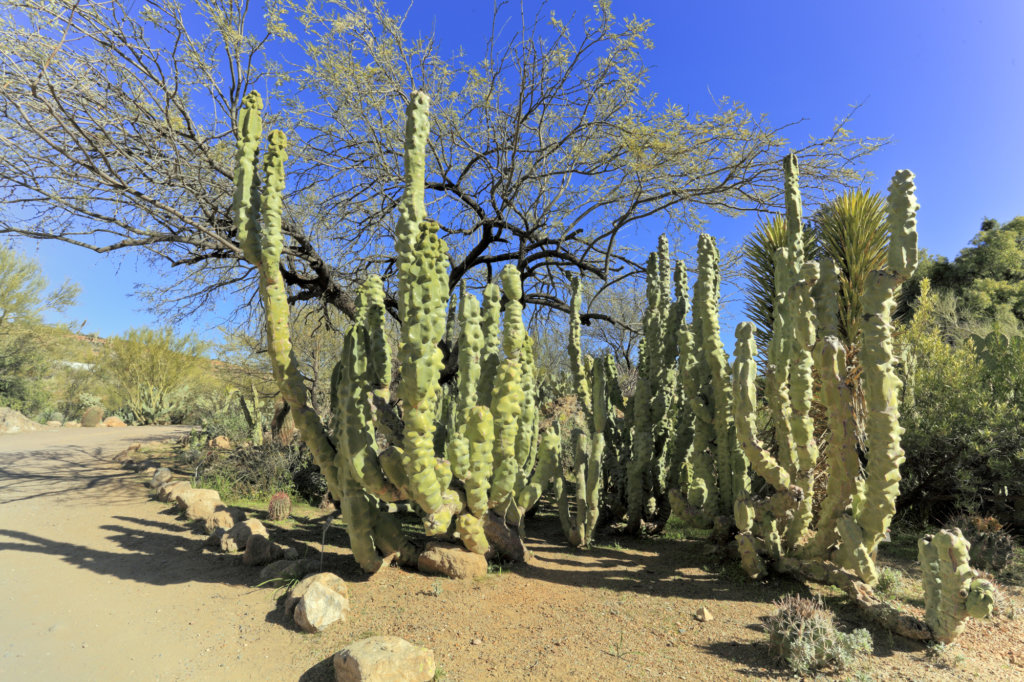
The totem pole cactus comes from the species Pachycereus schottii, also listed as Lophocereus schottii in some sources. The most common form in cultivation is Pachycereus schottii var. monstrosus. While the wild species is known as the Senita or Whisker cactus, the Totem Pole is distinct for its smooth, spineless skin.
This cactus belongs to the columnar cactus group. It grows upright and tall but develops uneven, knobby stems. Most plants sold for homes or gardens are this mutated form.
Key names you may see:
- Totem pole cactus
- Pachycereus schottii var. monstrosus
- Lophocereus schottii monstrosus
All names describe the same plant type, not different care needs.
Growth Habit and Unique Features
You will notice that this is a slow-growing cactus. It adds height over many years, not months. Mature plants can reach over 10 feet outdoors, but indoor plants stay much shorter.
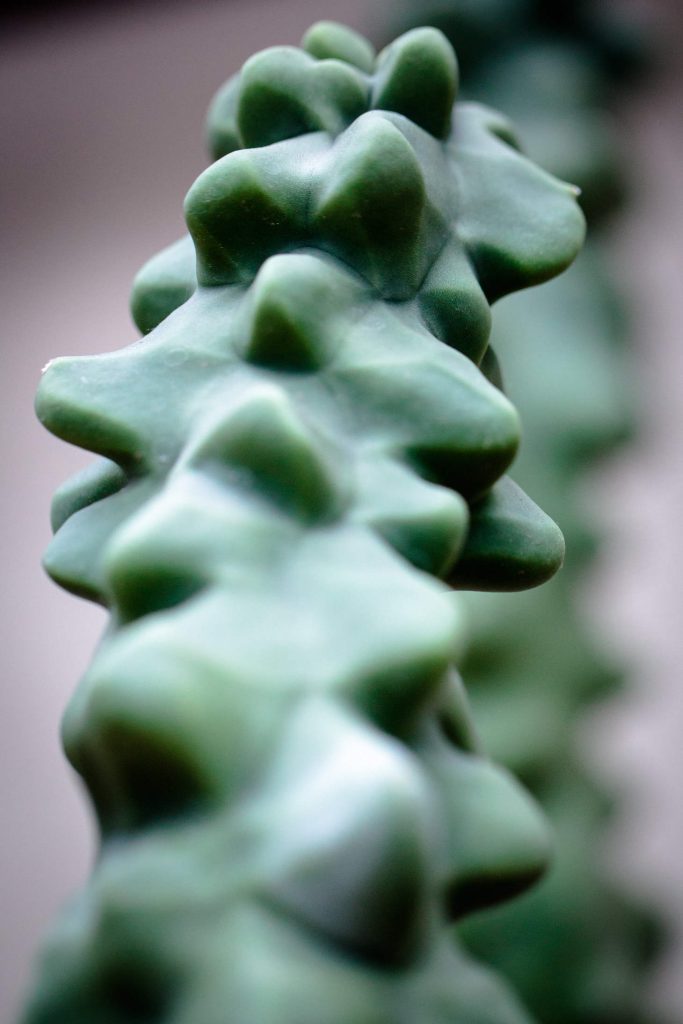
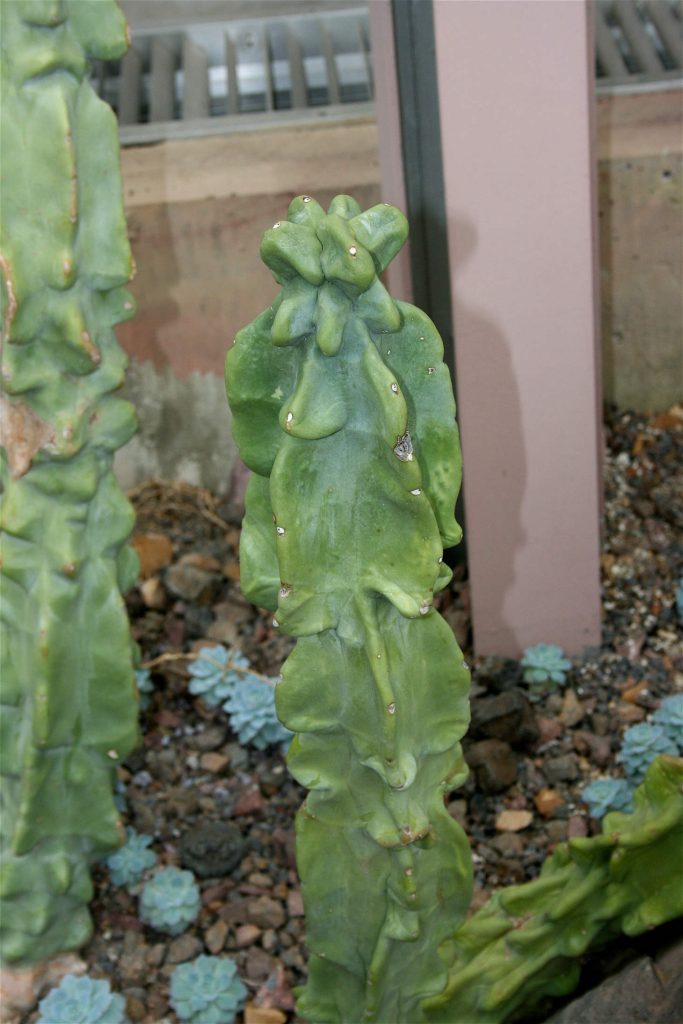
Distinctively spineless, this cactus features smooth, knobby areoles that create its signature “sculpted” appearance. Unlike the standard species, this mutation lacks thorns entirely. The stem forms soft-looking bumps and ridges. These shapes create the “totem pole” look.
Growth is upright, though mature plants frequently branch from the base to form dense clusters. Flowers appear only on very old plants and are uncommon in home settings. You should not expect blooms or fruit as part of normal care.
Ideal Placement and Light Requirements
You should place the totem pole cactus in bright, direct light. It thrives in full sun outdoors, though young plants may need light afternoon shade during extreme heatwaves. Indoors, a south-facing window works best. A west-facing window can also work if light stays strong most of the day.
If natural light falls short, use a grow light. Keep the light close (6–12 inches away) and run it 10–12 hours daily. Weak light slows growth and causes leaning.
Light guidelines:
- 6–8 hours of direct sun daily
- Strong light year-round
- Rotate the pot to keep growth even
Strong light supports firm growth and keeps the stem shape compact.
Totem Pole Cactus Care Instructions
You keep a totem pole cactus healthy by controlling water, soil, temperature, and feeding. This cactus grows slowly, so steady care matters more than frequent attention.
Watering Techniques and Frequency
You should water sparingly to prevent root rot. Let the soil dry out fully between waterings. In warm months, this often means watering every 2–4 weeks, depending on light and pot size.
Use a simple watering schedule and adjust based on the plant’s needs. If the base becomes mushy or blackened, it likely indicates rot from overwatering. Always pour water until it drains from the bottom, then empty the saucer.
During winter, reduce watering to once every 6–8 weeks. The cactus rests during this time and uses very little moisture.
Soil Composition and Potting
You must use well-draining soil to support proper cactus care. While commercial cactus mixes are a starting point, they often require added pumice, perlite, or coarse sand to ensure rapid drying.
Spike and Bloom High Drainage Cactus Soil eliminates this extra step with a professional-grade, ready-to-use formula specifically engineered for maximum aeration. It provides the perfect mineral balance straight from the bag, ensuring your cacti thrive without the hassle of DIY mixing.
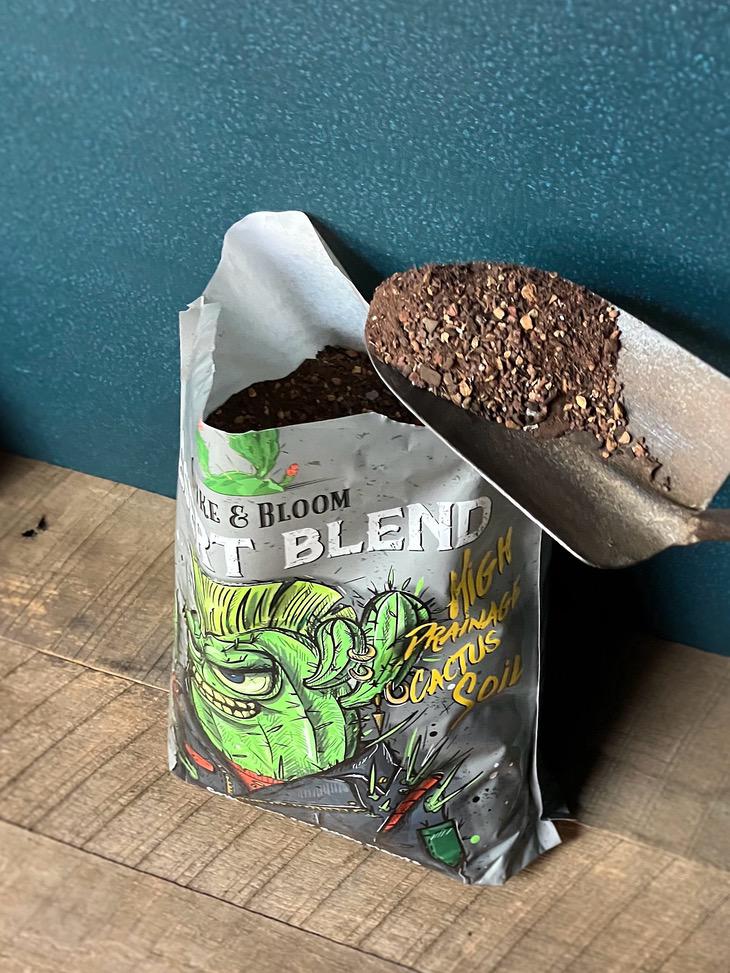
A good cactus potting mix should feel gritty and dry quickly after watering. Avoid regular garden soil, which holds too much moisture and leads to root rot.
Choose a pot with drainage holes. Clay pots work best because they let excess water evaporate. Repot only when the cactus outgrows its container or the soil breaks down.
Temperature, Humidity, and Dormancy
You should keep the cactus in warm, dry conditions. Ideal temperatures range from 65°F to 90°F. It can handle short drops to about 25°F, but frost damages the plant.
Low humidity suits this cactus best. Avoid placing it near humidifiers or in damp rooms. Good air flow helps prevent disease.
In winter, the cactus enters dormancy. Growth slows, and water needs drop. Cooler nights during this period support long-term health and structure.
Fertilization Practices
You should feed lightly to avoid stress. Use a cactus fertilizer diluted to half strength. Apply it once a month during spring and summer.
Choose a fertilizer low in nitrogen to support slow, steady growth. Too much nitrogen causes weak tissue and poor form.
Do not fertilize in fall or winter. During dormancy, unabsorbed nutrients can lead to salt buildup and root burn.
Propagation of Totem Pole Cactus
You can propagate the totem pole cactus with simple tools and patience. Most growers use stem cuttings because they root faster than seeds and keep the plant’s odd, bumpy form.
Propagation by Stem Cuttings
Stem cuttings give you the best results when you propagate a totem pole cactus. This plant, known as Pachycereus schottii monstrosus or Lophocereus schottii f. monstrosus, rarely forms viable seed. Cuttings also keep the same growth pattern as the parent, which matters with this unique succulent.
Choose a healthy stem with firm skin and no soft spots. Cut straight across with a clean blade. Each cutting should be at least 6 inches tall.
Let the cut end dry in a shaded, dry place. A hard callus protects the cutting from rot once you plant it.
Propagation Challenges and Seed Viability
Seeds present real limits with totem pole cactus propagation. Many plants never flower, and when they do, they often fail to set seed. Therefore, this plant must be cloned via vegetative cuttings to maintain its unique form.
Cuttings still face risks. Rot is the most common problem, caused by wet soil or planting too soon. Cold weather also slows rooting and can damage new tissue.
Watch for these warning signs:
- Soft or dark tissue at the base
- A sour smell from the soil
- No new growth after several months
You reduce these risks by using dry soil and warm temperatures.
Step-by-Step Propagation Process
Follow these steps to improve success when learning how to propagate totem pole cactus:
- Cut a healthy stem in spring or summer.
- Dry the cutting for 5–10 days until callused.
- Fill a pot with fast-draining cactus mix.
- Set the cutting upright and bury 1–2 inches.
- Wait 2-4 weeks before watering lightly.
Care after planting
| Factor | What to Do |
|---|---|
| Light | Bright sun, with gradual exposure |
| Water | Light watering every 2–3 weeks |
| Temperature | Keep above 60°F |
Roots often form within one to two months. New growth confirms success.
Troubleshooting and Common Issues
Totem pole cactus problems usually come from water, light, or pests. You can prevent most issues by adjusting care early and watching for small changes in color, texture, and growth.
Prevention and Treatment of Root Rot
Root rot is the most common and serious problem you may face. It starts when soil stays wet for too long and roots cannot breathe. Soft stems, dark spots near the base, and a sour smell often signal trouble.
You prevent root rot by using fast-draining cactus soil and pots with drainage holes. Water only when the soil is fully dry from top to bottom. In cool weather, water even less.
If rot starts, act fast. Remove the plant from the pot and cut away all black or mushy roots with a clean blade. Let healthy tissue dry for several days before repotting. Severe cases may require taking healthy stem cuttings to save the plant.
Pest Identification and Management
Pests rarely attack a healthy totem pole cactus, but stress makes infestations more likely. The most common pests are mealybugs and scale insects. You often see mealybugs as white, cotton-like clumps in stem folds. Scale insects look like small brown or gray bumps stuck to the skin.
Check plants monthly, especially indoors. Early detection makes control easier.
Treatment options
- Wipe pests off with a cotton swab dipped in alcohol
- Spray with diluted neem oil every 7–10 days
- Isolate affected plants to stop spread
Avoid heavy insecticides. They stress the cactus and rarely improve results.
Light Stress, Etiolation, and Growth Problems
Light issues cause many growth problems. Too little light leads to etiolation, where stems stretch, thin out, and lose their signature knobby texture. This change is permanent and weakens the plant.
Place your cactus in bright, direct light for at least 6–8 hours per day. Indoors, a south- or west-facing window works best. Rotate the pot every few weeks to keep growth even.
Too much sudden sun can also cause damage. Pale patches or yellow areas may appear after fast light changes. Move plants into stronger light slowly over one to two weeks to avoid stress.