What is a Bonsai Garden?
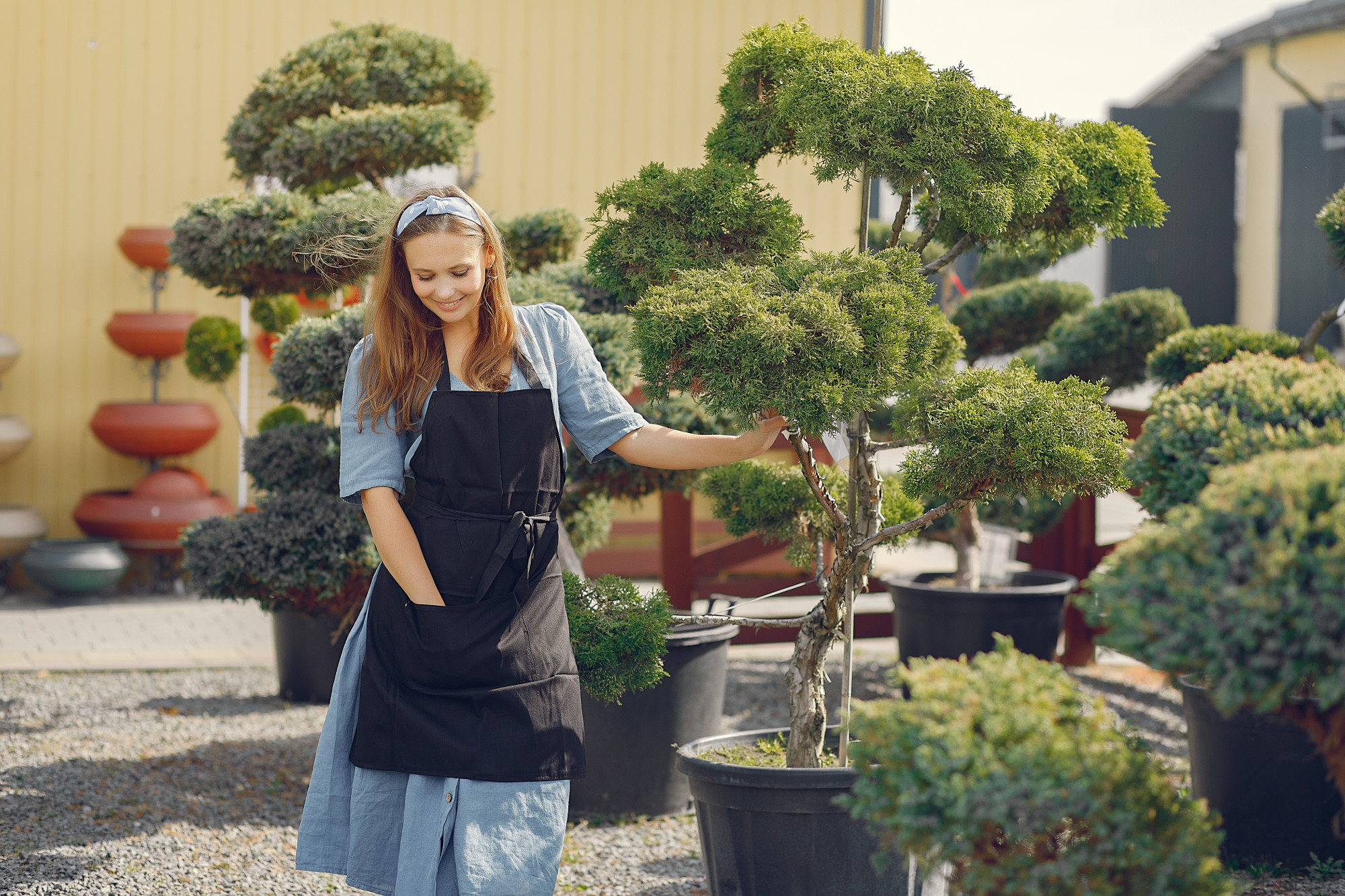
You may have seen small trees shaped with care and placed in shallow pots. A bonsai garden brings these miniature trees together in one planned space. A bonsai garden is a carefully designed space where you grow and display small trees that you shape and train to look like full-sized, mature trees.
You do not use special dwarf plants. You grow regular trees and control their size with pruning, root trimming, wiring, and careful potting. In a bonsai garden, you arrange these trees to create balance, order, and a natural look.
As you explore this topic, you will learn what defines a bonsai garden and how to design and care for one. You will see how art and plant care work together in a simple but precise way.
Defining a Bonsai Garden
A bonsai garden is a planned space where you grow and display miniature trees in containers. You shape each bonsai tree with care and arrange them to reflect nature on a small scale while honoring long-standing bonsai culture.
Key Characteristics of Bonsai Gardens
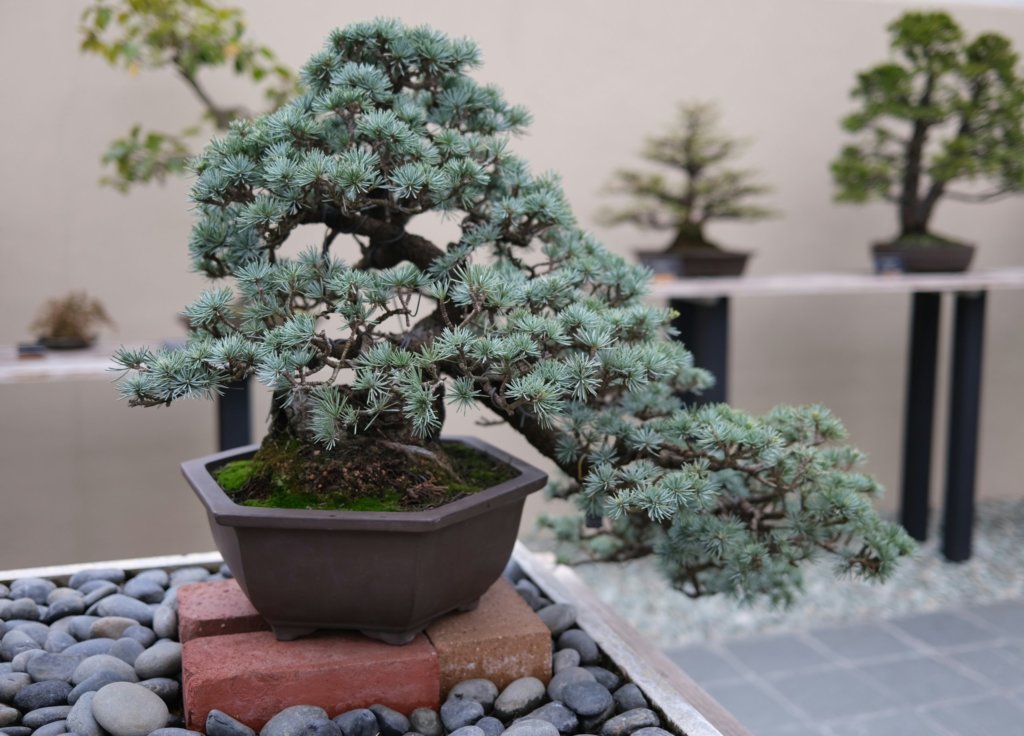
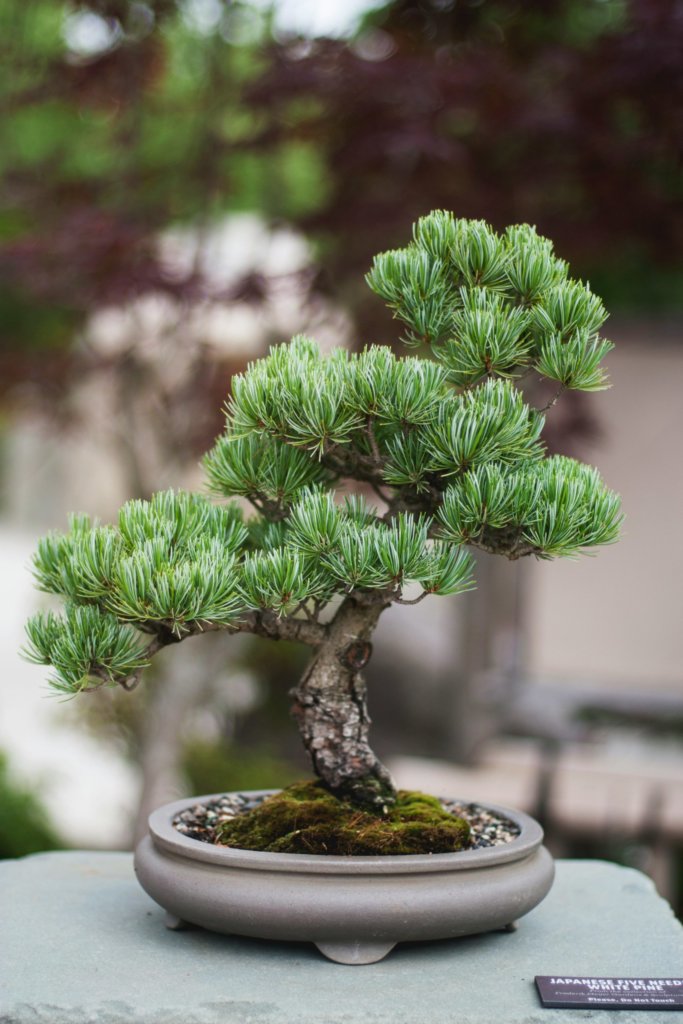
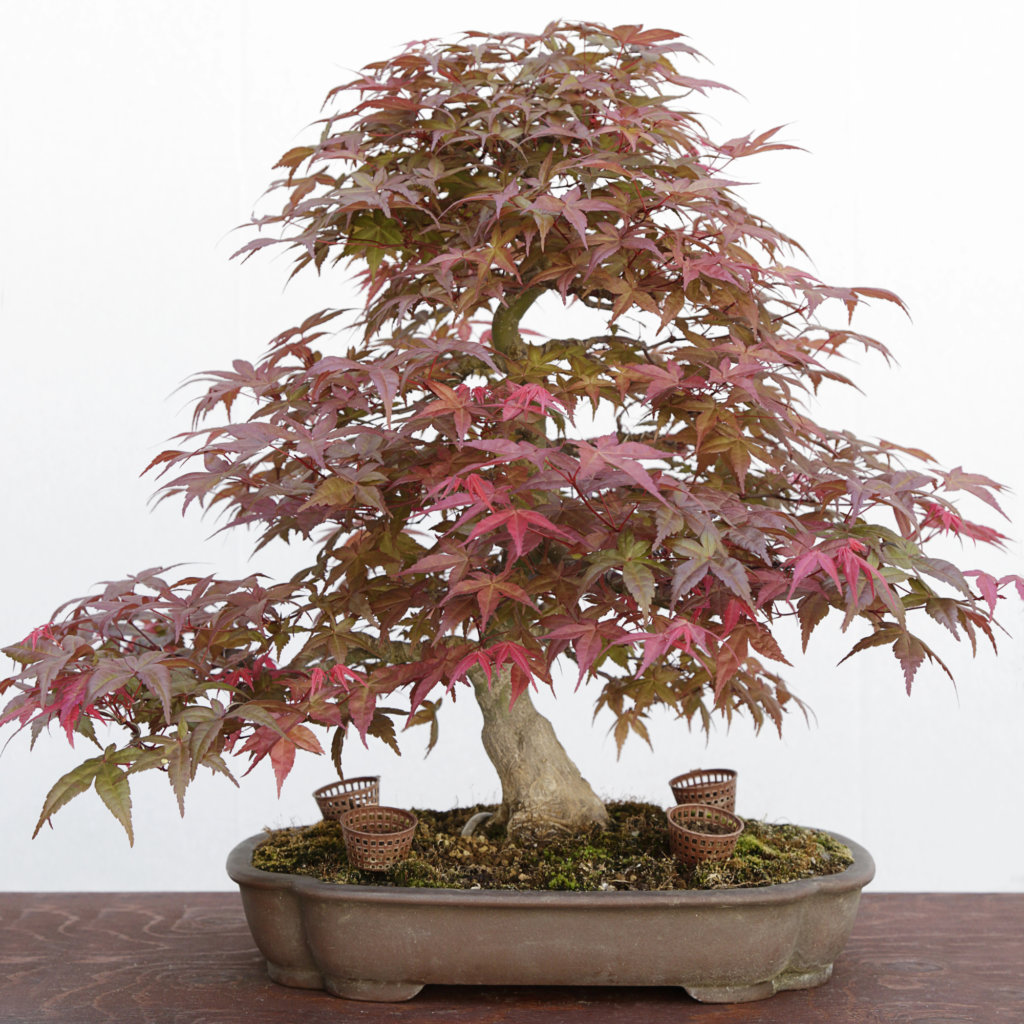
In a bonsai garden, you grow miniature trees in pots, not in the ground. You train regular tree species to stay small through pruning, root trimming, wiring, and careful watering.
You do not use genetically dwarf plants. Instead, you control growth with bonsai gardening methods that shape the trunk, branches, and roots.
Common bonsai species include:
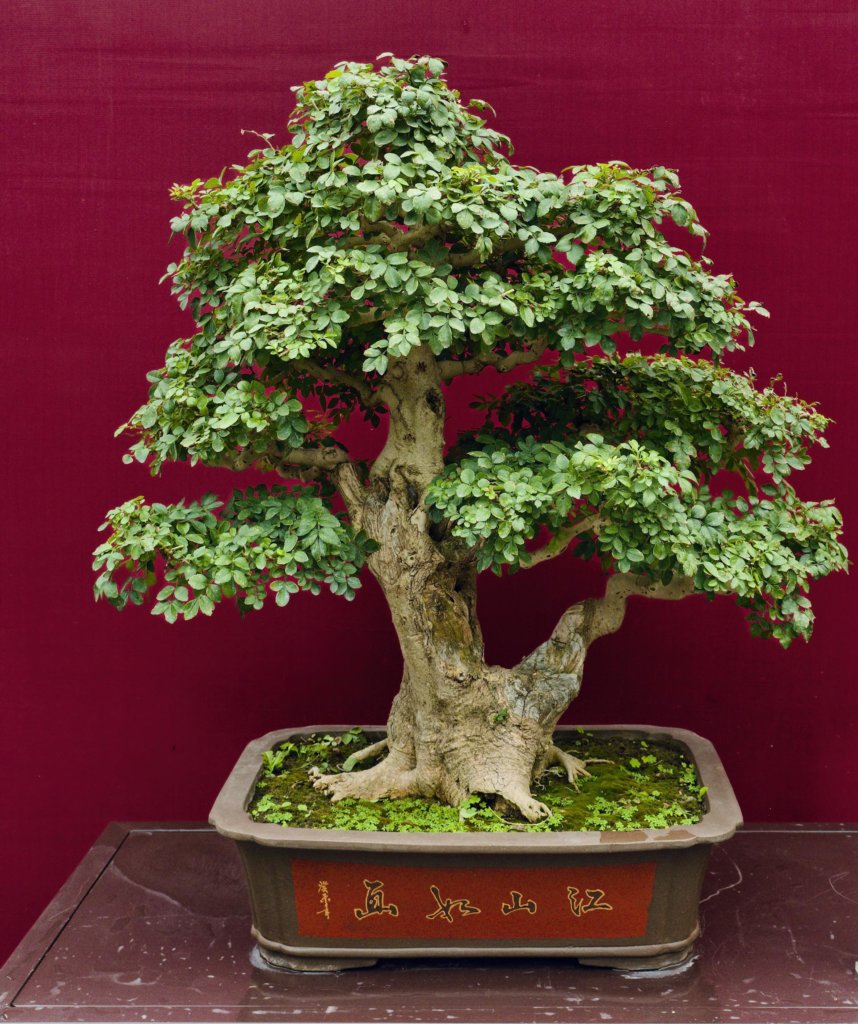
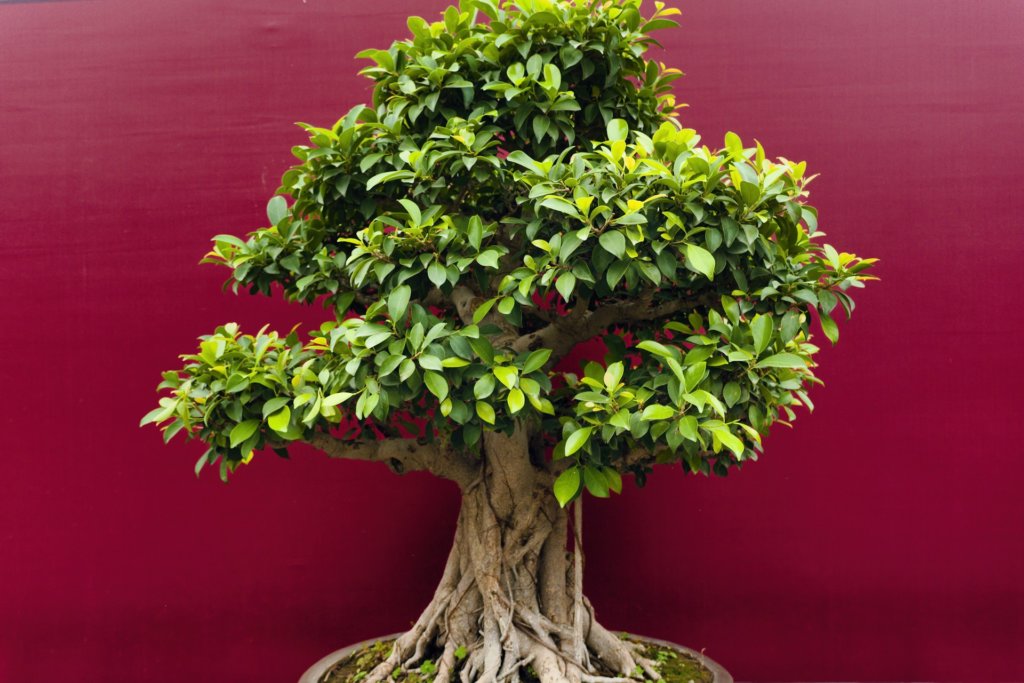
A bonsai garden often includes more than trees. You may add rocks, gravel, moss, or small water features. Some designs draw ideas from a zen garden, using clean lines and open space to create a calm setting.
Bonsai garden design focuses on balance, proportion, and placement. You arrange trees at different heights and angles to create depth in a small area.
Origins and Cultural Significance
Bonsai began in China as penjing, the art of creating miniature landscapes in containers. Japan later refined this practice into what you now know as bonsai.
In Japan, bonsai culture developed clear styles and rules. Growers created forms such as formal upright, informal upright, cascade, and forest planting. Each style reflects how trees grow in nature.
The word bonsai comes from Japanese words meaning “tray” and “plant.” This name shows that you grow trees in shallow containers, not in open soil.
The art of bonsai connects gardening with patience and discipline. Many people link it with meditation and quiet focus, especially when paired with elements of a zen garden. When you care for bonsai trees, you follow traditions that have lasted for centuries.
Miniature Landscapes and Bonsai Artistry
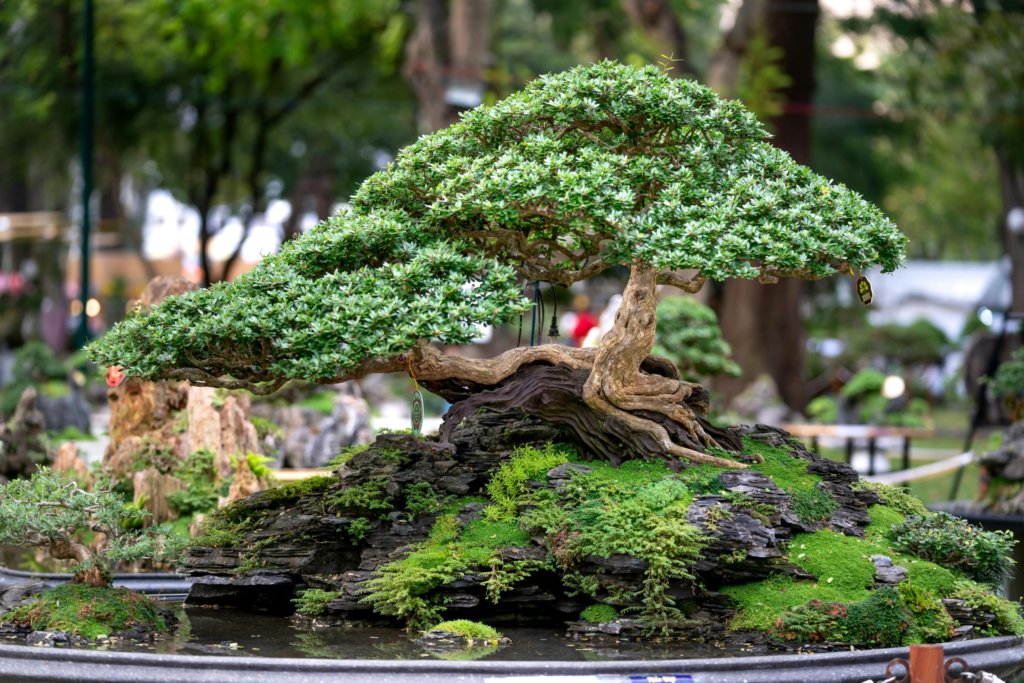
A bonsai garden does more than display single trees. You can design miniature landscapes that suggest mountains, forests, or riverbanks.
You use a scale to create this effect. A small rock can represent a cliff, and moss can stand in for grass or ground cover.
In bonsai design, you shape each bonsai tree to look mature, even though it is small. You guide branch direction with wire and prune leaves to keep the tree in proportion.
Some bonsai gardens group several trees in one container to form a forest scene. Others display individual bonsai trees on benches or stands to highlight their structure.
Your goal is to create a realistic scene in reduced size. Through careful bonsai garden design, you bring the look of full-sized nature into a compact and controlled space.
Fundamentals of Bonsai Garden Cultivation and Design
You shape a bonsai garden through careful training, proper tools, and clear design choices. Each tree, pot, and display method works together to create balance and healthy growth.
Popular Bonsai Styles and Display Techniques
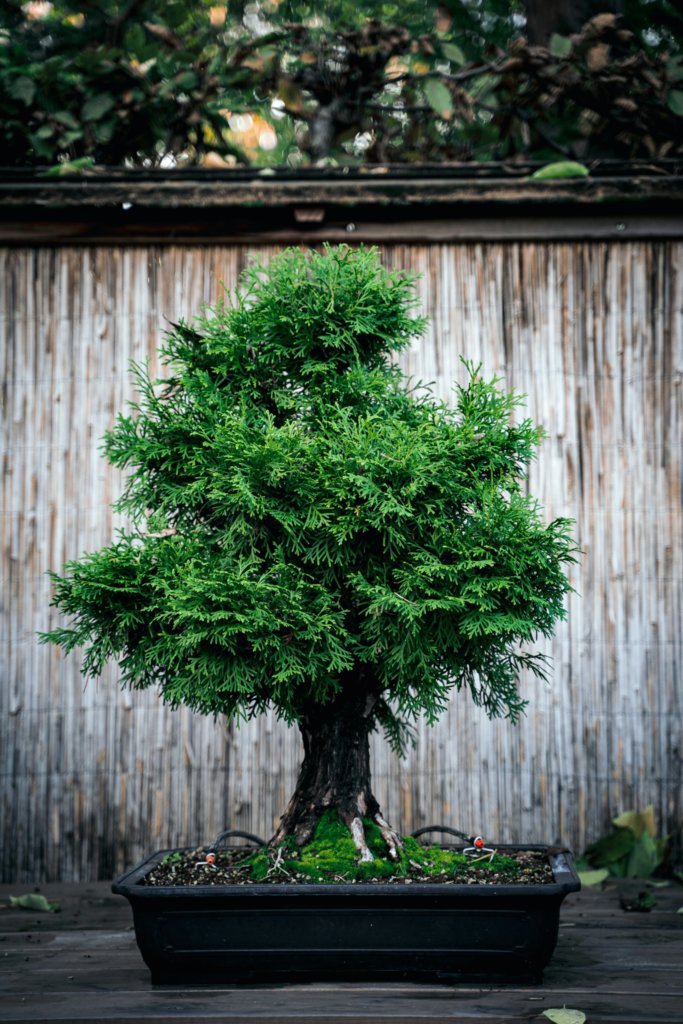
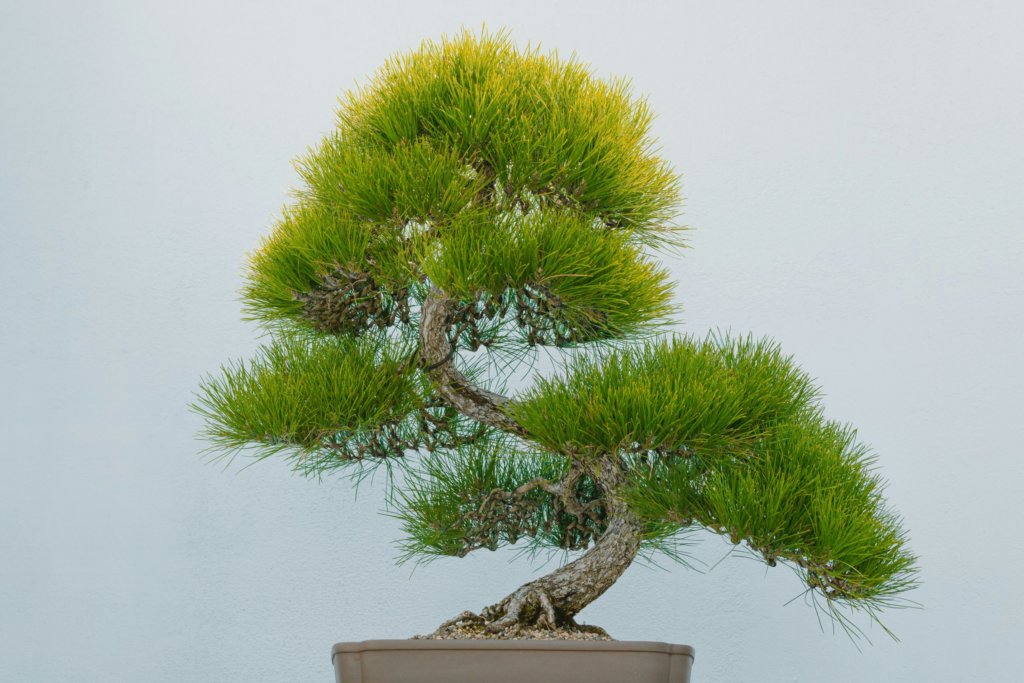
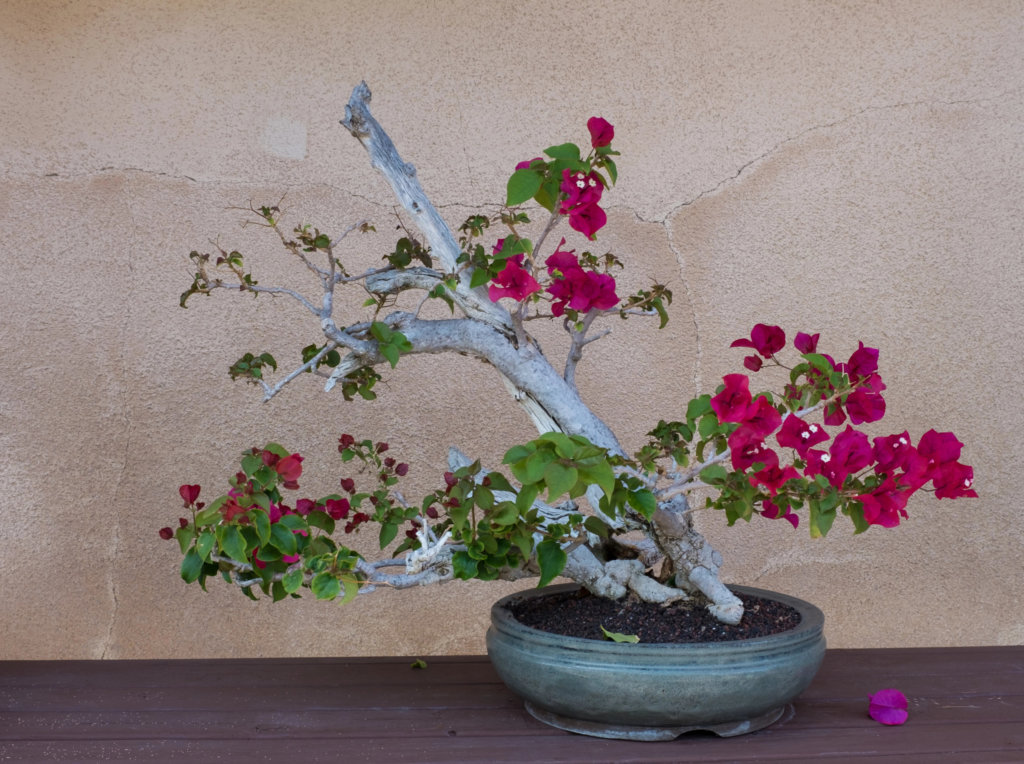
You can choose from several bonsai styles, each based on how a tree grows in nature. Common forms include formal upright, informal upright, slanting, cascade, and forest planting. Styles like root-over-rock, shari, and jin add age and character by exposing roots or creating deadwood features.
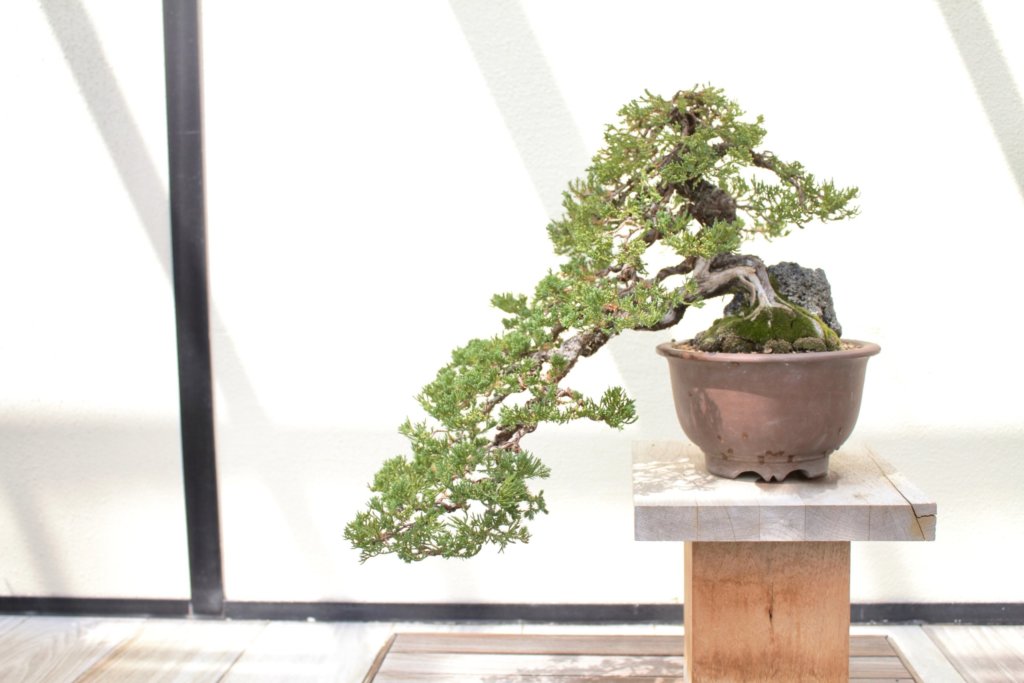
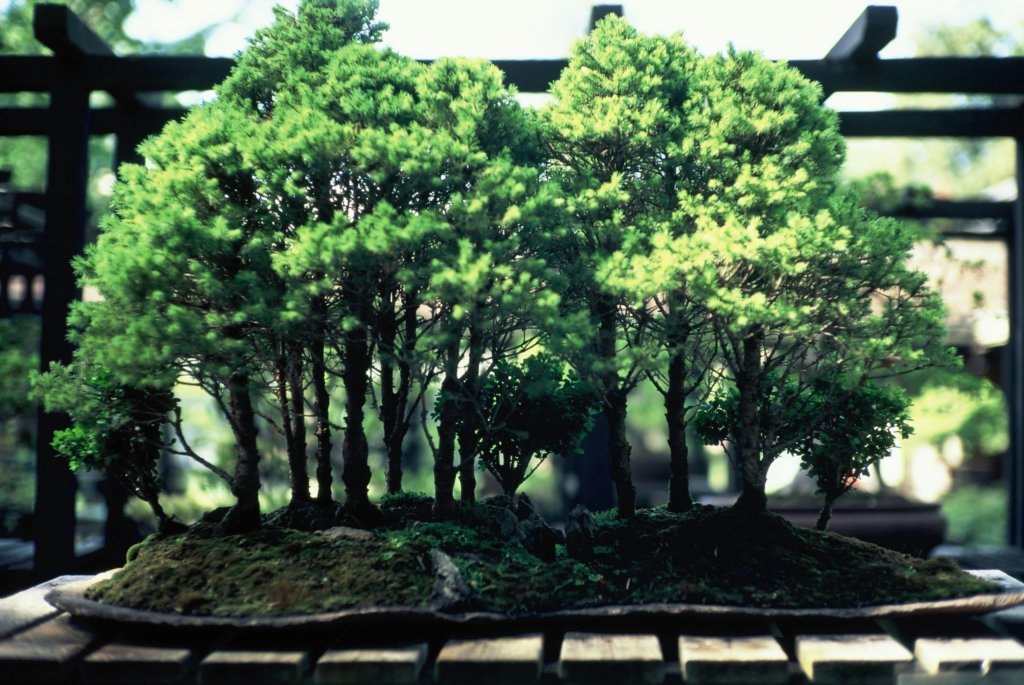
You guide shape through steady bonsai training. This includes pruning, wiring, and sometimes defoliation to refine leaf size and branch structure. For outdoor bonsai, you often use hardy species such as juniper or pine. True indoor bonsai consist of tropical or subtropical species like ficus, which tolerate the stable light and temperatures found inside a home.
For bonsai display, place trees on benches, stands, or raised platforms. Keep the main tree at eye level and avoid crowding. In larger bonsai gardens, group trees by size or season to create clean and organized bonsai displays.
Essential Tools and Materials
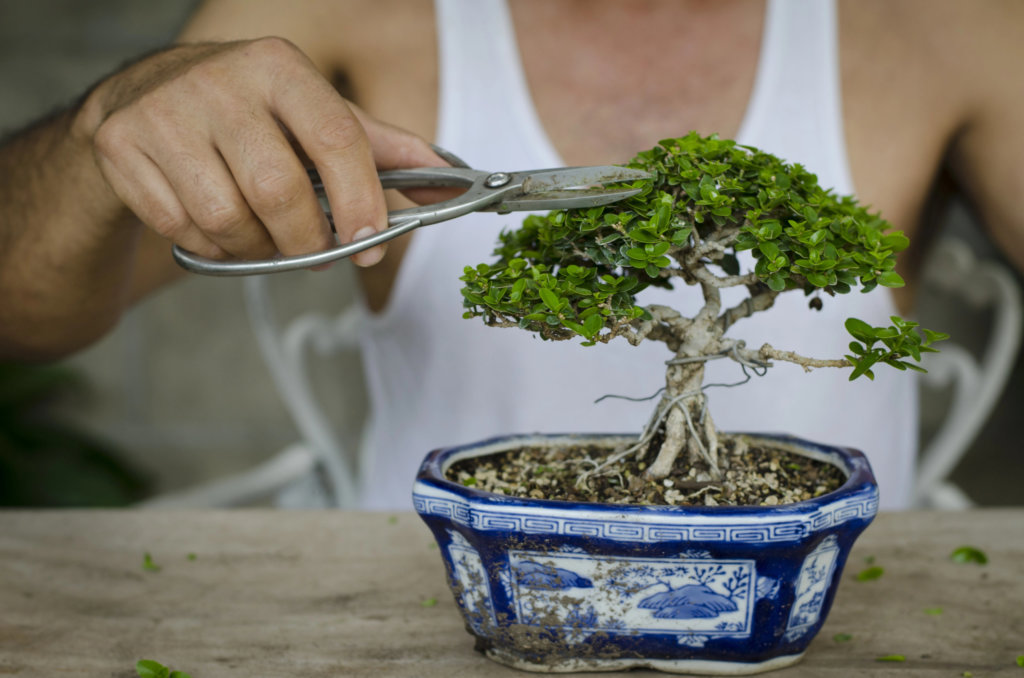
You need specific bonsai tools to shape and maintain trees with control. Basic tools include:
- Pruning shears for trimming shoots and small branches
- Concave cutters for removing thicker branches with clean cuts
- Wire cutters for removing training wire safely
- Root hooks and scissors for root pruning
Use tools only for bonsai to keep them sharp and clean.
Soil choice affects growth and drainage. A common bonsai soil mix includes:
| Component | Purpose |
|---|---|
| Akadama | Holds moisture and nutrients |
| Pumice | Improves drainage and root health |
| Lava rock | Adds structure and airflow |
Choose shallow bonsai pots with drainage holes. The pot should match the tree’s size and style. Repot periodically based on the specific species and maturity of the tree to refresh soil and manage root growth. Younger, faster-growing trees may need it every 1–2 years, while mature trees might only need it every 3–5 years.
Design Principles and Layouts
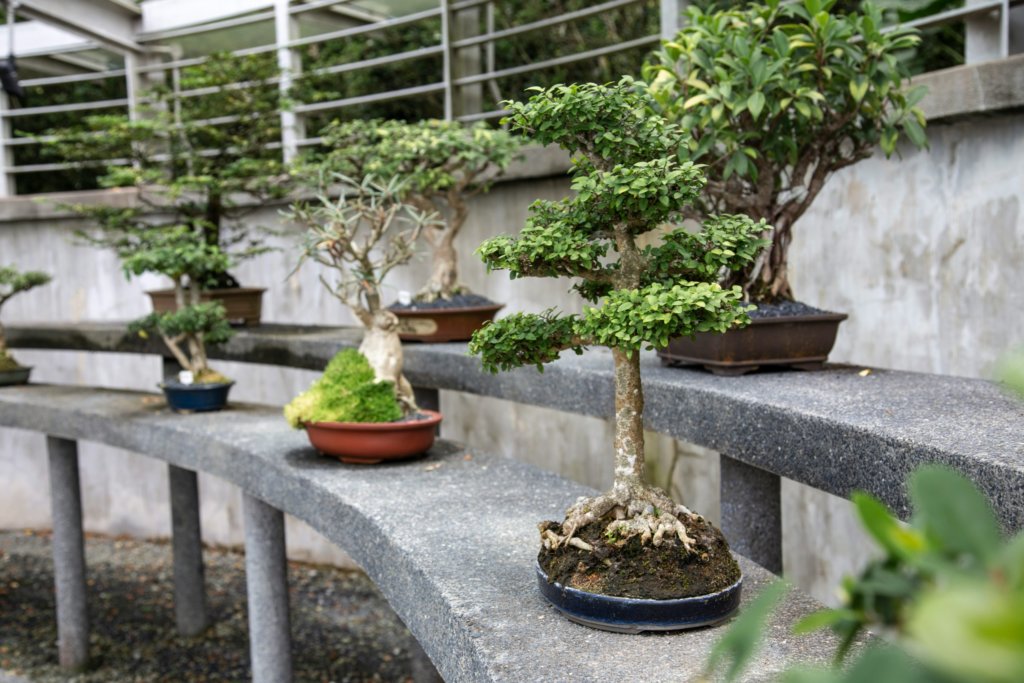
You design a bonsai garden with balance and clear spacing. Avoid placing trees in straight lines. Instead, vary height and shape to create movement.
In small spaces, use tiered benches to display multiple trees without crowding. For larger outdoor bonsai areas, group trees by style or species. This makes bonsai care easier and keeps watering needs consistent.
Focus on proportion. A sturdy trunk pairs best with a container that complements its visual weight. A cascade style needs a taller container. Leave open space around each tree so viewers can see its full form.
Strong layouts support both beauty and practical bonsai cultivation. When you plan carefully, your garden becomes organized, easy to maintain, and visually clear.