Bonsai Terminology Explained
Bonsai terminology gives you the words you need to shape, prune, and care for your tree with skill. Many guides assume you already know basic plant terms, which can make bonsai feel harder than it is. When you understand the language, you gain more control over your work.
Bonsai terminology is the set of specific words used to describe the parts, styles, tools, and care techniques involved in growing and shaping bonsai trees. A clear bonsai glossary explains terms like nebari (surface roots), apex (top of the tree), and foliage pad (a shaped cluster of leaves). These bonsai terms help you follow instructions, join discussions, and make better design choices.
As you explore more advanced techniques, you will see how the right words guide each cut and wire placement. Learning bonsai terminology does not just build knowledge; it helps you grow healthier trees and create stronger designs.
Key Takeaways
- You need clear bonsai terms to understand tree parts, styles, and care methods.
- A bonsai glossary helps you follow guides and improve your shaping skills.
- Strong knowledge of bonsai terminology supports better design and long-term tree health.
Essential Bonsai Terminology and Concepts
You need clear terms to shape, train, and discuss bonsai with accuracy. These core words explain structure, care methods, and the main style groups you will use in practice.
Key Structural Terms
You shape a bonsai by understanding its main parts. The apex is the top of the tree and controls its visual balance. The crown or canopy includes the upper branches and leaves.
At the base, you focus on the nebari, also called the root flare. Strong buttress roots and even buttressing create stability and age. Good nebari makes the tree look grounded.
Along each branch, a node is where leaves and buds grow. The space between nodes is the internode. Short internodes help you build tight foliage pads, which are flat layers of leaves used in many styles.
A bud forms new shoots. The petiole connects a leaf to the stem. Under the bark, the cambium layer moves nutrients. When you prune, the tree forms callus tissue to close the wound.
You should also know plant identity terms. A genus groups related trees, while a species is a single type within that group. A variety or cultivar is a selected form with specific traits, such as smaller leaves.
Common Bonsai Techniques and Tools
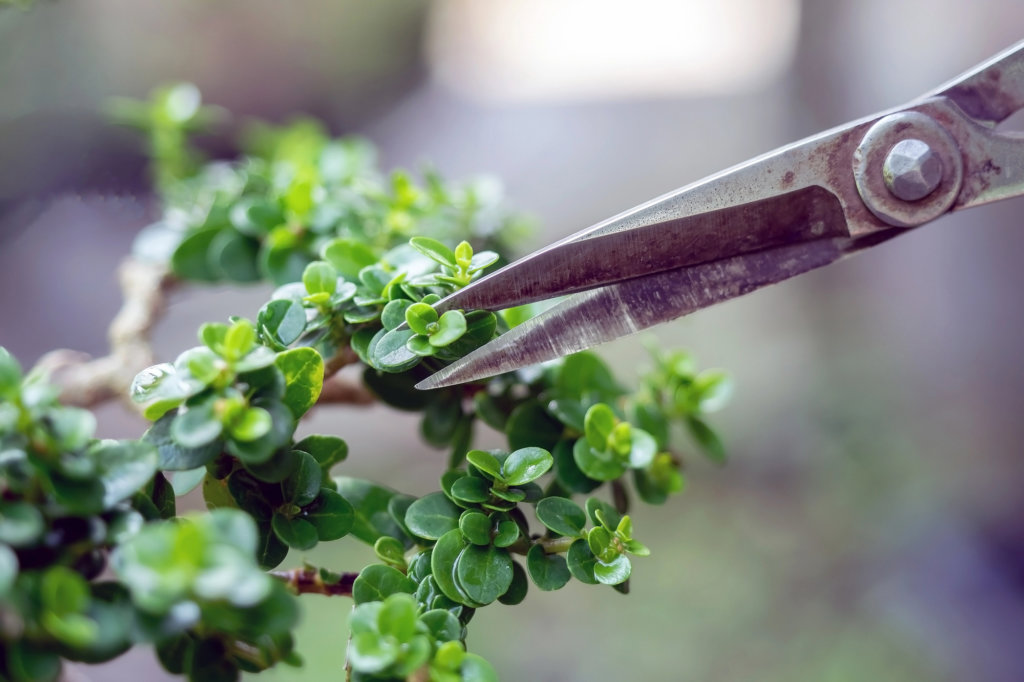
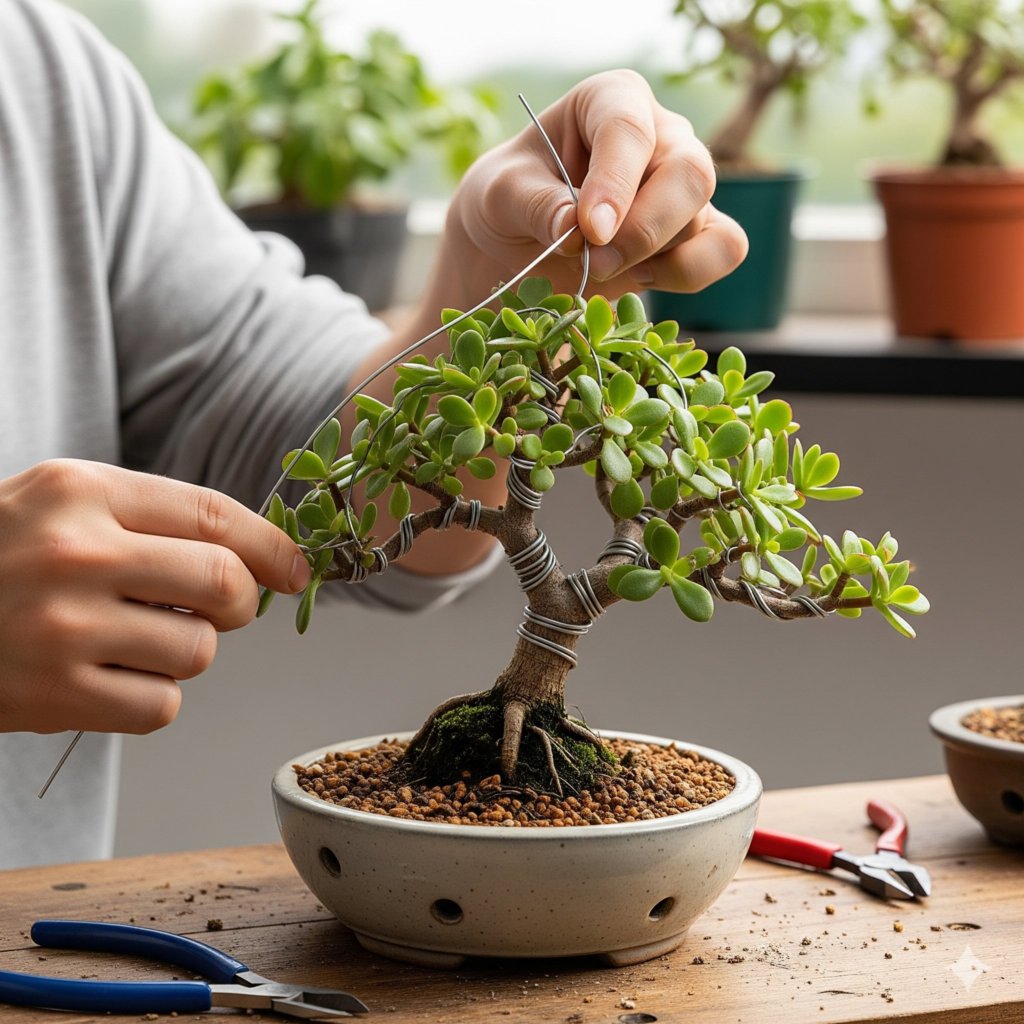
You control growth through pruning, wiring, and root work. Pruning cuts back shoots to shorten internodes and direct energy to selected buds. Root pruning reduces size and improves nebari.
Wiring shapes the trunk and branches. You wrap aluminum or copper wire around the branch and bend it into position. Remove the wire before it scars the cambium.
You often start with pre-bonsai, which is raw material trained for future design. Some growers collect yamadori, or wild trees, known for natural movement and aged bark.
Use sharp shears, concave cutters, and root rakes. Concave cutters help wounds heal flat, which reduces visible callus bumps.
In display, you may add an accent plant to support the main tree. You can place bonsai in a shallow container; however, it is important to distinguish this from a suiban.
While bonsai are traditionally kept in pots with drainage for long-term health, a suiban is a shallow tray without drainage holes. These are typically used for displaying suiseki (viewing stones) or creating miniature water scenes rather than for the long-term planting of a tree.
In a formal display area, called a tokonoma, you might also show these suiseki alongside your tree to enhance the overall aesthetic.
Fundamental Bonsai Styles and Classifications
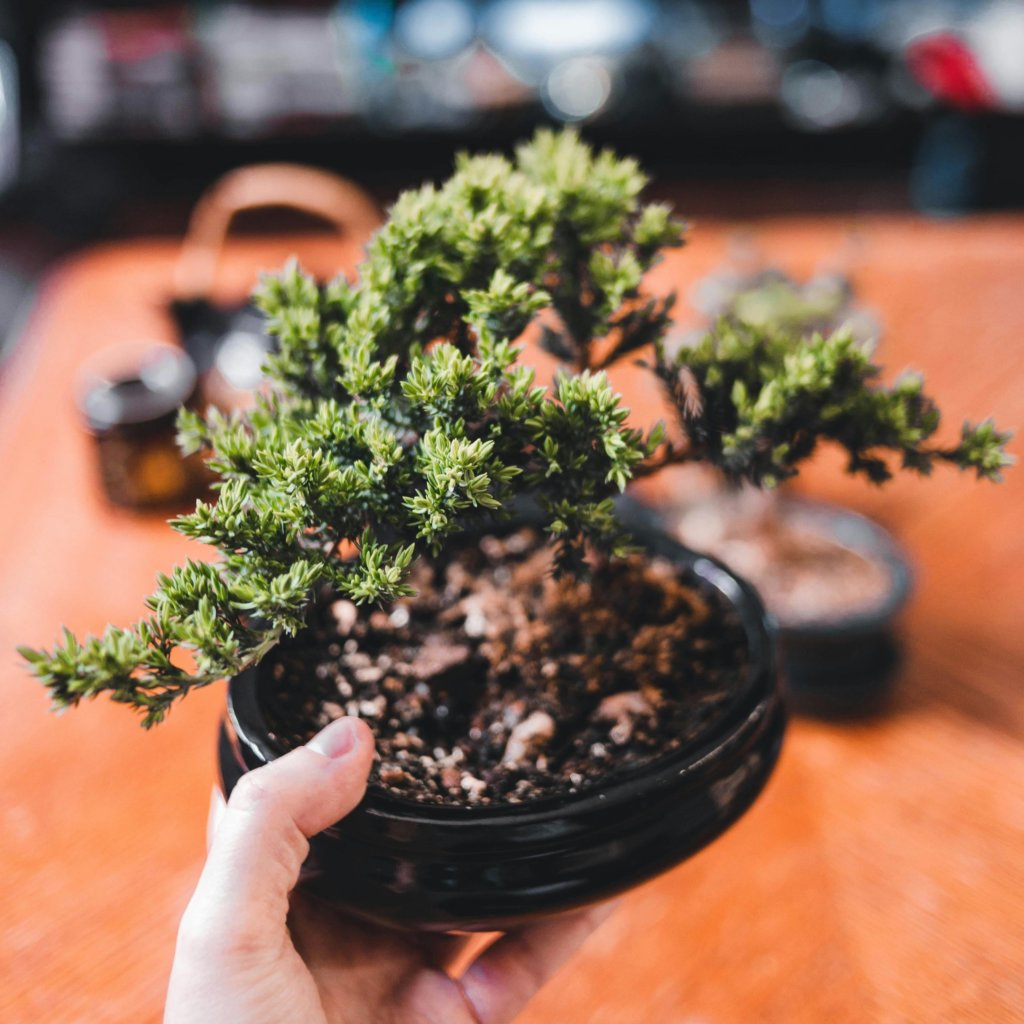
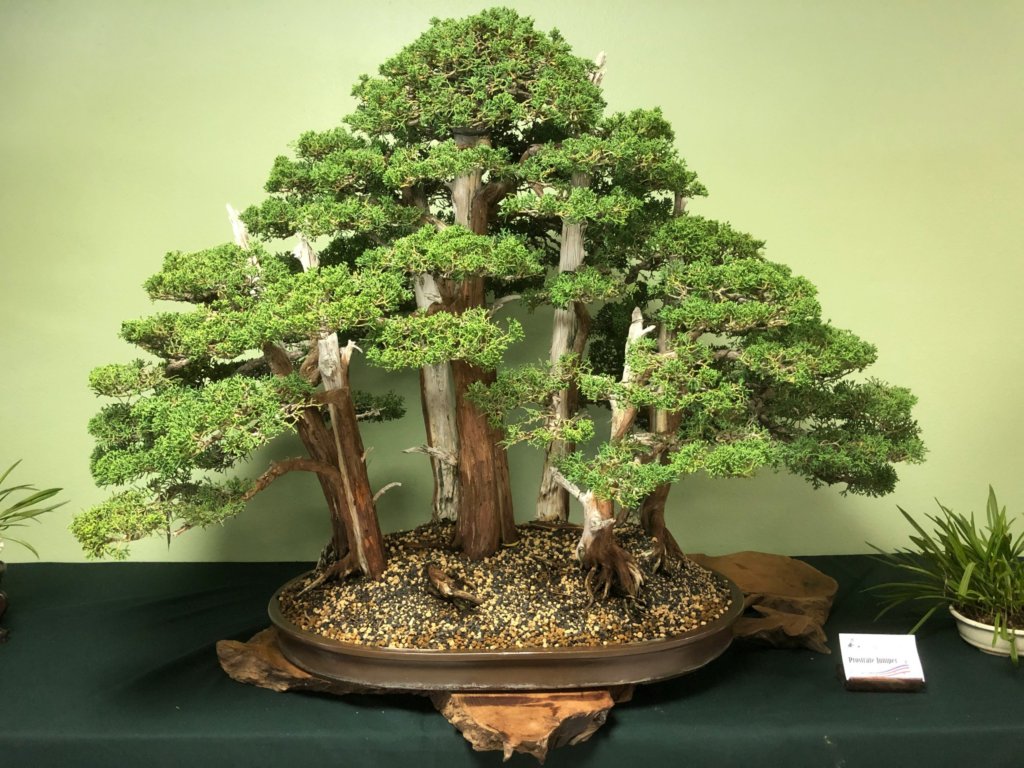
You classify bonsai by size and design. Shohin bonsai are small, usually under 8 inches tall. Mame bonsai are even smaller and fit in the palm of your hand.
A forest bonsai uses several trees of the same species to create a woodland scene. In rock planting, roots grow around or through stone. Root over rock designs expose roots that grip the rock surface.
Some styles focus on line and simplicity. Bunjin, also called literati style, uses a thin trunk with sparse branches and a high apex. It values empty space and balance.
Related arts include bonkei, which creates dry miniature landscapes in trays, distinct from the living trees used in bonsai. You choose the style based on the tree’s natural traits, not force it into a form that fights its growth pattern.
Advanced Bonsai Techniques and Care Vocabulary
Advanced bonsai work relies on precise terms that describe aging effects, shaping control, and plant health. You use this vocabulary to apply techniques correctly and to understand how each action affects growth and structure.
Deadwood and Ageing Techniques
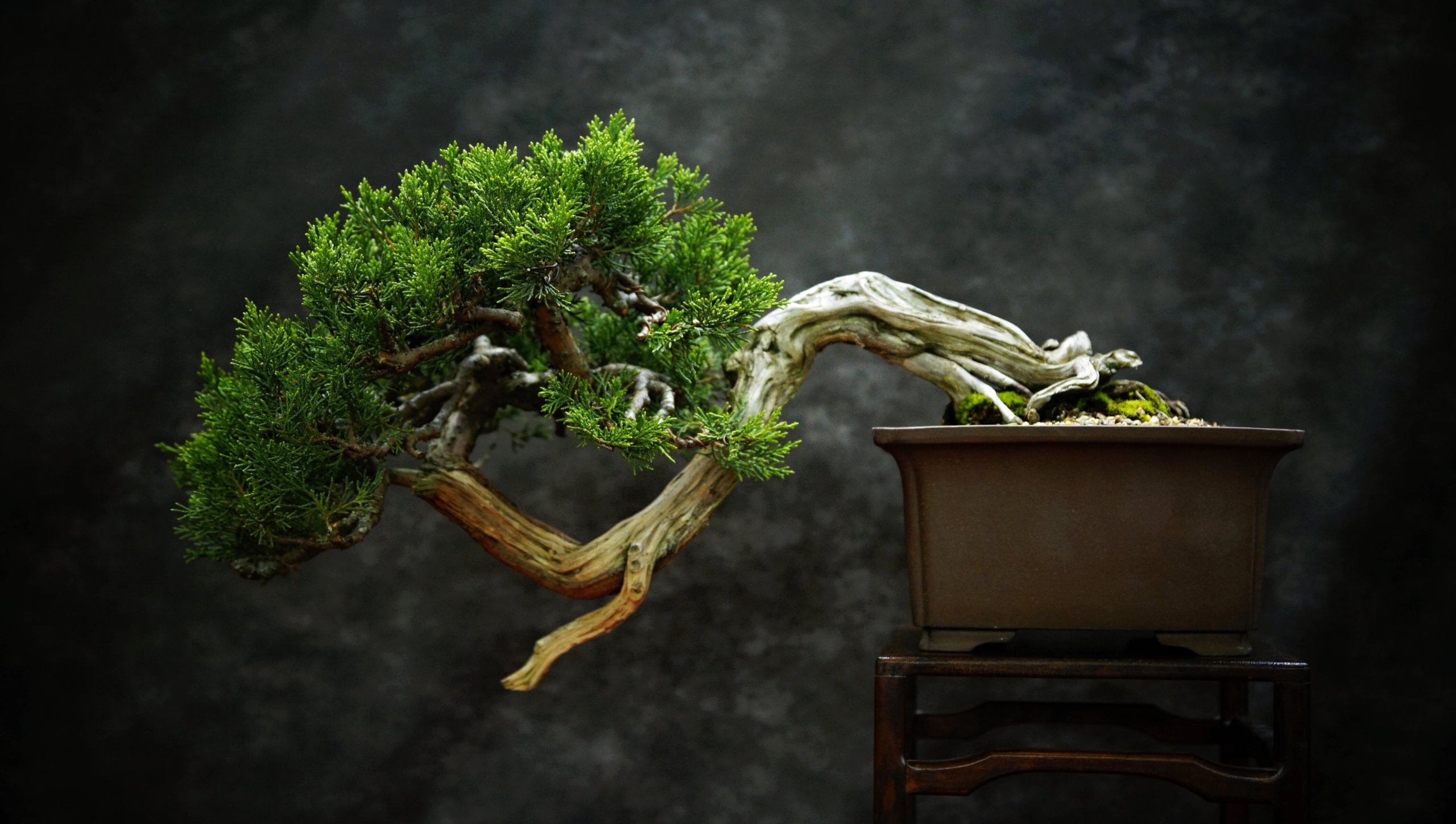
Deadwood techniques create the look of age and weather damage. You carve or strip bark to form jin (dead branches) and shari (deadwood along the trunk). These features expose hardwood and suggest past stress.
A hollow in the trunk is called an uro. A split or cracked trunk effect is known as sabamiki. You must seal live edges with cut paste to limit dieback and protect healthy tissue.
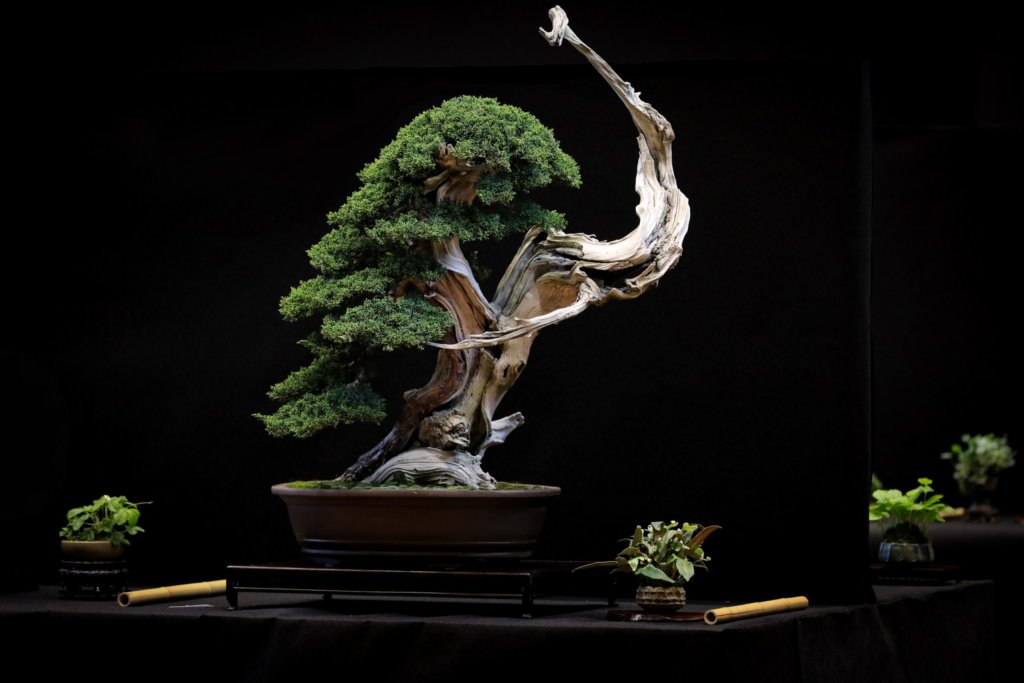
Sharimiki (or “driftwood” style) refers to a style where the trunk has extensive, barkless sections of deadwood. Tanuki, also called a phoenix graft, joins a live tree to a separate piece of deadwood to create a dramatic trunk line.
Use sharp bonsai tools such as concave cutters to shape clean wounds. Clean cuts heal faster and reduce decay in living veins.
Propagating and Shaping Practices
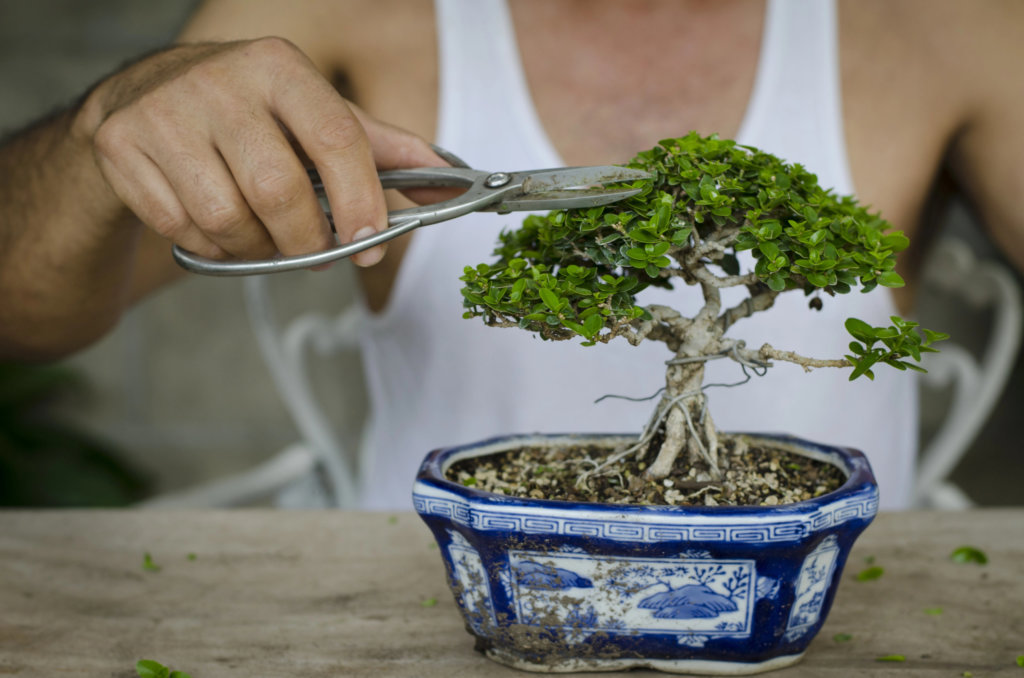
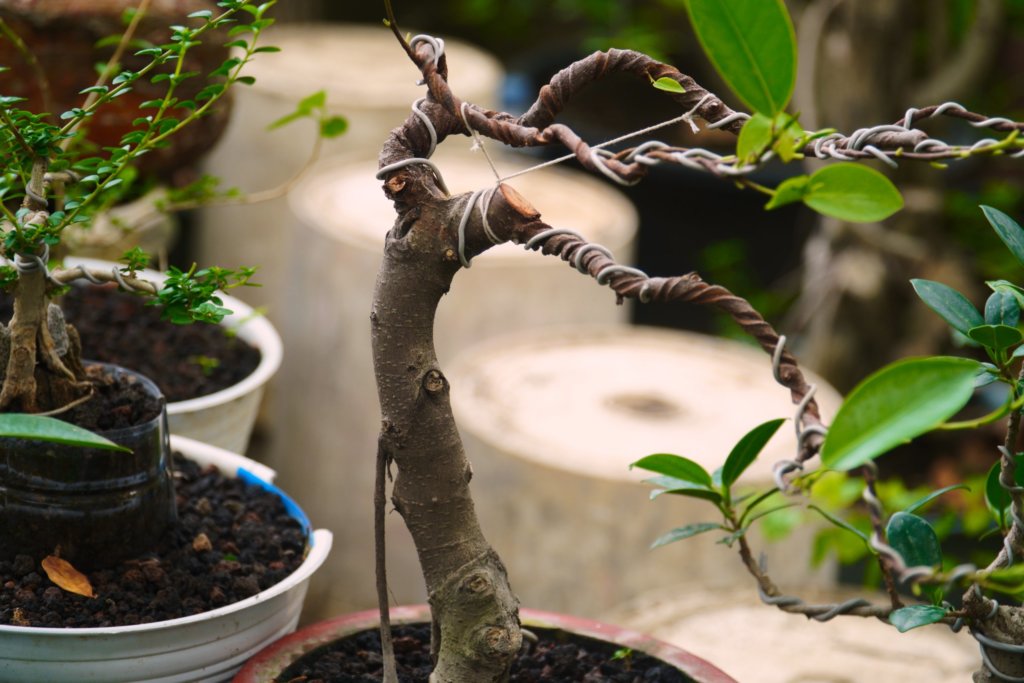
You control structure through pruning, wiring, and propagation. Hard pruning removes thick branches to reset form, while pinching trims soft tips to guide fine growth.
Defoliation removes leaves during the growing season. This can increase light inside the canopy and promote back budding, which helps build ramification (fine, dense branching achieved through repeated pruning).
Wiring bends branches into styles such as chokkan (formal upright), moyogi (informal upright), kengai (cascade), or han kengai (semi-cascade). You shape the leader and manage apical dominance, which comes from the terminal bud at the top.
For propagation and styling, you may use:
- Grafting to add branches or improve roots
- Air layering or ground layering to create new trees
- Kabudachi for multi-trunk forms
- Yose ue for forest plantings
These methods help you refine trunk movement, branch placement, and taper from the tachiagari upward.
Specialized Terms Related to Care
Healthy roots support all advanced design work. During repotting, you reduce the root ball and perform root pruning to control size and encourage fine feeder roots and hair roots.
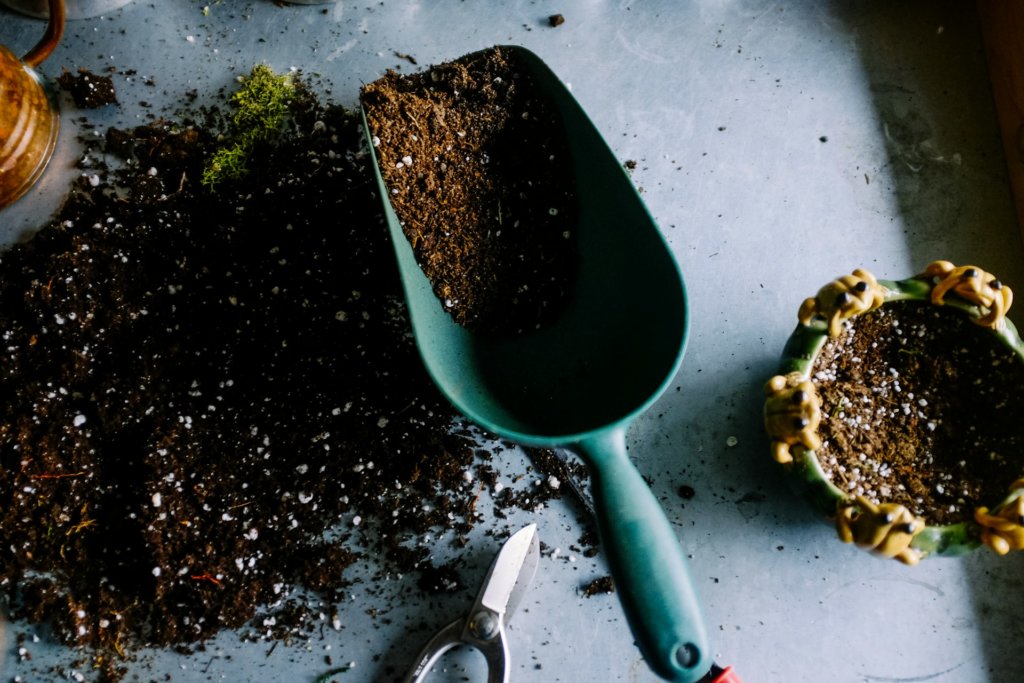
You plant in well-draining bonsai soil. Common parts include:
| Component | Purpose |
|---|---|
| Akadama | Holds water and nutrients |
| Pumice | Improves drainage |
| Organic Matter | Supplies trace nutrients |
| Sphagnum moss | Retains moisture for layering |
You must monitor humidity, especially after repotting or defoliation. Low humidity can cause desiccation, while poor nutrition may lead to chlorosis, which shows as yellow leaves.
Understand seasonal cycles. Trees enter dormancy in winter, and each species has a level of hardiness that defines cold tolerance. Strong root health, proper soil, and careful timing support steady growth from germination through maturity.